Choosing Revenue vs Conversation Intelligence in 2026
Compare revenue intelligence and conversation intelligence, and learn what enterprises actually need to govern meetings. October 2026
 Maintouch
If your enterprise is assessing revenue intelligence tools, you’re probably asking the right question for one team. The harder question is what happens to every other conversation your company has, and whether any of it is findable six months later when someone needs to know why a decision got made. Spinach AI, an enterprise conversation intelligence platform and the system of record for conversation data, is built for that second question.
TLDR:
- Revenue intelligence answers “will we hit our number?” while conversation intelligence answers “what was said and decided?” These two categories solve different problems
- Revenue intelligence tools only capture customer-facing sales calls; product reviews, HR calls, and leadership offsites produce no signal for the model
- 57% of sales leaders don’t trust their own quarterly forecast, according to Gartner (2024), which explains most enterprise revenue intelligence spend
- Conversation intelligence is projected to reach $92.54 billion by 2035 (SNS Insider), growing faster than revenue intelligence as companies treat spoken data as organizational infrastructure
- Spinach AI captures, centralizes, and manages conversation data across every team and meeting type that revenue tools don’t cover, then powers people and agents by routing structured outputs to Salesforce, Jira, Confluence, and more
What Is a Revenue Intelligence Platform?
A revenue intelligence platform aggregates commercial data (CRM activity, emails, calls, and meetings) and uses AI to turn that raw signal into forecasting, pipeline visibility, and sales performance insight. The goal is predictable revenue: knowing which deals are at risk, which reps need coaching, and whether the forecast is trustworthy before the quarter closes.
Where a CRM logs that a call happened, a revenue intelligence platform analyzes what was said, cross-references it with deal stage and email activity, and surfaces patterns a human reviewing notes would miss. According to Custom Market Insights, the global revenue intelligence market was valued at $3.83 billion in 2024 and is projected to reach $10.7 billion by 2033.
The core use cases cluster around four problems:
- CRM data that reps never actually enter, leaving pipeline visibility gaps that compound at forecast time
- Forecasts that drift from reality because they rely on rep-reported deal status instead of actual conversation signals
- Deal reviews built on rep memory instead of evidence from recorded calls
- Coaching that arrives after a deal is already lost, with no way to intervene mid-cycle
What Is a Conversation Intelligence Platform?
Conversation intelligence captures spoken conversations, transcribes them, and analyzes what was said to produce structured signals: topics discussed, sentiment, objections raised, decisions made, action items assigned. For a full breakdown of what conversation intelligence is, it’s worth noting the category started in sales call recording, where tools would transcribe calls and flag moments like competitor mentions or pricing questions. That original framing still shapes how most people think about the category, even though the actual scope has expanded considerably.
The sales-coaching origin causes real confusion. A tool that records discovery calls and flags talk-to-listen ratios is doing something meaningfully different from an enterprise system that captures every internal meeting, governs access by role, and routes structured outputs into Jira, Salesforce, and Confluence. Both carry the conversation intelligence label. They solve different problems at different organizational levels.
According to SNS Insider, the conversation intelligence software market was valued at $25.31 billion in 2026 and is projected to reach $92.54 billion by 2035. That growth reflects a shift in how companies treat spoken data: from a sales-coaching input to a broader organizational asset. The conversations where strategy changes, where a customer flags a product problem, or where a team decides to cut scope rarely get written down. Conversation intelligence is the category trying to close that gap.
Revenue Intelligence vs. Conversation Intelligence: How They Differ
The simplest way to separate them: revenue intelligence answers “will we hit our number?” and conversation intelligence answers “what is actually being said?”
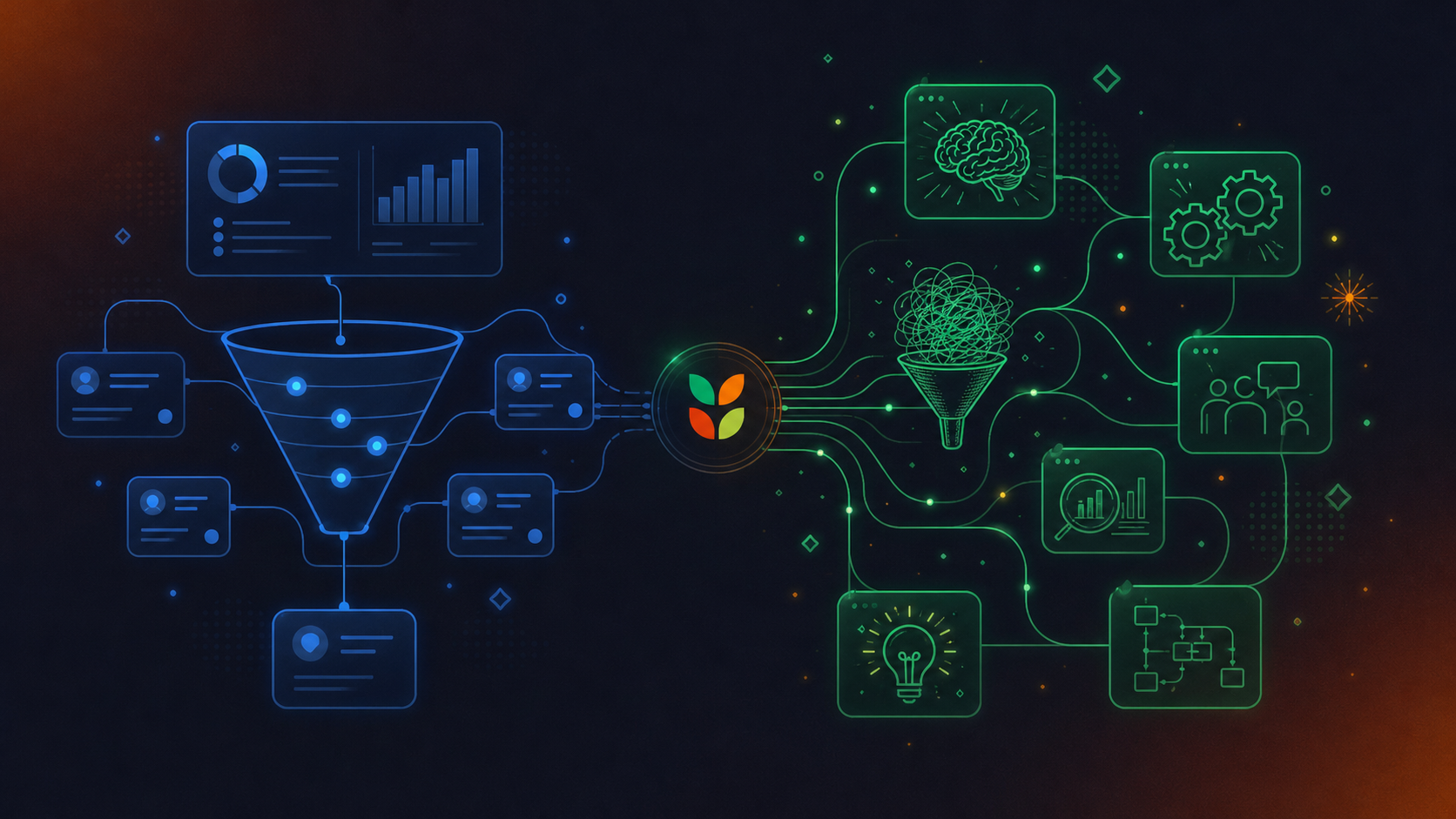
Revenue intelligence pulls from CRM records, email activity, and call data to model pipeline health and forecast accuracy. Conversation intelligence captures the spoken layer itself: what was said, decided, and committed to, and structures it for retrieval. The overlap is real: most revenue intelligence tools include call recording and transcription, a distinction covered in more depth in this enterprise conversation intelligence buyer’s guide. But that conversation layer feeds a sales-specific model. It answers one department’s questions, not the organization’s.
Dimension | Revenue intelligence | Conversation intelligence |
|---|---|---|
Primary question | Will we hit quota? | What was said and decided? |
Data inputs | CRM, email, calls, activity | Meetings, calls, spoken dialogue |
Primary output | Forecast, pipeline risk, rep coaching | Decisions, action items, topics, sentiment |
Scope | Sales and revenue teams | Any team that meets |
Architecture | CRM-adjacent | Conversation data layer |
The architectural gap matters most for enterprise buyers. A revenue intelligence tool ingests conversation data selectively: only customer-facing calls that sales reps attend. Engineering planning sessions, leadership offsites, product reviews, and HR conversations stay outside it entirely. Conversation intelligence, deployed org-wide, closes that gap. The two categories can coexist, and often do.
How Revenue Intelligence Platforms Work
Revenue intelligence ingests from the CRM, email, calendar, and call recordings, pulling every touchpoint a rep has with a prospect into one unified record. Most do this automatically, so the CRM gets updated whether or not the rep logged the activity.
From there, the raw signal gets enriched. Call transcripts get analyzed for topics, sentiment, and deal-relevant moments: a competitor mention, a pricing objection, a verbal commitment to next steps. Email threading adds context about response rates. Calendar data shows whether a follow-up was booked or whether a deal has gone quiet.
The AI layer sits on top of that enriched dataset, comparing current deal signals against historical patterns across closed, stalled, and lost deals. A deal matching the pattern of stalled contracts gets flagged before the rep notices.
Outputs land in three places: the forecast model, the deal review, and the coaching queue. Forecast accuracy depends on how well the signal layer reflects actual buyer behavior. Coaching can potentially move from post-mortem to in-cycle, because the system can flag a specific call moment without waiting for a lost deal to trigger a debrief.
The Business Case for Revenue Intelligence
Four compounding problems drive most enterprise revenue intelligence spend. Reps under-report bad news in the CRM. Deal reviews pull from memory instead of call evidence. Coaching happens after a loss, not before it. And forecast calls become negotiation because nobody trusts the numbers on the screen.
Revenue intelligence attacks each gap structurally: CRM auto-capture removes the rep as a bottleneck, call analysis gives managers evidence for deal reviews, pattern-matched risk signals allow coaching mid-cycle, and a forecast grounded in actual buyer behavior is harder to game. The ROI case typically builds around two levers: win rate improvement from better coaching, and forecast accuracy from cleaner pipeline data, both of which compound as the system accumulates historical signal.
Where Revenue Intelligence Platforms Fall Short
Revenue intelligence tools are built around one question: what happens to revenue? That clarity is also the constraint.
The conversation layer inside most revenue intelligence tools covers customer-facing calls that sales reps attend. Engineering planning sessions, product reviews, internal escalations, and leadership offsites produce no signal for the revenue model because they were never in scope. The CRM is the organizing layer, and anything that doesn’t touch a deal record stays invisible.
CRM data quality is a second ceiling. If reps under-log, deal stages stay stale, or contacts aren’t properly associated, the AI model compounds those gaps instead of correcting them. It surfaces patterns from whatever history it has, good or bad.
What gets captured from a sales call also rarely travels anywhere useful outside the sales org. A customer flagging a product gap on a discovery call might generate a coaching note for the rep. It rarely reaches the product team in structured form, and it almost never links to the sprint where that feature is being scoped. The insight dies at the CRM boundary.
The real test is scope: if your conversations happen only in customer-facing sales calls, a revenue intelligence tool may be sufficient. If decisions, risks, and institutional knowledge are spread across every team’s meetings, you have a gap that revenue intelligence alone wasn’t designed to close.
When Conversation Intelligence Extends Beyond Sales
Sales calls are where conversation intelligence started, but nowhere close to where decisions actually live in an organization.
Product direction changes in design reviews. Budget gets cut in leadership offsites. Compliance risk surfaces during internal escalations. An HR onboarding call contains context new hires will search for six months later. None of it reaches a CRM. Most of it never gets written down.
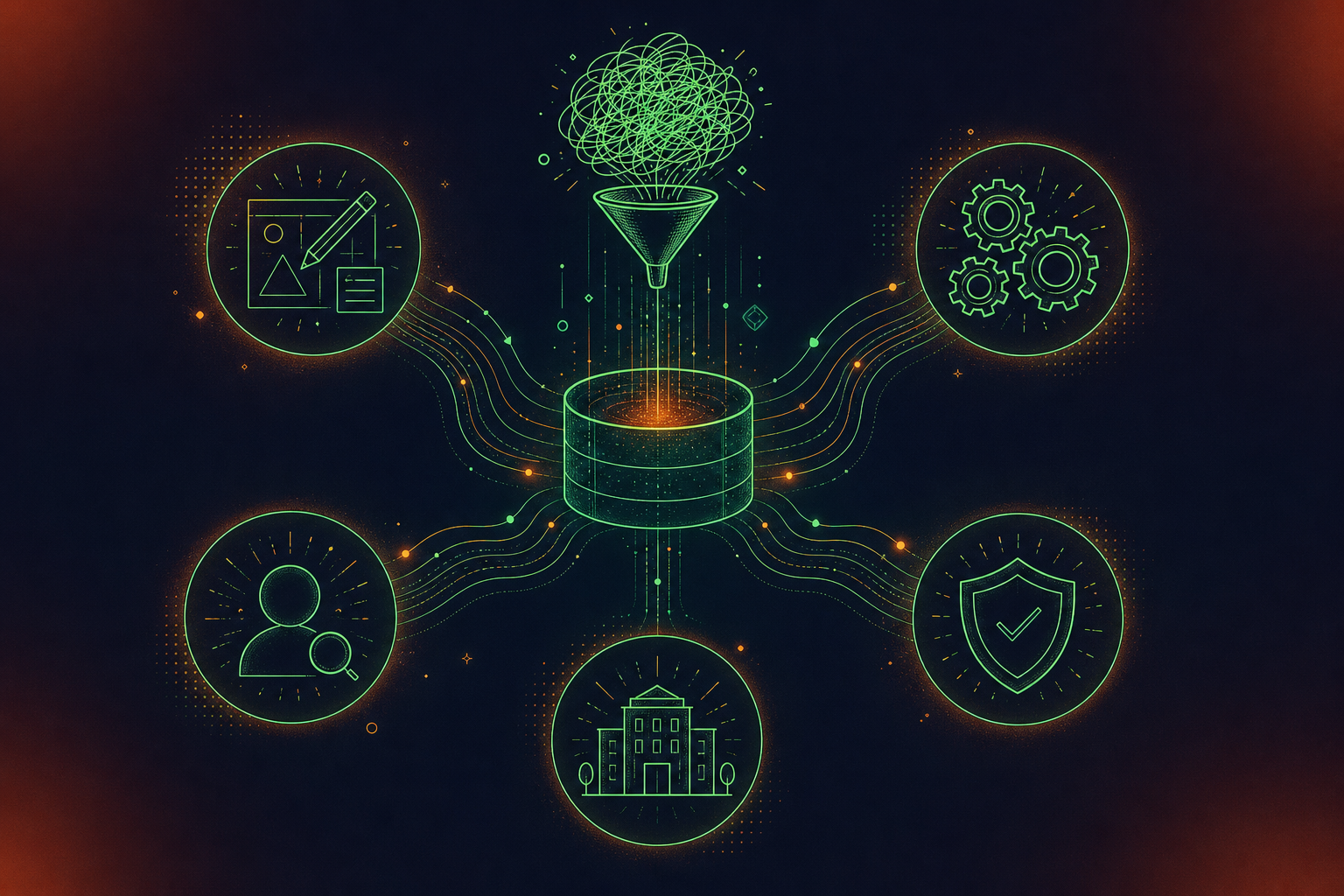
When conversation intelligence is scoped to sales only, every other team operates with the same gap sales teams had before the category existed: decisions made verbally, context lost at the end of the call, no governed record anyone can query later. The functions where this compounds hardest:
- Product and engineering: design decisions and scope changes discussed in planning sessions, never linked to the tickets they affect
- HR and recruiting: interview context and onboarding guidance that lives in a folder of individual recordings, if it’s captured at all
- Legal and compliance: internal calls where risk gets named but never logged in any system reviewable during an audit
- Leadership: strategic direction set in offsites and all-hands, with no queryable record of what was decided or why
Enterprise buyers scoping a deployment should ask one question first: where do our consequential conversations actually happen? The answer is almost never “only on sales calls.”
Key Features to Review in a Revenue Intelligence Platform
Six questions worth taking into every demo:
- Does CRM sync run automatically, or does it depend on reps logging activity? Auto-capture is the baseline; rep-dependent sync means the model is only as good as rep compliance.
- How does the forecast model explain its confidence? If a number changes, you need to know which signal moved it.
- Can managers pull up the specific call moment that generated a coaching flag, or just the summary?
- Which CRMs and meeting platforms does it support natively, and what breaks if you run a mixed stack? This enterprise meeting software evaluation walks through how to weigh that tradeoff.
- Can an admin set data retention policy and access rules by data type, or is it one org-wide policy?
- What does the security review require? As outlined in this meeting recording security and compliance guide, SOC 2 Type II, GDPR, and SSO are table stakes for most enterprise IT teams.
The last question is the one most buyers ask too late. Procurement and legal reviews routinely stall deployments that passed every functional evaluation. If a vendor’s compliance posture is unclear before the demo ends, that is the signal to dig harder.
The Conversation Intelligence Software Market in 2026
The size gap between the two categories tells you something real. Conversation intelligence is projected to reach $92.54 billion by 2035 at a 15.49% CAGR. Revenue intelligence, at a projected $10.7 billion by 2033, grows fast but serves a narrower function.
What started as a sales tool category is now being purchased by IT, security, and legal as an organizational data infrastructure question. The conversations a company has are its highest-context data, and the market is pricing that in.
How Gong Approaches Revenue Intelligence (as of October 2026)
Gong started as a conversation intelligence tool and has grown into what it now calls a Revenue AI Operating System. According to Claap, as of May 2026, Gong reportedly surpassed $500 million in annual recurring revenue with more than 5,000 companies using it.
Its core strength is customer-facing call analysis. Gong records sales calls, emails, and meetings, then surfaces deal risk signals, coaching moments, and forecast inputs. The AI layer analyzes transcripts for deal-relevant signals (competitor mentions, pricing objections, stalled follow-ups, changes in buyer sentiment) and cross-references those against historical patterns from closed and lost deals to flag risk before a rep notices it. Gong Coaching handles rep development; Gong Engage covers sales engagement; Gong Forecast builds pipeline models from conversation signals in place of rep-entered CRM data. See this Spinach AI vs Gong comparison for how the two approaches diverge. The product is purpose-built for revenue workflows and executes deal-risk scoring, coaching flags, and forecast modeling with sales-specific depth.
Worth naming plainly: Gong’s organizing layer is the revenue motion. Internal meetings, product reviews, engineering planning sessions, and cross-functional decisions outside the sales org produce no signal for the Gong model. That scope is a design choice, not a gap in execution.
What Enterprises Need Beyond Revenue Intelligence
Revenue intelligence tools answer a departmental question. The organizational question is different: who owns the record of what was said everywhere else?
Leadership forums, product reviews, engineering planning sessions, HR discussions, and cross-functional offsites produce the decisions that sales teams are later hired to execute. None of that conversation data flows into a revenue intelligence model, because none of it was designed to. That is the architectural boundary, and it is a deliberate one.
For a CIO or IT leader, the blind spot looks like this: CRM hygiene, revenue tooling, and knowledge bases are all in place. What remains unsolved is a governed record of spoken dialogue outside the sales org. Those conversations are where context actually lives: the reasoning behind decisions, the constraints that shaped a product direction, the risk someone named in a call that never reached a ticket. When an AI agent needs that context later, it either finds a transcript in someone’s personal folder or finds nothing. This gap is covered in detail in this guide to building an enterprise knowledge base your AI agents can actually use.
The fix is architectural, not a feature addition. Capturing company-wide conversation data requires meeting data governance designed around organizational deployment: consent mechanics enforced at the policy level, access rules by role and data type, retention configured per data category, and retrieval that works across every meeting regardless of which video tool hosted it. A revenue intelligence tool extended to cover internal meetings is still pointing at the wrong organizing layer. The CRM was never meant to be the system of record for conversation data describing what an engineering lead said in sprint planning.
Filling the Organizational Intelligence Gap: Beyond Revenue Tools
Spinach AI is the enterprise conversation intelligence system of record for everything the revenue tool doesn’t touch. It captures conversations across the enterprise, centralizes them in one AI-ready data asset, manages access and policy, and powers people and agents with the result.
The deployment pattern across enterprise organizations is straightforward: keep Gong or a similar tool for customer-facing sales calls, and deploy Spinach company-wide for every other conversation, including product reviews, sprint planning, leadership forums, HR discussions, and compliance-sensitive calls. Both sources feed one governed corpus, and the organizational record gets complete. Spinach’s advantages in that pattern are org-wide scope, one platform for retrieval across all conversation data, buildability through MCP and API, and materially lower cost for company-wide coverage. The distinction between a knowledge base and organizational memory matters here.
Spinach joins meetings across Zoom, Google Meet, Microsoft Teams, Slack Huddles, and Webex, captures video, audio, transcript, screen share, and in-meeting chat during the meeting, then centralizes, governs, and routes structured outputs to the tools your teams already work in. Native integrations cover Salesforce, HubSpot, Jira, Linear, and Confluence. MCP connectors for Claude and ChatGPT are included on Business and Enterprise, and API and webhooks are available on Enterprise. Decisions and action items with named owners route automatically when the meeting ends.
Governance is enforced at the policy level, not left to individual users. Enterprise retention is configurable per data type (transcript, summary, and video) from one week to indefinite, org-level settings apply to every user, and an admin dashboard provides audit logging and usage reporting. Spinach is SOC 2 Type II, GDPR, and HIPAA compliant (BAA available on Enterprise/HIPAA engagements) and supports 100 languages. As of July 2026, the Business plan is $19/user/month billed annually ($29/user/month monthly); Enterprise is custom pricing. See how Spinach works as the system of record for conversation data or contact sales about Enterprise pricing.
Final Thoughts on Revenue Intelligence, Conversation Intelligence, and What Fills the Gap
Revenue intelligence and conversation intelligence are not competing answers to the same question. One is built for a department; the other is built for an organization. Your CRM handles deals. Your forecast model handles pipeline. What neither of them handles is the spoken record of every decision that happened outside a sales call. That is the gap worth closing, and it’s the one Spinach AI is built to close: the enterprise system of record for conversation data, deployed company-wide to capture, centralize, and manage the conversations your revenue tool was never scoped to touch, and to power your people and agents with them.
A revenue intelligence platform (Gong is the clearest example) answers “will we hit our number?” by pulling CRM activity, emails, and call recordings into a sales-specific model that drives forecasting, pipeline risk signals, and rep coaching. A conversation intelligence platform answers “what was actually said and decided?” across every meeting in the organization, beyond customer-facing sales calls. The architectural gap is real: revenue intelligence ingests selectively from deal-related touchpoints, while org-wide conversation intelligence captures product reviews, leadership forums, engineering planning sessions, and HR discussions that never touch a CRM record.
These tools solve different scope problems, and most enterprises deploy both. Gong is purpose-built for customer-facing revenue workflows and executes that job with considerable depth; keep it for sales call analysis, forecasting, and rep coaching. Spinach AI governs the conversation data Gong never sees: internal meetings across product, engineering, HR, legal, and leadership, captured across Zoom, Google Meet, Microsoft Teams, Slack Huddles, and Webex under one policy-enforced system of record. The deployment pattern that works is Gong for the revenue motion, Spinach company-wide for everything else, with both feeding one governed corpus.
Start with SOC 2 Type II, GDPR, and HIPAA posture, plus whether a BAA is available for compliance-sensitive engagements. These are table stakes for most enterprise security reviews, not differentiators. From there, the questions that stall deals most often are: Does the tool use voice biometrics? (Spinach does not; speaker identification is context-based.) Is customer data used to train AI models? (Spinach’s answer is no, with zero data retention terms with LLM providers.) Can retention be configured per data type and enforced at the org level instead of left to individual users? Enterprise retention in Spinach is configurable per data type (transcript, summary, and video) from one week to indefinite, set and enforced by admins, not employees.
Sales call recording is where the category started, not where consequential conversations actually live. Product direction changes in design reviews. Budget decisions get made in leadership offsites. Compliance risk surfaces in internal escalations. Interview context lives in a folder of individual recordings, if it gets captured at all. When conversation intelligence is deployed org-wide (with governed access by role, policy-enforced retention, and structured outputs routed into Jira, Salesforce, Confluence, and similar tools) it becomes the system of record for what the organization actually decided, extending well beyond what the sales team heard from prospects.
They serve different functions, and the accurate pattern in enterprise deployments is coexistence, not replacement. Spinach is not at feature parity with Gong for the specific sales-coaching and revenue-workflow use case. Gong’s deal-risk scoring, coaching flags, and forecast modeling are purpose-built in ways Spinach does not replicate. What Spinach does that Gong does not is govern the full organizational conversation record: every internal meeting, across every team, on every video platform, under one access policy and retention framework. Organizations that consolidate later typically do so because the organizational record Spinach provides makes the sales-only scope of a revenue intelligence tool look like a partial answer.
What you should do now
Next, here are some things you can do now that you've read this article:
- You should check out our library of meeting agenda templates for every type of meeting.
- Learn more about Spinach and how it can help you run a high performing org.
- If you found this article helpful, please share it with others on Linkedin or X (Twitter)

