Meeting Data Governance: Access & Retention Controls (Aug 2026)
Meeting data governance in August 2026: enforce sharing defaults, apply per-type retention, redact PII, and monitor compliance across all org meetings.
 Maintouch
Meeting data carries legal weight. The problem starts when fifty people each install a different AI meeting tool, each with their own sharing defaults, retention settings, and data processing terms nobody reviewed. The gap between individual convenience and organizational policy is where most of the risk lives.
TLDR:
- A single meeting now produces recordings, transcripts, AI summaries, and chat logs, each with separate legal exposure your org likely has no policy for.
- Multi-party consent laws in states like California, Illinois, and Massachusetts apply the stricter standard when participants join from different jurisdictions.
- Retention policy only works when every system holding a meeting derivative, from audio to CRM summaries, operates under the same classification logic per data type.
- PII spoken aloud in sales, HR, and client calls lands verbatim in transcripts, triggering GDPR, HIPAA, and PCI DSS obligations outside normal input controls.
- Spinach AI governs meeting data at the org level with SCIM-based deprovisioning, per-data-type retention, enforced sharing defaults, and compliance agents that classify and flag compliance-sensitive conversation data for human review.
Meeting Data as an Unmanaged Enterprise Asset
A single one-hour meeting now produces several distinct data objects: a recording, a transcript, an AI-generated summary, in-meeting chat, and sometimes a separate set of formal minutes. Each can differ in tone, attribution, and level of detail. Any one of them could surface in a legal hold, a regulatory audit, or an employment dispute.
Most organizations have no policy that answers which version is authoritative, who holds access, or when each layer gets deleted. As White & Case notes, AI meeting tools create governance risks that organizations are only beginning to recognize. Meeting data carries real legal and compliance weight, and the enterprise meeting recording compliance implications are substantial, yet it gets treated as a productivity byproduct that employees manage on their own.
The Shadow IT Problem: Unmanaged AI Notetakers at the Org Level
When an employee connects an AI notetaker through calendar OAuth, that grant typically covers every future meeting on their calendar, every single one. Multiply that across a team of fifty people, each running a different tool, from individual meeting assistants to consumer notetakers, and you get dozens of separate transcript repositories, each with its own retention schedule, sharing defaults, and data processing agreement.
The scale of this is documented: Nudge Security tracked one enterprise customer where a single unapproved AI notetaker generated 800 new employee accounts in just 90 days, nearly double the accounts created over the previous several years, driven entirely by a viral sharing dark pattern. No one reviewed the vendor’s subprocessor list. No one checked whether the tool trains on customer data. External participants got recorded under terms they never agreed to, because the employee who installed the tool didn’t read the fine print either.
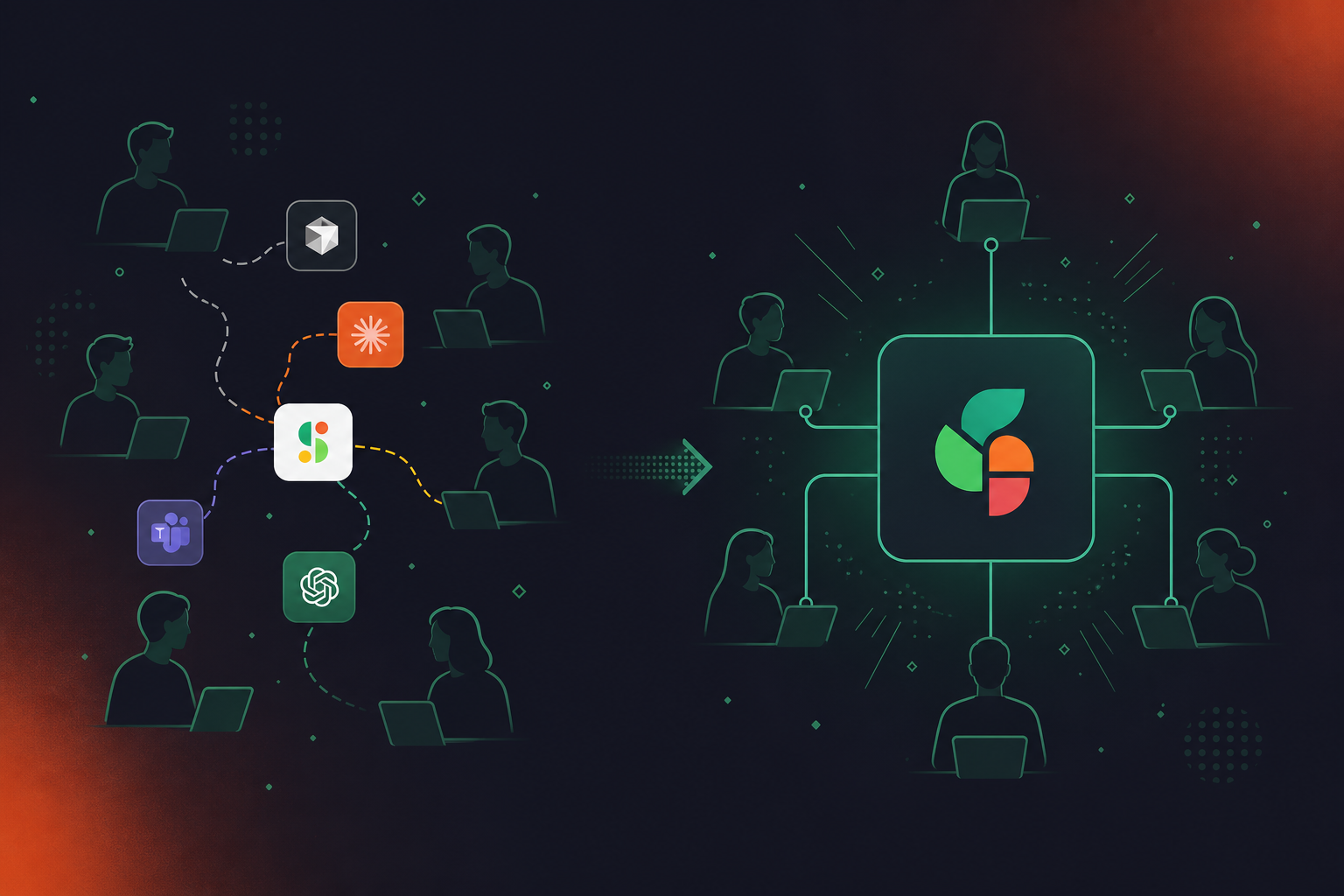
The result is a structural gap: no single organizational record, no enforced policy, and no clear owner when something goes wrong.
Recording Consent: From Individual Awareness to Org-Level Policy
Under the federal Wiretap Act, recording a conversation with the consent of one participant is generally lawful. That baseline runs into state law quickly. California, Florida, Illinois, Massachusetts, and several other states require all-party consent, meaning every person on the call must be notified before recording begins. Recording law varies widely by state, and when participants join from different states, the stricter standard typically controls.
An employee in Texas joining a call with a counterpart in Illinois is in all-party consent territory, whether they know it or not. Leaving that determination to individual judgment, meeting by meeting, is how consent exposure accumulates silently across the org.
The governance answer is visible, policy-enforced disclosure at the recording layer itself, regardless of which meeting platform the org uses. Spinach AI’s bot is always visible and never covert. Organizations can rename and rebrand it (e.g., “Acme Notetaker”), set a custom legal-approved in-meeting notification message, and admit it from the Zoom waiting room only after verbal consent. Pause, resume, and kick commands let any participant stop capture mid-meeting. Consent stops being a memory exercise and becomes an enforceable configuration.
Enforcing Sharing Controls at the Org Level
When an employee finishes a meeting, the default sharing behavior on most consumer-grade AI notetakers is whatever that employee configured in their personal account settings. That’s the entire policy. One person shares the transcript with all attendees. Another sends it to a Slack channel. A third generates a public link and pastes it into a follow-up email to an external contact.
None of those choices required approval. None were logged. The external recipient now holds a searchable record of your internal discussion under terms no one reviewed.
Consumer tools are designed for individual convenience, and their sharing controls follow that logic. There is no admin override that enforces internal-only defaults, no setting that blocks public link generation, and no audit trail showing who shared what with whom. When a recording lives inside a personal account, it leaves the organization’s control the moment the user decides to share it.
Org-level enforced sharing defaults invert this. The organization sets the maximum scope a user can share, and individual preference operates within that boundary. A configuration restricting distribution to internal attendees cannot be overridden by a user who wants to include external contacts. Sharing stops being a per-meeting judgment call and becomes a policy with teeth.
Building a Retention Policy for Meeting Data by Data Type
Treating all meeting data as a single category is a policy error. A summary noting that “the team agreed to extend the contract” carries different regulatory weight than a raw transcript containing a patient’s insurance number or a caller’s payment card details. Applying one blanket retention window to both creates exposure in both directions: too short on compliance-governed data, too long on data that should be deleted.
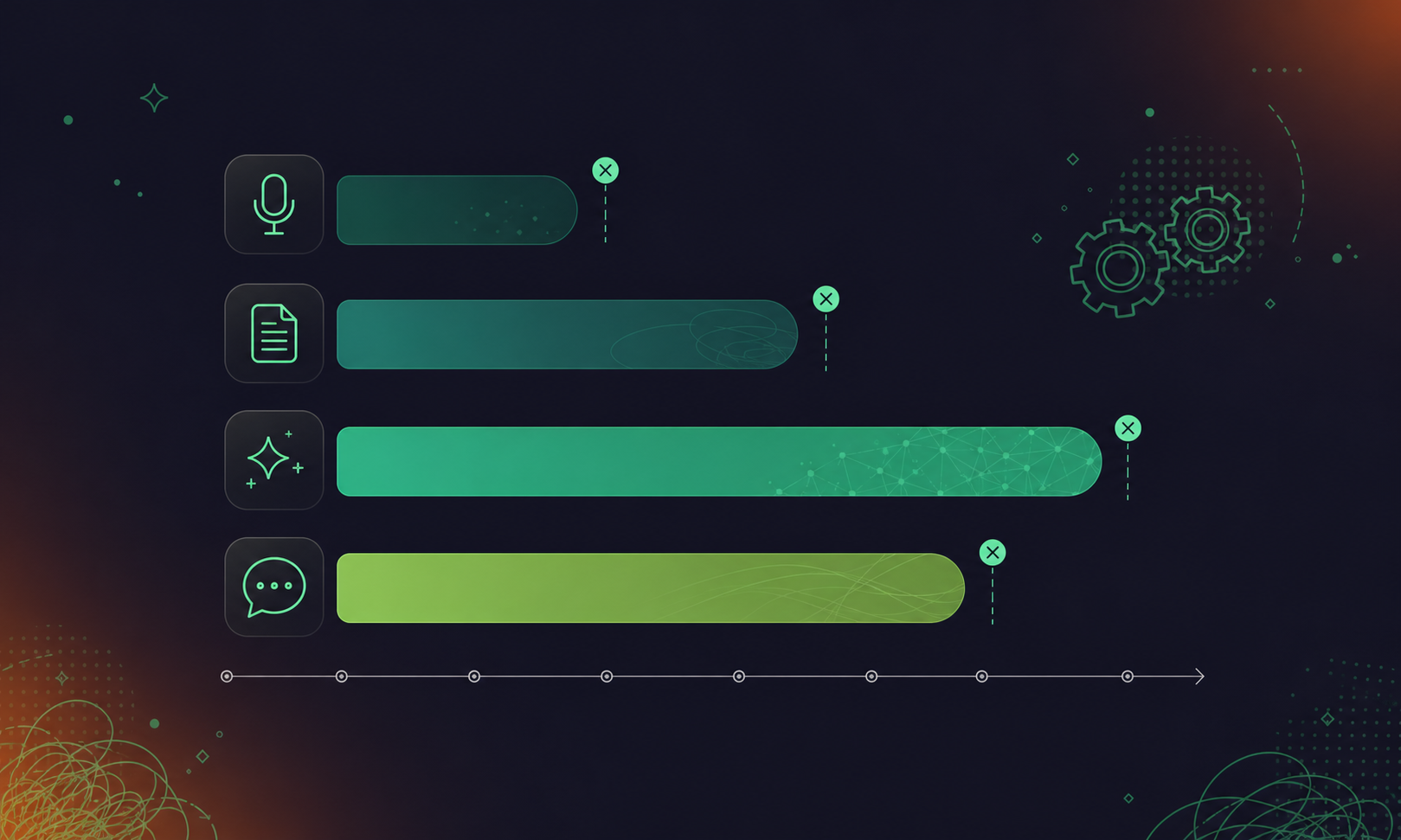
A defensible policy classifies by type before setting windows. Different AI transcription tools handle retention differently, and summaries, transcripts, and recordings each age differently under GDPR’s storage limitation principle, HIPAA’s minimum necessary standard, and FINRA’s recordkeeping floors. As Drata outlines, a compliant data retention policy maps each data category to its governing regulation and deletion trigger.
Data Type | Example Content | Governing Framework(s) | Key Retention Consideration |
|---|---|---|---|
Raw recording (audio/video) | Full meeting audio, video file | GDPR storage limitation, HIPAA minimum necessary | Highest storage cost and risk; typically the shortest retention window |
Transcript | Verbatim spoken text, PII spoken aloud | GDPR, HIPAA, PCI DSS, FINRA Rule 4511, MiFID II | Contains structured and unstructured PII; requires per-type redaction and access controls |
AI-generated summary | Action items, decisions, key points | GDPR, FINRA Rule 4511 | Often retained in CRM indefinitely; must match the transcript’s deletion schedule |
In-meeting chat | Links, file shares, informal messages | GDPR, FINRA (for firms under supervisory obligations) | Frequently overlooked; carries the same legal weight as other meeting derivatives |
The subtler risk is siloed deletion. If a meeting platform purges audio on a 30-day cycle while the CRM retains the AI-generated summary indefinitely, regulators and courts will treat those as the same record on different schedules. That mismatch is the exposure, not the individual window. Retention policy only works when every system holding a derivative of the meeting operates under the same classification logic.
PII in Meeting Transcripts: Redaction and Access Risk
PII in a structured database sits in a labeled column. PII in a meeting transcript sits inside a sentence spoken by someone who wasn’t thinking about data residency when they said it, a challenge that enterprise conversation intelligence platforms must handle at a structural level.
Most governance frameworks weren’t built for the second case. GDPR’s access and erasure rights, HIPAA’s minimum necessary standard, and PCI DSS’s prohibition on storing authentication data all apply the moment that content lands in a transcript file. The data arrived through speech, not a form field, so none of the usual input controls caught it.
What ends up in transcripts is more varied than most compliance teams expect:
- Sales calls capture payment card numbers read aloud during account verification, which land verbatim in a searchable text file with a retention window that may not match PCI DSS requirements.
- HR conversations contain national ID numbers, salary figures, and medical disclosures that trigger GDPR and HIPAA obligations regardless of how informally they were shared.
- Client onboarding sessions in financial services reproduce security question answers verbatim, and patient-adjacent discussions capture diagnosis details and prescription names with no real-time flag.
Automated redaction handles structured identifiers well: credit card numbers, Social Security numbers, passport numbers, bank account strings all have known formats and can be detected and redacted at the transcript level without human review of every recording. Spinach applies PII redaction at the transcript level for structured identifiers of this type.
Unstructured PII is harder. A patient’s name spoken mid-sentence or a salary figure buried in a negotiation recap won’t be caught by pattern matching. That gap is where access controls carry the remaining load: restricting who can query, export, or share a transcript limits exposure for PII that redaction didn’t reach.
Compliance Monitoring Across Governed Conversation Data
Industries under compliance mandates have always had to govern conversation data. The shift is volume. FINRA Rule 4511 and MiFID II both require firms to retain and produce records of client communications, a category that now includes meetings where investment advice, trade ideas, or material non-public information surfaces. A recorded call with a portfolio manager discussing fund positioning is a compliance-governed record from the moment the transcript is created, regardless of whether the compliance team knows the meeting happened.
Healthcare compounds the problem differently. PHI does not announce itself. A physician saying a patient’s name alongside a diagnosis in a care coordination call creates a HIPAA obligation the moment that transcript is stored with identifiable context attached. The minimum necessary standard applies to who can read that file afterward, but it cannot apply retroactively if access was never restricted.
The attorney-client privilege angle is less discussed and carries real risk. Some outside counsel have raised concerns that when recorded conversations are routed to a third-party AI whose terms of service reserve data-use rights, the confidentiality of those communications may not survive a challenge. Outside counsel discussing litigation strategy inside a meeting that gets transcribed and processed by a vendor with ambiguous data rights has created a discoverable record under conditions the client never authorized.
No compliance team reviews thousands of meeting transcripts manually at any meaningful cadence. The practical answer is automated classification: conversation data runs against a customer-defined rule set, and the system flags records matching a risk pattern for a human reviewer to assess. The agent surfaces the risk; a person decides what to do with it. Spinach AI’s compliance agents work this way at the Enterprise tier, classifying and flagging compliance-sensitive conversation data without automated remediation, because remediation decisions carry legal weight that should not be delegated to an automated system.
Human review stays in the loop precisely because the consequences of a wrong call are material.
Access Management and Deprovisioning for Meeting Data
When an employee who hosted two hundred recorded meetings leaves the company, the question is simple and the answer is usually bad: where did that data go?
In most individual notetaker deployments, it went with them. Recordings, transcripts, and summaries lived in a personal account tied to a personal email. IT deprovisions the corporate identity, the OAuth grant breaks, and every meeting that person hosted becomes inaccessible to the organization. No one planned for it.
SAML SSO and SCIM provisioning (Enterprise tier) close that gap at the identity layer. When a user is deprovisioned through SCIM, access is revoked immediately, without waiting for an IT ticket or a manual account audit. The meeting data stays inside the organization’s governed corpus, not orphaned inside an account that no longer exists. Spinach AI supports SAML SSO and SCIM at the Enterprise tier so that identity lifecycle events flow through to meeting data access automatically, not retrospectively.
Chasing down individual account credentials at offboarding does not scale and does not satisfy an auditor. A governed organizational record requires that no single employee’s departure can create a gap in it.
How Spinach AI Governs Meeting Data at the Enterprise Level
Spinach AI is an enterprise conversation intelligence platform that serves as the system of record for conversation data. Where individual AI notetakers solve one person’s problem, Spinach is deployed company-wide to capture, centralize, manage, and power the organization with every conversation it has. Every governance control described in this post maps to something Spinach enforces at the org level, not the individual account level.
SAML SSO and SCIM provisioning are available on Enterprise, so identity lifecycle events automatically propagate to meeting data access. Retention is configurable per data type: transcript, summary, and video each carry their own window, from one week to indefinite, set by the organization instead of by individual users. Org-level enforced sharing defaults override individual preferences, so no employee can share beyond the scope the organization permits. PII redaction runs at the transcript level for structured identifiers including payment card and national ID numbers. Compliance agents monitor conversation data against a customer-supplied rule set, classifying and flagging regulatory risk for human review, since remediation decisions stay with a person because they carry legal weight that should not be delegated to an automated system. An admin dashboard provides audit logging and usage reporting across the full corpus.
Spinach AI is SOC 2 Type II compliant, GDPR compliant, and HIPAA compliant, with a BAA available for Enterprise and HIPAA engagements. Customer data is never used to train AI models, and zero data retention applies with LLM providers.
The contrast with individual AI notetakers is architectural. When each employee picks their own tool, the organization ends up with dozens of separate transcript repositories, each with its own retention schedule, sharing defaults, and data processing agreement that nobody in IT or legal reviewed. Spinach is deployed once, company-wide, as the single governed platform, so every control applies uniformly across every meeting the organization holds. Organizations comparing meeting intelligence platforms face exactly this structural choice between per-user convenience and org-level governance. Talk to the Spinach team to scope company-wide deployment.
Final Thoughts on Managing Meeting Data as a Governed Enterprise Asset
The meeting data your organization produces every week already carries legal, regulatory, and security weight, whether or not your policies say so. Leaving that data inside personal accounts, with inconsistent sharing defaults and no enforced retention, means your governance posture is only as good as each individual employee’s judgment call. That is not a policy. Building one means deploying an enterprise conversation intelligence platform that enforces controls at the org level, not the user level, and making sure identity, access, retention, and compliance monitoring all run through it automatically. Spinach AI is that platform: the system of record for conversation data, deployed company-wide so that every conversation the organization has is captured, centralized, managed under policy, and available to power the people and agents that need it. Get started with Spinach AI and stop relying on individual accounts to carry governance weight they were never designed for.
A data governance meeting agenda for conversation data should cover four areas: classification (which data type, transcript, summary, or video, governs which regulation), retention windows per type, sharing scope and who can override defaults, and deprovisioning procedures for departing employees. Each data type ages differently under GDPR, HIPAA, and FINRA, so a single blanket window is a policy error; your agenda should produce a decision for each layer, not one decision for all of them.
Four practices cover the most common exposure points: enforce visible bot disclosure with a customizable legal-approved notification message so consent is a configuration, not a memory exercise; set retention per data type instead of applying one window across transcript, summary, and video; apply PII redaction at the transcript level for structured identifiers like payment card and national ID numbers; and tie meeting data access to SAML SSO and SCIM so deprovisioning happens automatically when an employee leaves. The gap most organizations miss is siloed deletion: if your meeting platform purges audio on a 30-day cycle while your CRM retains the AI summary indefinitely, regulators treat those as the same record on different schedules.
Individual notetakers are built for one person’s meetings. Deployed across fifty people, you get fifty separate transcript repositories, each with its own retention schedule, sharing defaults, and data processing agreement that IT and legal never reviewed. Spinach AI is an enterprise conversation intelligence platform deployed company-wide as the single system of record for conversation data. Org-enforced sharing defaults cannot be overridden by individual users. Retention is configurable per data type, with transcript, summary, and video independent, from one week to indefinite on Enterprise. Compliance agents classify and flag compliance-sensitive conversation data for human review. SAML SSO and SCIM guarantee identity lifecycle events propagate to meeting data access automatically. The structural gap is architectural: individual tools produce shadow IT and no organizational record; Spinach produces one governed, AI-ready data asset that every control applies to uniformly.
Start with vendor data practices before setting policy: confirm whether the tool’s terms reserve any data-use rights, whether zero data retention applies with LLM providers, and whether the vendor’s subprocessors have been reviewed. From there, your data governance council meeting agenda should define which meeting categories require privilege protection, whether those meetings should be excluded from recording entirely or restricted to named attendees, and what the audit trail looks like if a record is later challenged in discovery. Spinach processes customer data under zero data retention terms with LLM providers and never uses customer data to train AI models, which directly resolves the confidentiality challenge outside counsel raises most often.
Automated redaction handles structured identifiers well: credit card numbers, Social Security numbers, passport numbers, and bank account strings all have known formats and can be detected and redacted at the transcript level without human review of every recording. Unstructured PII, such as a patient’s name spoken mid-sentence or a salary figure buried in a negotiation recap, won’t be caught by pattern matching. Your data governance committee meeting agenda should account for both layers: automated redaction as the first line for structured data, and access controls restricting who can query, export, or share transcripts as the backstop for PII that pattern matching doesn’t reach.
Without SAML SSO and SCIM provisioning, meeting data tied to a personal account typically leaves with the employee — recordings, transcripts, and summaries become inaccessible to the organization the moment IT deprovisions the corporate identity. SCIM-based deprovisioning closes this gap: when a user is removed, access is revoked immediately and the meeting data stays inside the organization’s governed corpus. On Spinach’s Enterprise tier, identity lifecycle events propagate to meeting data access automatically, so no single departure creates a gap in the organizational record.
California, Florida, Illinois, Massachusetts, and several other states require all-party consent, meaning every participant must be notified before recording begins. When participants join from different states, the stricter standard controls — an employee in Texas on a call with someone in Illinois is in all-party consent territory regardless of where the recording originates. The governance answer is enforced, visible disclosure at the recording layer itself, with a customizable legal-approved in-meeting notification message, rather than leaving the determination to individual judgment call by call.
Letting employees pick their own tools produces a different transcript repository per person, each with its own retention schedule, sharing defaults, and data processing agreement that IT and legal never reviewed — that structural sprawl is shadow IT, not policy. An enterprise conversation intelligence platform deployed company-wide means every governance control, retention window, sharing default, and deprovisioning rule applies uniformly to every meeting the organization holds. The individual-tool approach only works for one person’s productivity; it fails the moment a security review, a legal hold, or an employee offboarding asks where the data went.
PCI DSS prohibits storing authentication data and places strict controls on cardholder data, and those obligations apply the moment a payment card number spoken on a call lands verbatim in a searchable transcript file — regardless of how informally it was shared. Automated redaction at the transcript level handles structured identifiers like card numbers and national ID strings because their formats are detectable without human review of every recording. Spinach applies PII redaction at the transcript level for structured identifiers of this type, but access controls restricting who can query or export transcripts carry the remaining load for unstructured content that pattern matching does not reach.
A blanket retention window applies one deletion schedule to every meeting artifact — recording, transcript, summary, and chat — which creates exposure in both directions: too short on compliance-governed records, too long on data that should be deleted under GDPR’s storage limitation principle. Per-data-type retention lets you set independent windows for each artifact, since a raw video file, a verbatim transcript containing PII, and an AI-generated summary each age differently under GDPR, HIPAA, FINRA Rule 4511, and other frameworks. On Spinach’s Enterprise tier, transcript, summary, and video each carry their own configurable window from one week to indefinite, set by the organization rather than by individual users.
On consumer-grade AI notetakers, the sharing scope is whatever the individual user configured in their personal settings — there is no admin override, no audit trail, and no way to block a public link from being pasted into an external email. Org-level enforced sharing defaults invert this: the organization sets the maximum scope any user can share, and individual preference operates within that boundary. A configuration restricting distribution to internal attendees cannot be overridden by a user who wants to include external contacts, so sharing becomes a policy with an audit trail rather than a per-meeting judgment call.
A data governance meeting agenda for firms under FINRA Rule 4511 or MiFID II should classify any meeting where investment advice, trade ideas, or material non-public information surfaces as a compliance-governed record from the moment the transcript is created. The agenda should define which meeting types fall under supervisory-record obligations, set retention windows that meet the applicable recordkeeping floors, and specify who holds access to those transcripts — because the minimum necessary standard cannot apply retroactively if access was never restricted. Automated compliance monitoring that classifies and flags records matching a risk pattern for a human reviewer is the practical answer at the volume most financial services firms operate.
Yes — when recorded conversations are routed to a third-party AI whose terms of service reserve data-use rights, the confidentiality of those communications may not survive a challenge in discovery. Outside counsel discussing litigation strategy in a meeting that gets transcribed and processed by a vendor with ambiguous data rights has created a discoverable record under conditions the client never authorized. Confirming that the vendor applies zero data retention with LLM providers and never uses customer data to train AI models is the specific check that resolves this before outside counsel raises it.
A data governance committee meeting agenda for healthcare should cover four specific controls: transcript-level PII redaction for structured identifiers such as national ID numbers, per-data-type retention windows aligned to HIPAA’s minimum necessary standard, access restrictions governing who can query or export transcripts containing PHI, and a deprovisioning procedure that revokes meeting data access automatically when a user leaves. The committee should also confirm whether the meeting intelligence vendor offers a BAA, since HIPAA obligations attach the moment a transcript containing a patient’s name alongside a diagnosis is stored with identifiable context. Spinach offers a BAA on Enterprise and HIPAA engagements.
If your meeting platform purges audio on a 30-day cycle while your CRM retains the AI-generated summary indefinitely, regulators and courts treat those as the same record on different schedules — the mismatch is the exposure, not the individual window. A retention policy only holds up when every system storing a derivative of the meeting, from raw recording to action items filed in a CRM, operates under the same classification logic for each data type. Closing this gap means the organization, not individual systems or individual users, controls the retention rule that each artifact follows.
What to do now
You made it to the end of this article! Here are some things you can do now:
- You should check out our library of meeting agenda templates for every type of meeting.
- You should try Spinach to see how it can help you run a high performing org.
- If you found this article helpful, please share it with others on Linkedin or X (Twitter)

