Setting Meeting Recording Consent Policies (August 2026)
A guide to setting meeting recording consent policies for enterprise teams in August 2026, covering legal requirements and IT governance.
 Maintouch
One person on a call from California or Illinois can change the consent rules for every other participant on that meeting. Most enterprise teams don’t have a policy that accounts for that, and the gap gets wider once you add an AI bot, international attendees, and meeting types that fall under strict legal rules. This is how organizations are closing it.
TLDR:
- When one participant joins from an all-party consent state, that state’s law governs the entire session.
- AI tools that build voiceprints for speaker identification trigger biometric data statutes in multiple states, separate from recording consent.
- A record-by-default policy with documented exclusions gives IT more governance control than opt-in per meeting.
- AI-generated summaries and transcripts are discoverable documents subject to the same legal hold obligations as email.
- Spinach AI is an enterprise conversation intelligence platform deployed company-wide, not a per-person note taker, with a visible bot, context-based speaker identification, org-enforced policy controls, and per-data-type retention on Enterprise.
The Legal Foundation: Federal and State Consent Requirements
The federal Electronic Communications Privacy Act sets the national floor: one-party consent is sufficient, meaning the person recording can consent on behalf of themselves. That sounds simple until state law enters the picture.
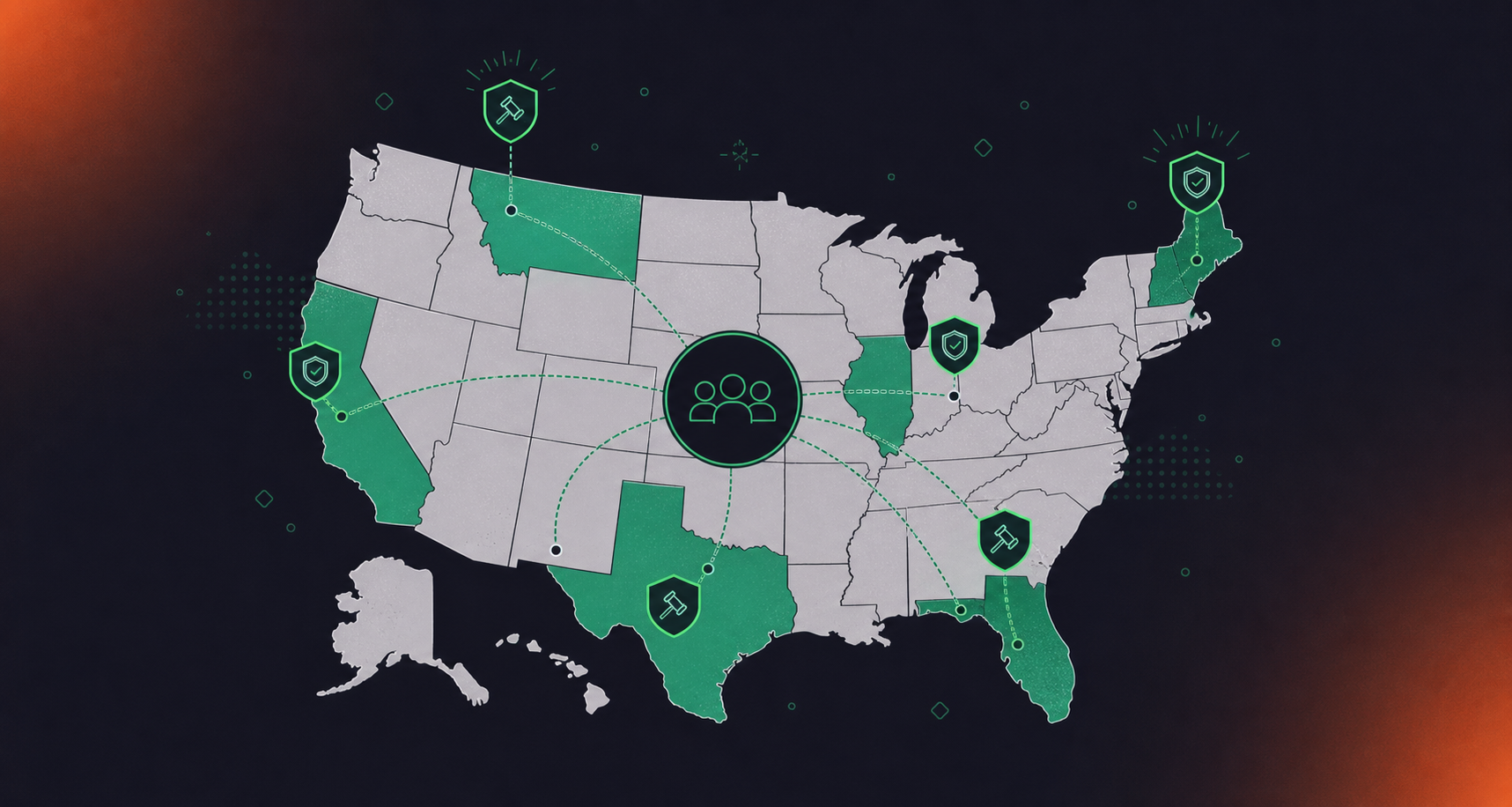
As of [month] 2026, 13 states require all-party consent before a conversation can be recorded, including California, Florida, Illinois, Maryland, Massachusetts, Pennsylvania, and Washington. Penalties go beyond civil fines, since several states treat violations as felonies.
The cross-state problem is where enterprise teams get caught, particularly those using AI tools for remote teams across multiple states. When even one participant dials in from an all-party consent state, strictest applicable law governs the session. A meeting with nine people in Texas and one in Illinois is an Illinois meeting for consent purposes. That asymmetry is why a blanket opt-in policy is the only defensible enterprise default.
How AI Recording Tools Change the Consent Calculus
Deploying an AI meeting assistant does not suspend consent obligations. The same wiretap statutes that apply to a human pressing record apply when a bot joins automatically. The mechanism of capture is legally irrelevant; the absence of notice is not.
AI tools introduce a second exposure layer that human recording never created: biometric data. When a tool builds voiceprints to identify speakers, it may trigger statutes like Illinois’ Biometric Information Privacy Act, a risk covered in depth in any AI transcription tools buyer’s guide, which requires written consent before any biometric identifier is collected. Several states are expanding similar frameworks. A transcript with speaker labels tied to voice patterns can constitute biometric collection under those laws, regardless of whether the vendor calls it that, a factor worth weighing when reviewing best AI transcription software.
Bot visibility is where legal exposure and participant trust meet, a distinction central to enterprise conversation intelligence. A clearly identified bot that participants can see in the meeting room is treated differently than silent background capture, both legally and practically. Visible presence gives participants the opportunity to object, pause, or leave. Covert capture removes that opportunity entirely, which is why regulators treat it more harshly.
Spinach AI is an enterprise conversation intelligence platform deployed company-wide. Its bot is always visible, can be renamed to match your organization’s branding (for example, “Acme Notetaker”), and uses context-based speaker identification instead of voice biometrics. No biometric identifiers are stored. The output is a governed, centralized record of every conversation, routed into your team’s tools when the meeting ends, not a folder of per-user notes.
International Compliance: GDPR and Beyond
Under GDPR, a meeting recording becomes personal data the moment an identifiable person speaks, appears on screen, or is named in a transcript. This applies to any organization processing data about EU or UK residents, regardless of where the company is headquartered.
To record lawfully, organizations must set up one of three bases: legitimate interests (supported by a documented balancing test), contractual necessity, or explicit consent. Explicit consent is often the weakest basis for workplace recordings because regulators question whether employees can genuinely refuse without professional consequence. Fines reach €20 million or 4% of global annual turnover, whichever is higher.
Other jurisdictions add further layers. Germany treats recording without consent as a criminal offense under section 201 of the German Criminal Code. China’s PIPL and Singapore’s PDPA both require explicit, unbundled consent before personal data is collected. Country-specific policy language is a requirement, not a courtesy.
What a Meeting Recording Consent Policy Must Cover
A written policy delivered through an employee handbook and training is the recognized standard for setting employer expectations around recording. The specific provisions that belong in that document are well known.
- Purpose and scope: which meetings are covered, which roles can initiate recording, and which platforms fall under the policy
- Permitted and prohibited activities: explicit prohibition on covert recording in all circumstances
- How consent is obtained: verbal notice at meeting start, calendar invite language, or implied consent by joining a disclosed-recording environment
- What happens when a participant objects: a clear escalation path and the option to pause or remove the bot
- Access and sharing rules: who can retrieve recordings and under what conditions
- Retention periods per data type: transcript, summary, and video may each carry different timelines
- Exceptions: industries under strict oversight add requirements on top of this baseline
Healthcare, financial services, and legal organizations face additional obligations. HIPAA, FINRA, and legal privilege rules each impose specific constraints on how recordings are stored, who can access them, and how long they must be kept. A generic policy that ignores these layers is incomplete for those sectors.
Record-by-Default Policies: How IT Teams Set Them Up
IT teams implementing record-by-default face a foundational choice: capture all eligible meetings unless explicitly excluded, or require organizers to opt recording in per session. The first model produces complete organizational coverage and an auditable record; the second produces gaps, inconsistency, and the shadow IT problem that opt-in was supposed to avoid.
Opt-In vs. Record-by-Default
Approach | Coverage | IT Control | Common Gap |
|---|---|---|---|
Opt-in per meeting | Partial | Low | Organizer forgets; no org record |
Record-by-default | Complete | High | Requires exclusion lists for sensitive meeting types |
Governance Decisions Before Rollout
Before switching on org-wide recording, IT needs to answer four questions:
- Which user groups or departments are in scope for the initial rollout
- How the org-level setting is pushed through the admin console and whether exceptions require a ticket or a calendar flag
- What the default notification text says and whether legal has approved it
- Which meeting types are excluded by policy: executive sessions, HR investigations, legal discussions, board calls, and any conversation type under strict oversight that legal has flagged
Exclusions matter as much as the default. A policy that captures everything without exception creates its own exposure in industries under strict oversight.
Closing the Shadow IT Gap
Without an org-wide policy, employees solve the note-taking problem themselves by deploying a personal AI meeting assistant of their own choosing. The result is a different tool per team, recordings stored in personal accounts, no consistent retention schedule, and no audit trail. When a legal hold arrives, IT has no single place to look.
An org-enforced deployment replaces that sprawl with a single governed platform. Spinach AI is the enterprise conversation intelligence platform organizations deploy once, company-wide, to capture every conversation, centralize it as a governed data asset, and route structured outputs (decisions, action items with named owners, and follow-ups) into the tools that run the business. Org-level admin settings let IT push default sharing scope, bot branding, notification text, and retention rules across the entire account, a capability compared directly in the Spinach AI vs Fathom review, with SCIM provisioning to handle new users automatically.
Managing Consent for External Participants and Cross-Border Meetings
External participants introduce consent requirements that your internal policy alone cannot cover. A client based in Germany, a vendor in Illinois, or a partner joining from Singapore each brings their own jurisdiction into the call, and that jurisdiction travels with them.
The cleanest cross-border rule is also the simplest: apply the strictest standard that applies to any participant on the call. Organizations running frequent international meetings often codify this as a standing policy default, treating all-party consent as the baseline regardless of where the recording host is located. This eliminates the per-meeting jurisdiction analysis that no one realistically performs before a vendor sync.
For external participants who object to being recorded, a documented accommodation process matters more than the recording itself:
- Include recording notice in the calendar invite so participants know before they join, not after they are already on the call.
- Open every recorded session with a verbal announcement that recording is active.
- Rely on bot visibility so participants see a clear, persistent indicator throughout the meeting.
- Offer a documented path to pause recording during sensitive portions or exclude the bot entirely for that session.
The last item is where most internal policies have a gap. Employees learn the opt-out mechanism through onboarding; external participants often do not. Written material sent before the meeting, a clear statement at the call’s start, and a visible bot name all serve the same function: giving external participants a genuine, informed opportunity to object.
Data Retention, Access Controls, and Legal Holds
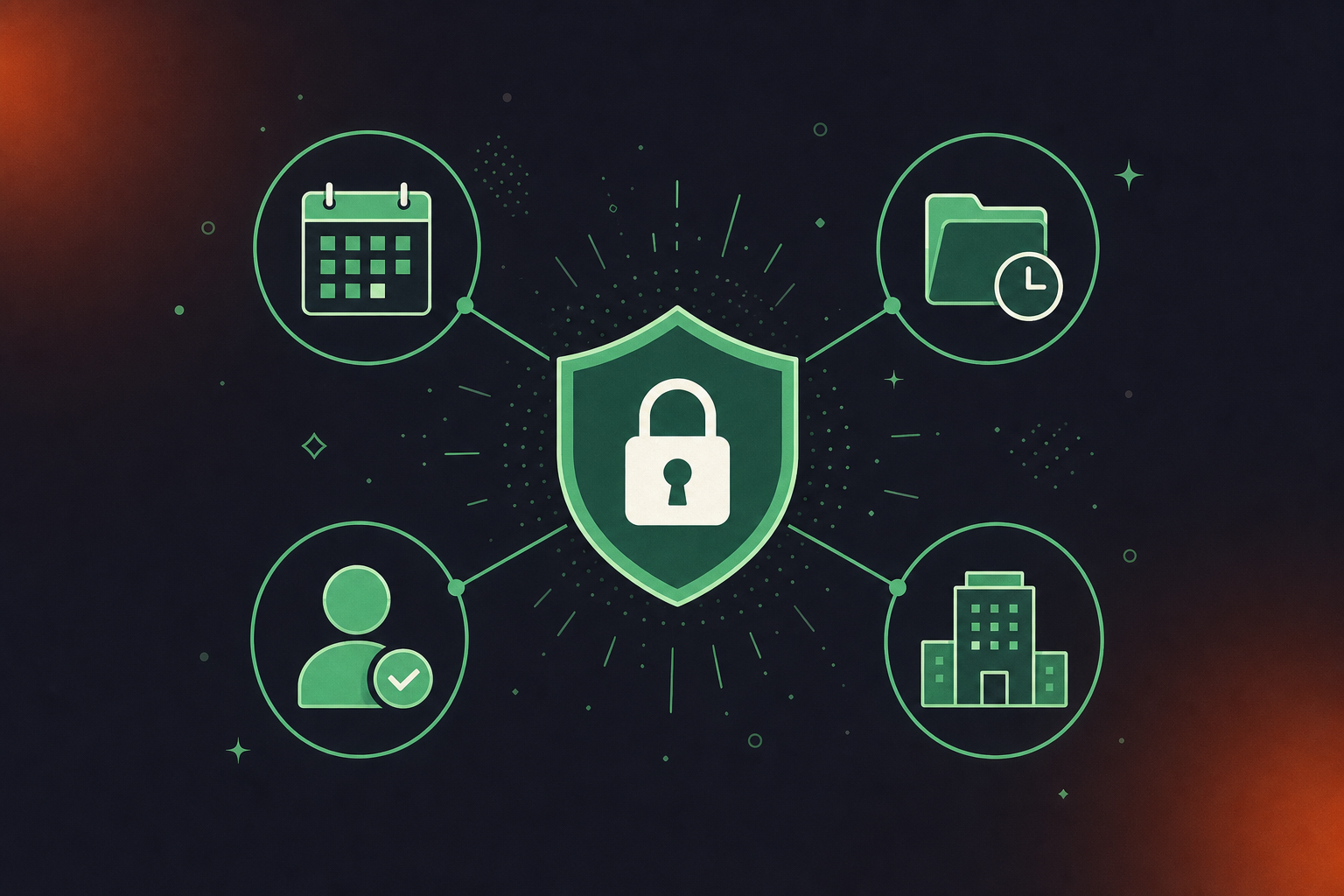
Retention decisions carry as much legal weight as the consent notice itself. A recording stored indefinitely expands the scope of any future litigation discovery request. Delete too early in an industry under strict oversight, and you have a compliance failure on record.
The decisions an enterprise policy must define:
- Retention period by data type: the video file, the transcript, and the AI-generated summary may each warrant a different timeline. A 90-day video retention with a one-year transcript retention is a legitimate and common configuration.
- Who can retrieve recordings and under what conditions, with access logged for audit purposes.
- How the system handles a legal hold when one arrives: automated deletion schedules must be pausable, and that pause must be applied before the scheduled deletion runs, not after.
AI meeting notes and transcripts are discoverable documents. If a matter goes to litigation, those records are subject to preservation obligations under the same standards as email or contracts. A policy that treats video files as the only record worth preserving misses the asset that lawyers will actually request, including structured meeting transcripts that can be queried via an MCP server for meeting transcripts.
Industries under strict oversight face mandatory floors. Financial services firms subject to FINRA rules carry specific minimum retention periods for communications related to customer accounts. Those minimums override whatever deletion schedule the organization would prefer to run. Legal must map the applicable requirements before IT sets retention defaults.
Spinach AI’s Enterprise plan lets organizations configure retention per data type, with transcript, summary, and video each set separately, from one week to indefinite, with granular controls applied at the org level. Business plan retention is a flat one year across all data types.
Employee Rights and the Limits of No-Recording Policies
Enterprise recording policies run into a hard legal limit from an unexpected direction. Under the NLRB’s 2023 Stericycle standard (Stericycle Inc., 372 NLRB No. 113, 2023), a blanket employer prohibition on workplace recording is presumptively unlawful when it could chill employees’ Section 7 rights under the National Labor Relations Act. Employees retain the right to record for the purpose of documenting alleged labor violations, safety concerns, or union organizing activity, and a policy that sweeps those recordings into a general prohibition is vulnerable to an unfair labor practice charge.
Drafting discipline is the practical fix. Employer-initiated AI recording of business meetings and restrictions on employee-initiated recording must be written as separate documents, with the latter including an explicit carve-out for protected concerted activity.
GC Memorandum 25-07 (June 2025) added another constraint: secretly recording collective-bargaining sessions is a per se unfair labor practice, regardless of whether one-party consent applies in the relevant state. HR and labor counsel need to review both documents together before any policy goes final.
Enforcing Recording Consent Policies at the Enterprise Level
The most common blocker in enterprise AI adoption is not summary quality. It is the absence of an internal recording consent policy and a vendor that can enforce it at scale, a gap covered directly in the Spinach AI vs Fireflies comparison.
Spinach AI is an enterprise conversation intelligence platform, the system of record for conversation data, deployed company-wide, with consent enforcement built into its architecture. Where individual note takers produce a different tool per team and uncontrolled sharing, Spinach is the platform an organization deploys once, with enforced policy and a single governed data asset. The bot is always visible, can be renamed to match your organization’s branding (for example, “Acme Notetaker”), and supports custom legal-approved in-meeting notification text so every session opens with a consistent, org-approved notice. Mid-meeting pause, resume, and kick commands are available to any participant. A documented consent notice is in place from the moment the meeting begins. See how this compares to Zoom AI Meeting Notes and its alternatives.
For industries under strict oversight, Enterprise retention is configurable per data type: transcript, summary, and video are each set separately, from one week to indefinite. PII redaction is available at the transcript level. The admin dashboard provides audit logging and usage reporting for compliance monitoring across the organization.
Spinach AI is SOC 2 Type II, GDPR, and HIPAA compliant, with a BAA available for Enterprise and HIPAA engagements. No customer data is used to train AI models. Any setting available to individual users can be enforced at the org level, making it straightforward to apply the strictest consent standard company-wide instead of relying on each employee to configure their own defaults correctly.
Final Thoughts on Recording Consent Policies for Workplace Meetings
Consent requirements across states, countries, and industries do not simplify over time, but your internal policy can still be straightforward if it covers the right ground: purpose, scope, objection handling, retention, and access controls. The trickiest part for most enterprise teams is not drafting the policy. It is making sure every meeting actually follows it. That is where Spinach AI, the enterprise conversation intelligence platform organizations deploy company-wide, does the work your handbook cannot. One governed platform replaces per-user note-taker sprawl, enforces custom notification text and bot branding org-wide, and produces a single auditable record of every conversation. Get started with Spinach AI to see how the admin controls map to your policy requirements.
Start by answering four questions before switching on org-wide recording: which user groups are in scope, how exceptions are pushed through the admin console, what the default notification text says and whether legal has approved it, and which meeting types are excluded by policy. Executive sessions, HR investigations, legal discussions, and board calls typically need explicit carve-outs. Record-by-default without a documented exclusion list creates its own exposure in regulated industries — the exclusions matter as much as the default itself.
When even one participant dials in from an all-party consent state — California, Illinois, Florida, and 10 others as of 2025 — the strictest applicable law governs the entire session. The cleanest cross-border rule is to apply all-party consent as the standing default for every recorded meeting, regardless of where the recording host is located. This eliminates the per-meeting jurisdiction analysis that no one realistically performs before a vendor sync, and it is the only defensible enterprise default for organizations running frequent international meetings.
It depends on how the tool identifies speakers. If a tool builds voiceprints to identify speakers, it may trigger Illinois’ Biometric Information Privacy Act and similar statutes expanding across other states, which require written consent before any biometric identifier is collected. Spinach uses context-based speaker identification, does not use voice biometrics, and does not store biometric identifiers — so a Spinach deployment does not create biometric collection exposure under those frameworks.
A defensible policy covers purpose and scope, permitted and prohibited activities (with an explicit prohibition on covert recording in all circumstances), how consent is obtained, what happens when a participant objects, access and sharing rules, retention periods per data type, and industry-specific exceptions for healthcare, financial services, and legal. A policy that treats video files as the only record worth preserving is incomplete — AI-generated summaries and transcripts are discoverable documents subject to the same litigation preservation obligations as email or contracts.
Otter and Fireflies are built for one person’s meetings — deployed across a company, they produce a different tool per team, recordings stored in personal accounts, no consistent retention schedule, and no audit trail. Spinach is deployed company-wide, with org-level admin settings that push default notification text, bot branding, sharing scope, and retention rules across the entire account, with SCIM provisioning for new users. When a legal hold arrives, there is one governed configuration point to look at, not a sprawl of individual accounts.
One-party consent means the person recording can consent on behalf of themselves — that is the federal floor set by the Electronic Communications Privacy Act. All-party consent requires every participant to agree before recording begins, and 13 states including California, Illinois, and Florida impose that stricter standard, meaning a single participant joining from one of those states makes their law the governing rule for the entire session.
A meeting recording becomes personal data under GDPR the moment an identifiable person speaks, appears on screen, or is named in a transcript — which means any organization processing data about EU or UK residents must establish a lawful basis before recording, regardless of where the company is headquartered. Legitimate interests, contractual necessity, or explicit consent each qualify, but regulators scrutinize whether employees can genuinely refuse consent without professional consequence, making explicit consent the weakest basis for workplace recordings. Fines reach €20 million or 4% of global annual turnover.
Both methods are recognized, and most enterprise policies combine them: include recording notice in the calendar invite so participants know before they join, then open every recorded session with a verbal announcement that recording is active. Using a clearly identified, visible bot throughout the meeting provides a persistent third layer of notice that regulators treat more favorably than silent background capture.
Germany treats recording a conversation without consent as a criminal offense under section 201 of the German Criminal Code — not just a civil matter subject to fines. US all-party consent states impose civil and in some cases felony liability, but Germany’s criminal framing makes country-specific policy language a hard requirement rather than a courtesy for any multinational operating there.
A blanket prohibition is presumptively unlawful under the NLRB’s 2023 Stericycle standard if it could chill employees’ Section 7 rights under the National Labor Relations Act — employees retain the right to record for documenting alleged labor violations, safety concerns, or union organizing activity. Employer-initiated AI recording policies and restrictions on employee-initiated recording must be written as separate documents, with the latter including an explicit carve-out for protected concerted activity.
There is no single correct answer — the right period depends on industry, jurisdiction, and data type. A common enterprise configuration is 90-day video retention paired with one-year transcript retention, since the transcript is the asset lawyers will actually request in litigation. Regulated industries such as financial services face mandatory minimum floors from rules like FINRA requirements for customer-account communications, and those minimums override any shorter deletion schedule the organization would prefer.
Yes — AI-generated summaries and transcripts are discoverable documents subject to the same legal hold and preservation obligations as email or contracts. A policy that treats only video files as records worth preserving misses the structured text assets that opposing counsel will request, and automated deletion schedules must be pausable before a scheduled deletion runs, not after a hold arrives.
Apply the strictest consent standard that applies to any participant on the call, and codify that as your standing policy default rather than performing a per-meeting jurisdiction analysis. Organizations running frequent international meetings treat all-party consent as the baseline regardless of where the recording host is located — this eliminates the gap created when no one realistically checks participant locations before a vendor sync.
A documented accommodation path matters more than the recording itself — the policy must state what happens when a participant objects, offer a clear option to pause or remove the bot for that session, and give external participants the same opt-out information employees receive through onboarding. Relying solely on bot visibility without written material sent before the call and a verbal statement at the call’s start leaves external participants without a genuine, informed opportunity to object.
Executive sessions, HR investigations, legal discussions, board calls, and any regulated conversation type that legal has flagged should be explicitly excluded in the policy document. Regulated industries add further carve-outs — HIPAA, FINRA, and legal privilege rules each impose specific constraints — so legal must map applicable requirements before IT sets org-level defaults. A record-by-default policy without a documented exclusion list creates its own exposure in regulated industries.
What to do now
You made it to the end of this article! Here are some things you can do now:
- You should check out our library of meeting agenda templates for every type of meeting.
- You should try Spinach to see how it can help you run a high performing org.
- If you found this article helpful, please share it with others on Linkedin or X (Twitter)

