Enterprise AI Fails Here Every Time (September 2026)
95% of AI pilots fail. Conversation data is the gap agents can't bridge. Discover what a real enterprise AI foundation requires. September 2026.
 Maintouch
Ninety-five percent of generative AI pilots fail to deliver measurable financial returns, and the reason keeps coming up in the same place. It’s not the model. It’s not the budget. It’s the data the model can actually see, and one category of it that most organizations haven’t solved.
TLDR:
- 95% of generative AI pilots fail to deliver measurable financial returns, per MIT’s 2025 NANDA research.
- The model rarely fails. Only 7% of organizations say their data is fully AI-ready (Cloudera/HBR, 2026).
- Conversation data is the gap: your CRM records decisions, but the reasoning behind them lives nowhere agents can query.
- AI governance and IT security solve different problems: agents don’t browse selectively, so classification must run ahead of access.
- Spinach AI is an enterprise conversation intelligence platform that captures, centralizes, manages, and powers the organization with conversation data from Zoom, Google Meet, Microsoft Teams, Slack Huddles, and Webex, routing structured outputs into CRM, project management, knowledge systems, and agent workflows.
What Enterprise AI Actually Means at Scale
Deploying AI for one person is a productivity experiment. Deploying it across a company is an infrastructure decision, and the gap between those two things is where most enterprise AI initiatives quietly collapse.
At the individual level, the model is the product. At the organizational level, the model is the last problem you need to solve. What matters is whether the AI has access to the right data, whether that data is governed well enough to trust, and whether the outputs route into the systems and workflows that actually run the business. The enterprise knowledge management gap between what AI can access and what organizations actually capture is where most of this breaks down. A writing assistant that helps one employee draft faster is a tool. An AI system that surfaces blockers across twelve teams, updates your CRM after every customer call, and feeds structured context to your agents is an organizational system, and it has to be built like one.
Why Most Enterprise AI Initiatives Stall Before They Scale
MIT’s 2025 NANDA research found that 95% of generative AI pilots fail to deliver measurable financial returns. McKinsey’s State of AI 2026 found that while 44% of organizations are now scaling AI across the enterprise, the majority have yet to reach that stage. These aren’t outlier findings from pessimistic researchers. They describe the dominant outcome.
The bottleneck is structural. A pilot works because someone hand-selects clean data, controls the environment, and measures a narrow outcome. Scaling means extending that to messy, real, org-wide conditions: different teams, different data sources, different compliance requirements, and workflows nobody fully documented. That transition exposes everything the pilot was allowed to ignore.
The Specific Step Where Initiatives Break Down
The model almost never fails. The data feeding it does.
A Cloudera and Harvard Business Review survey of 1,574 enterprise IT leaders found only 7% say data is AI-ready. That means 93% of organizations are pointing AI at data that is incomplete, ungoverned, or structurally inaccessible to any agent trying to use it. The pilot passed because someone cleaned the dataset by hand. Production fails because nobody can do that at scale, indefinitely, across every team.
Research consistently puts the cause upstream of the model: the majority of obstacles come from people and processes, not algorithms or infrastructure. Executives keep replacing the model when the real gap is upstream: what context the AI can access, who owns it, and whether it was ever captured in a form any AI system can read.
Why Structured Data Is Already AI-Ready (and Conversation Data Is Not)
Connect Jira and you have a dataset. Connect Salesforce and you have a dataset. The data exists, it’s machine-readable, and pointing an AI at it is mostly a plumbing problem.
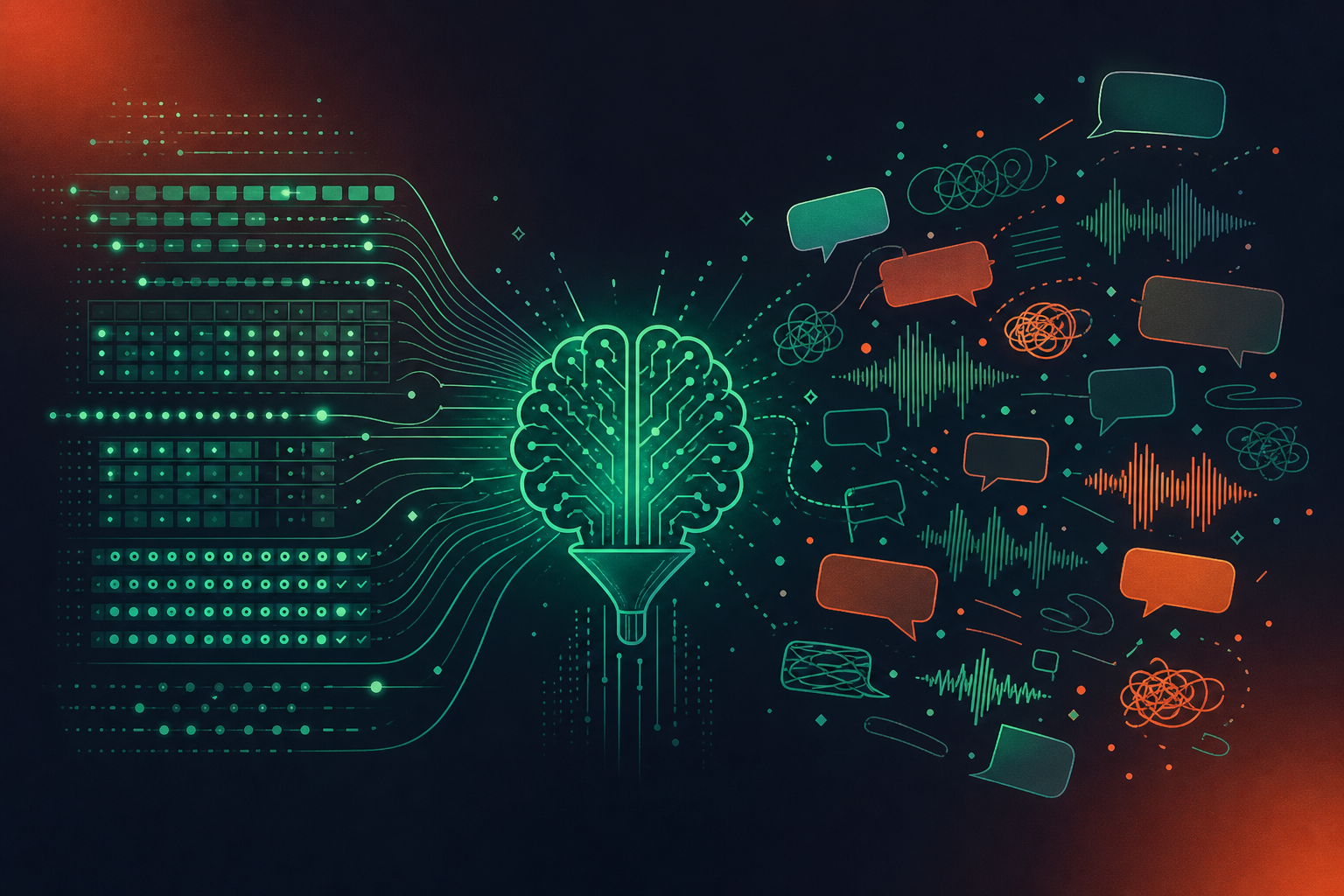
Conversations are different in kind. Your CRM has a record that a deal closed. The meeting where the team decided the pricing strategy, argued over the discount, and named the constraint that almost killed it sits nowhere in your data infrastructure. That context was said out loud, across three video tools, none of which centralize recordings into a corpus any agent can query.
The reasoning behind decisions never gets written down. What gets written is the conclusion: “let’s build the Slack integration.” The meeting where that was decided contains the why, what got rejected, and what the team was worried about. That’s what an AI agent actually needs, and it’s the data category almost every enterprise AI strategy treats as optional.
The Common Shortcuts That Do Not Work
Three patterns show up repeatedly when organizations try to patch the conversation data gap, and all three fail for the same underlying reason: they rely on individual action to produce organizational outcomes.
- Asking employees to manually paste meeting notes into Confluence or Notion. It works for one team for two weeks, then adoption collapses and the gaps accumulate silently.
- Treating native AI from Zoom, Teams, or Google Meet as a conversation data system of record. These tools deliver individual productivity features well, but querying all of your company’s conversation data through them requires either building a centralization layer on their API or asking every employee to share every meeting by hand. Neither scales.
- Letting each department pick its own note-taking tool. The result is a different silo per team, uncontrolled sharing, and no governed corpus any agent can query across the org.
All three are bottom-up solutions to a top-down infrastructure problem.
What a Working Enterprise AI Data Foundation Looks Like
Four requirements separate organizations that scale AI from those that stay stuck in pilots.
- Systematic capture across every channel and modality: not one team’s Zoom recordings, but every conversation, every format, captured by default instead of individual opt-in.
- Centralization into one governed corpus, because per-user note silos are not a data asset. Building an enterprise knowledge base your AI can use means creating a single organizational record that any authorized agent can query.
- A meeting data governance layer with real controls: access rules, consent mechanics, retention policy per data type, and classification that keeps HR conversations out of the general corpus without manual curation.
- Routing into the agents and workflows that actually use it. A corpus that sits inert is an archive. The value is in what it feeds: decisions into project management and CRM systems, structured knowledge into whatever agent is querying it.
The gap most organizations miss is that these four requirements apply to conversation data as much as to structured records, and conversation data is the one input category almost nobody has solved.
How Enterprise AI Governance Differs From IT Security
IT security keeps bad actors out. AI governance controls what your own systems can see.
Missing that distinction is one of the most common reasons an enterprise AI rollout stalls at legal review. Encryption, MFA, and access logs are the right controls for a human trying to read a file. An AI agent with broad corpus access doesn’t browse selectively. It finds everything reachable: the side conversation about a compensation decision nobody thought to exclude, the HR call that wasn’t tagged, the M&A discussion sitting in a shared calendar series. Enterprise meeting recording security and compliance controls must account for this architecture, beyond perimeter threats alone.
Traditional access control was designed assuming a person on the other end who exercises judgment. Agents don’t. What enterprise AI governance actually requires is different in scope:
Dimension | IT Security | AI Governance |
|---|---|---|
Primary goal | Keep bad actors out | Control what your own systems can see |
Assumed actor | Human who exercises judgment about what to open | Agent that finds everything reachable, with no selective browsing |
Core controls | Encryption, MFA, access logs, perimeter threats | Data classification, consent architecture, retention per data type, visibility controls |
Classification timing | Reactive: triggered after a breach or incident | Proactive: must run ahead of agent access |
Retention policy | Single org-wide setting is common | Per data type (transcript, summary, video each follow separate schedules) |
Failure mode | External breach | Agent surfaces HR, compensation, or M&A data that was never excluded from the corpus |
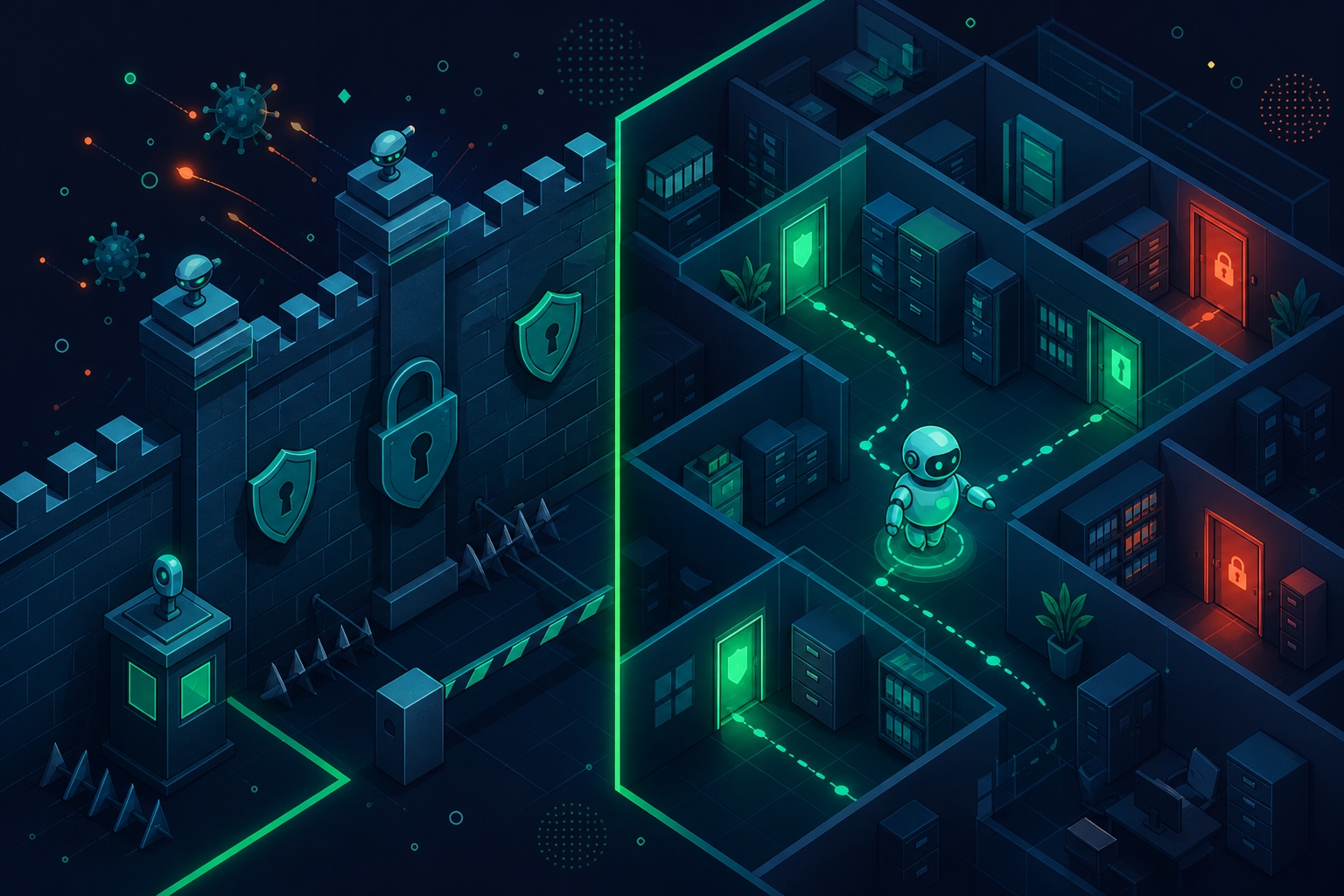
The last point has no grey area. If employees can’t tell whether a meeting is accessible to the company brain, the governance layer has already failed, regardless of how strong the perimeter security is.
Building an Enterprise AI Strategy That Survives Legal and HR Review
Most enterprise AI programs don’t die at the pilot stage. They die in the six months after, when legal and HR finally get the meeting request.
The approval sequence is predictable: recording consent, data classification, retention policy, then HR sign-off on what “record by default” actually means for employees. Getting all four right requires treating them as a single architecture problem, not a checklist.
Recording Consent
A visible, named bot with a legal-approved notification message is the baseline. Setting meeting recording consent policies requires answering the harder question of whose consent governs: the meeting host, the organizer, or every attendee? Organizations that survive legal review pick a position, document it, and build opt-out mechanics that are visible without being so frictionless that the corpus empties.
Data Classification
HR wants one-on-ones, performance reviews, and compensation conversations excluded from any corpus an AI agent can query. Legal wants M&A discussions out. The mechanism that works is a rules-based tagging layer applied before agent access. The two most universally requested tags: is this personal, and is this HR-related? Classification that runs ahead of retrieval is the only version that clears legal review.
Retention Configuration
A single org-wide retention setting satisfies nobody. EU employees may need aggressive deletion, while a compliance team needs indefinite records for specific meeting types. When selecting meeting management software for enterprise, configuring retention per data type, so transcript, summary, and video each follow their own policy, gives legal a defensible answer without forcing a compromise that leaves someone exposed.
Closing the Conversation Data Gap in Enterprise AI
Spinach AI was built for the infrastructure problem that stalls enterprise AI: unstructured, ungoverned conversation data that never reaches the agents and systems that need it.
As an enterprise conversation intelligence platform, Spinach joins meetings across Zoom, Google Meet, Microsoft Teams, Slack Huddles, and Webex and turns them into structured, governed, AI-ready knowledge that powers both people and agents across the organization through four core functions:
- Capture handles systematic, record-by-default collection across every channel and modality, so no conversation falls outside the organizational record.
- Centralize builds one corpus instead of per-user silos, giving agents a consistent data source to query.
- Manage covers the governance layer: classification and flagging against policy rules, configurable retention per data type (transcript, summary, and video each follow separate schedules), and consent mechanics visible to every participant.
- Power routes that corpus into agents and workflows through meeting AI MCP server connectivity, API, webhooks, and native integrations into Jira, Salesforce, and the tools teams already run on.
Sharing rules are enforced at the org level, not set manually per meeting, so the corpus scales without depending on individual opt-in. Spinach is SOC 2 Type II, GDPR, and HIPAA compliant, which means security, legal, and HR review questions have documented answers, not open items.
Spinach powers thousands of organizations including public enterprises. For teams ready to stop patching the conversation blind spot with workarounds that don’t scale, spinach.ai is the starting point.
Final Thoughts on the Data Foundation Behind a Successful Enterprise AI Strategy
The gap between a successful AI pilot and a scaled enterprise AI strategy almost always comes back to data governance, and conversation data is where that gap is widest. Your agents can only work with what they can access, and right now, most of what your teams decide, debate, and agree to in meetings is invisible to them. That’s a solvable problem. Spinach AI gives your organization a governed, AI-ready corpus of conversation data your agents can actually use.
The failure point is almost never the model — it’s the data feeding it. MIT’s 2025 NANDA research found that 95% of generative AI pilots fail to deliver measurable financial returns because pilots are run on hand-cleaned, controlled datasets that don’t reflect real org-wide conditions. When organizations try to scale, they hit incomplete data, ungoverned sources, and workflows nobody fully documented — exactly the conditions the pilot was designed to avoid.
Structured records like Jira and Salesforce are machine-readable by design, so pointing AI at them is a plumbing problem. Conversation data is different: the reasoning behind decisions, what got rejected, and what the team was worried about all live in meetings across Zoom, Teams, and Google Meet — and none of those platforms centralize recordings into a corpus any agent can query. Your CRM records that a deal closed; the meeting where pricing strategy was debated and nearly killed the deal exists nowhere in your data infrastructure.
IT security keeps bad actors out; AI governance controls what your own systems can see — and missing that distinction is one of the most common reasons an enterprise AI rollout stalls at legal review. A human browsing files exercises judgment about what to open; an agent with broad corpus access finds everything reachable, including the compensation discussion nobody thought to exclude and the HR call that wasn’t tagged. What enterprise AI governance actually requires is data classification that runs ahead of agent access, consent architecture that distinguishes personal from confidential, and retention policy configured per data type rather than a single org-wide setting.
Zoom AI Companion and Teams Copilot deliver individual productivity features — notes, action items, summaries — and they do that well. The architectural gap is that neither is an organizational system of record: querying all of your company’s conversation data through them requires either building a centralization layer on their API or asking every employee to share every meeting by hand. Spinach AI is deployed company-wide with policy-based sharing, one governed corpus any authorized agent can query, and configurable retention per data type — transcript, summary, and video each follow separate schedules.
Four requirements separate organizations that scale AI from those that stay stuck in pilots: systematic capture across every channel and modality by default rather than individual opt-in; centralization into one governed corpus rather than per-user silos; a governance layer with real controls covering access, consent, retention per data type, and classification that runs ahead of agent access; and routing into the agents and workflows that actually use the data. The gap most organizations miss is that all four requirements apply to conversation data as much as to structured records — and conversation data is the one input category almost nobody has solved before legal and HR review arrives.
Deploy a record-by-default organizational platform that joins meetings automatically across every channel — Zoom, Google Meet, Teams, Slack Huddles, and Webex — rather than relying on individual opt-in. When capture is systematic and policy-based, the corpus builds itself without depending on any single employee’s habits. That’s the structural difference between an infrastructure fix and a workaround that collapses after two weeks.
Manual documentation relies on individual action to produce an organizational outcome, and adoption always erodes — leaving silent gaps that accumulate invisibly across teams. The corpus that results is incomplete, inconsistently structured, and ungoverned, which means an AI agent querying it gets partial context at best. A governed data foundation requires capture to happen at the infrastructure level, not the individual level.
Treat recording consent, data classification, retention policy, and HR sign-off as a single architecture problem rather than a checklist you hand off sequentially. The specific requirements that clear review are: a visible bot with a legal-approved notification message, rules-based classification that excludes HR and confidential conversations before agent access, and retention configured per data type so transcript, summary, and video each follow separate schedules. Organizations that arrive with documented answers to all four pass review; those that treat them as IT’s problem stall.
Letting each department choose its own tool produces a different silo per team, uncontrolled sharing, shadow IT, and no governed corpus any agent can query across the organization. Standardizing on one company-wide platform with enforced policy is the only architecture that produces a single organizational record — the data asset your AI agents actually need. The per-department approach is a bottom-up solution to a top-down infrastructure problem.
Data classification is the process of tagging conversation data — for example, marking a meeting as HR-related or confidential — so that access rules can be applied before any AI agent queries the corpus. It has to run ahead of agent access because agents don’t exercise judgment the way a person browsing a file does: they retrieve everything reachable. Classification applied after the fact, or only at the perimeter, leaves sensitive conversations — performance reviews, compensation discussions, M&A calls — exposed to any agent with broad corpus access.
A pilot works because someone hand-selects clean data, controls the environment, and measures a narrow outcome — conditions that disappear at scale. Enterprise AI implementation means extending the same system to messy, real, org-wide conditions: different teams, different data sources, different compliance requirements, and workflows nobody fully documented. According to McKinsey’s State of AI 2025, nearly two-thirds of organizations remain stuck in experimentation without scaling, because the transition exposes every gap the pilot was designed to avoid.
The controls that consistently clear HR and legal review are: a rules-based classification layer that automatically excludes personal, HR-related, and legally sensitive conversations from the queryable corpus; configurable retention per data type so transcript, summary, and video follow separate schedules; consent mechanics visible to every meeting participant; and an audit log showing which conversations are in the shared corpus and with whom. Any governance layer that can’t answer those four questions in writing before a review meeting starts will stall the rollout.
Structured data from Jira, Salesforce, and similar systems gives your agents conclusions — that a ticket was closed, that a deal was won. Conversation data gives them the reasoning: what was debated, what got rejected, what constraint nearly killed the project. Agents operating only on structured records are missing the context layer that explains why decisions were made, which is the input required for any workflow that needs to act on intent rather than just outcomes.
Record by default means the platform captures every conversation across the organization automatically, without requiring any individual to remember to start a recording or share a meeting. Opt-in capture produces a corpus full of gaps — meetings that weren’t recorded because someone forgot, or chose not to, or didn’t know the recording would matter later. For an AI agent to query organizational knowledge reliably, the corpus has to be complete, and completeness requires systematic capture at the infrastructure level rather than voluntary participation.
Configure retention per data type rather than applying a single org-wide setting — transcript, summary, and video can each follow a separate schedule depending on the business need. EU employees may require aggressive deletion under GDPR while a compliance team needs indefinite records for regulated meeting types; a flat retention policy forces a compromise that leaves someone exposed. On Spinach’s Enterprise plan, each data type can be set independently from one week to indefinite, giving legal and HR a defensible answer without forcing uniformity across the organization.
What you should do now
Next, here are some things you can do now that you've read this article:
- If communication is a challenge for your team, you should check out our library of meeting agenda templates.
- Learn more about Spinach and how it can help you run a high performing org.
- If you found this article helpful, please share it with others on Linkedin or X (Twitter)

