How to make accountability a core part of your workplace culture
Workplaces with a strong sense of personal ownership and accountability thrive — but how do you get there?
 Hiba Amin
It’s impossible to create a high-performing team when there’s a lack of accountability.
Why?
Put simply, when no one takes ownership of making decisions, addressing issues and solving problems, things don’t get done.
Accountability is when people take responsibility for their own actions. It’s about taking initiative and recognizing not only that individuals have the power to cause problems, but also to fix them. In this article, we’ll dive into what accountability looks like at work, why it’s essential and how to embed it into your culture:
- What does accountability mean in the workplace?
- What happens when there’s a lack of accountability at work?
- How do you show accountability at work?
- 7 steps to make accountability a core part of your culture
- Bonus section: holding coworkers accountable
What does accountability mean in the workplace?
Accountability in the workplace means that all employees are responsible for their actions, behaviors, performance and decisions. It’s also linked to an increase in commitment to work and employee morale, which leads to higher performance.
It’s recognizing that other team members and general company performance depend on the results of your work. When employees are held accountable, they take responsibility for results and don’t assume it’s someone else’s job.
Essentially, it’s the opposite of passing the buck.
The directly responsible individual
The concept of the directly responsible individual (DRI), coined by Apple, is the perfect example of accountability at work. Everything at Apple, big or small, is assigned to someone who’s directly responsible for it.
DRIs are held accountable for the success and failure of the projects they’re assigned to. By explicitly assigning responsibility, there’s less room for passing blame, and more clarity over who’s making decisions.
Ultimately, when team members consistently demonstrate ownership and accountability, trust is formed. This results in less micromanaging and higher performance.
What happens when there’s a lack of accountability at work?
To put it simply: A lack of accountability damages the team.
When people aren’t accountable, one person’s delay becomes the team’s delay. One shortfall snowballs into bigger shortfalls.
When missed deadlines, lack of punctuality, and unfinished work are tolerated, they have the tendency to become the norm. People learn that the real deadline is a week from the published one; that consistently being 10 minutes late for a meeting is okay; that sub-par work is acceptable. Your team suffers, and ultimately your workplace culture suffers too.
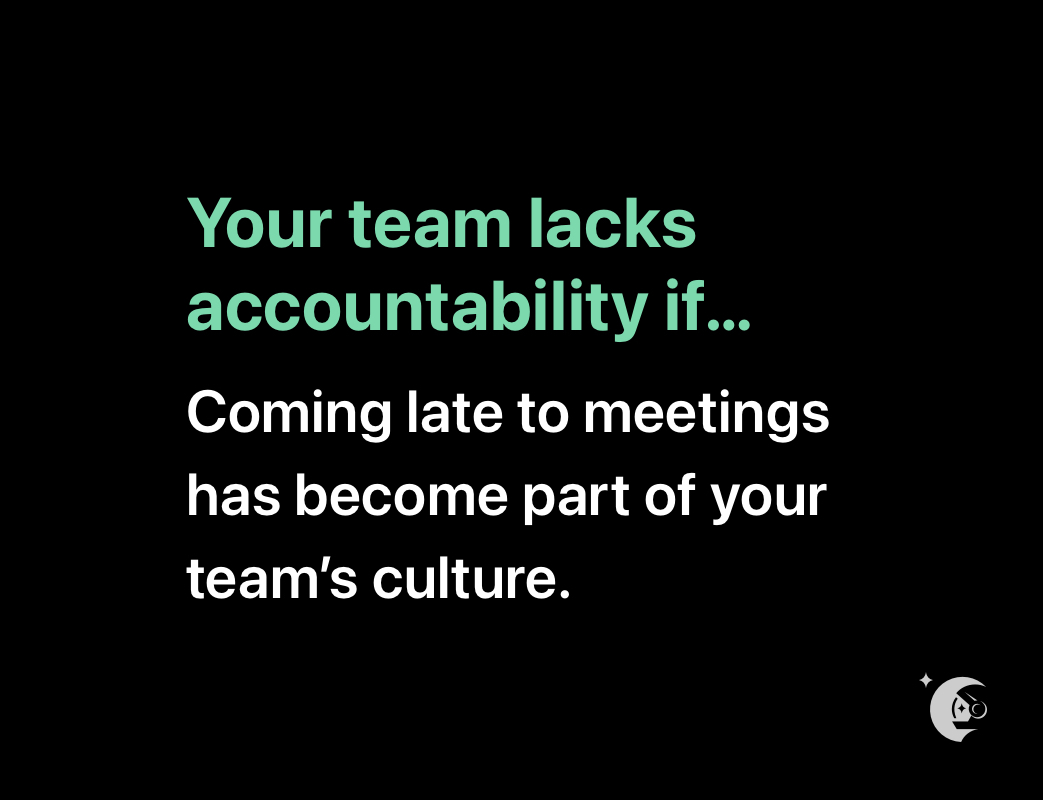
Having a member of the team that isn’t meeting their commitments and isn’t being held accountable causes frustration and disengagement with the rest of the team.
According to Partners In Leadership, a lack of accountability in the workplace leads to:
- Low team morale
- Unclear priorities across the team
- Decreased employee engagement
- Unmet team and individual goals
- Low levels of trust
- High turnover
Yikes! 😳
How do you show accountability at work?
Clearly, there’s a high cost for a lack of accountability. So how do you either avoid or remedy the situation? Before even thinking about how to embed accountability into your workplace culture, you need to look within. Are you demonstrating accountability at work?
Goals and expectations are a good place to start. You can’t be accountable if you don’t know what you should be taking accountability for. Set goals for yourself and your team that are clear and measurable so everyone, including you, knows what you’re trying to achieve.
👉 We’ll tackle setting goals in the next section, but you can skip there now if you want!
Next, you’ll want to address the gap between expectations and performance. Once you understand your goals and expectations, you can bridge the gap between what you’re actually doing and what you’re supposed to be doing. Is there an abyss where things are getting lost because you didn’t realize they fell on your plate?
Lastly, and most importantly, take responsibility for your actions. When you acknowledge you’ve made a mistake, you’re also recognizing you have the power to fix that mistake. And that’s the beauty of accountability.
Examples of demonstrating your own accountability in the workplace:
- Complete tasks that have been assigned to you by the timeline you agreed on.
- Be responsible for the success of your team and make the effort to support your team when needed.
- When you schedule meetings, respect everyone else’s time by showing up prepared and on time (and expect that others do too).
- Take ownership over the problems you flag by coming to the table with solutions too.
- Don’t sweep problems under the rug or assume the issue’s already being dealt with. Instead, flag issues as they arise.
How to make accountability a core part of your culture and a core value of your team
We resist holding others accountable because we’re uncomfortable doing it, we forget to do it or maybe we don’t even know how to go about it. Here’s how to tackle these issues to create a culture of accountability in the workplace.
1. Lead by example and hold yourself accountable first
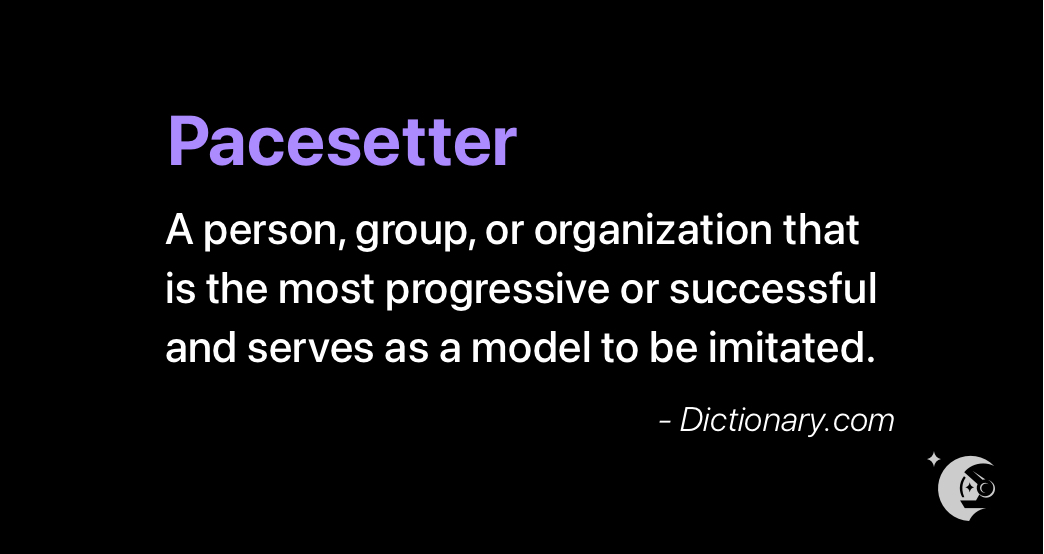
Like we mentioned earlier, as a manager, you’re the pacesetter of tone, performance, and culture for your team. People will follow your lead. If you’re continuously showing up to meetings late, pushing deadlines, and not owning up to your mistakes, the team will follow suit.
2. Set team goals
Setting goals is an essential part of creating a culture of accountability on your team. It helps establish what you’re trying to achieve together.
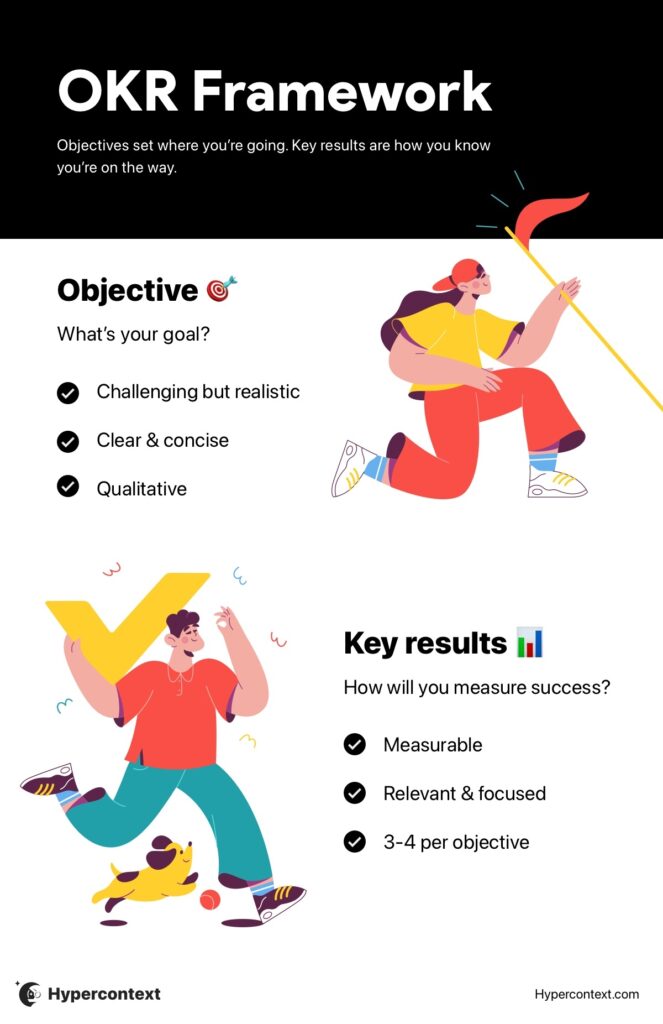
But it’s important to remember not all goals are made equal. To set goals that encourage accountability, they need to be measurable, clear and challenging. Our favorite way to set goals is through the OKR framework (objective and key results). The beauty of OKRs is that they’re not top-down. You create them together as a team and they’re easily trackable. Plus, they should ladder up to larger company goals so everyone know their impact on the bigger picture.
This makes it easier for everyone to understand their roles and what’s expected on both an individual and team level.
3. Work on your feedback skills
Giving tough feedback isn’t easy, but it’s a skill that can be improved. One of the most important things you do as a manager is to provide feedback. When you regularly give feedback (including positive feedback), it makes tough feedback much easier to give. It also reduces the chance of your direct report being surprised by the feedback they’re receiving, leading to further disengagement.
There are a few ingredients that make up effective feedback:
- Ensure psychological safety: It’s essential to give negative feedback in a safe, private space, like your one-on-one meetings. But it’s important to remember psychological safety doesn’t happen over night. Work to create a space with your team members where they feel comfortable being vulnerable and being themselves. If they don’t, it’s going to be a lot harder for them to accept your feedback.
- Assume positive intent: At its heart, effective feedback comes from a place of genuinely wanting to help someone grow. You need to ‘give a damn.’ And vice-versa, assume the issue you’re addressing wasn’t done with mal intent. It comes down to having eachother’s backs.
- Be specific: When you’re too general, you’re not doing your team member any favors. Use a specific example to back up your feedback — that way they’ll have a better understanding of how to improve.
👉 For more resources on how to give constructive feedback well, check out this round-up of constructive feedback examples.
4. Create a culture of two-way feedback
Good feedback isn’t only about the ability to give it, it’s also about being open to receiving it and providing a space to do so. When you don’t foster a culture of two-way feedback, and your team members don’t feel like there’s a safe space to speak up, they start to disengage. Vital Smarts studied nearly 800 professionals and found that:
- 52% hesitate to discuss peer performance problems, like improper shortcuts, poor attention to detail and incomplete work
- 47% say they wait to share concerns or ideas that might improve an element of the business because it encroaches on somebody else’s turf
- 49% take more than a week to speak up when policy decisions are begining to create unintended negative consequences
- 55% are reluctant to discuss when they believe someone (or a group) has made a bad strategic choice
That’s a lot of valuable insights that are being missed, and resources being wasted. It’s important to encourage two-way feedback so your team feels confident identifying and communicating problems.
👉 To help encourage feedback, try making the lettuce pact with your team.
5. Make accountability a habit
Setting up a reminder to give and solicit feedback as part of each meeting agenda will help ensure that feedback flows consistently. We believe one-on-ones and team meetings are great opportunities to build a habit around accountability.
Here are a few of the meeting questions that managers using Spinach AI add to their one-on-one agendas to make accountability a habit:
- Is there anything we should START doing as a team?
- Would you like more or less direction from me on your work?
- Do you feel you’re getting enough feedback on your work? If not, where would you like more feedback?
- Is there an aspect of your job where you would like more help or coaching?
- How could we improve the ways our team works together?
6. Keep track of your commitments and hold each other accountable
If you make a promise to provide more feedback to your direct reports, make sure you add that as a future agenda item to hold yourself accountable. If your employee commits to providing a work back schedule for a project by a certain date, make sure you have a way to check-in on that day.
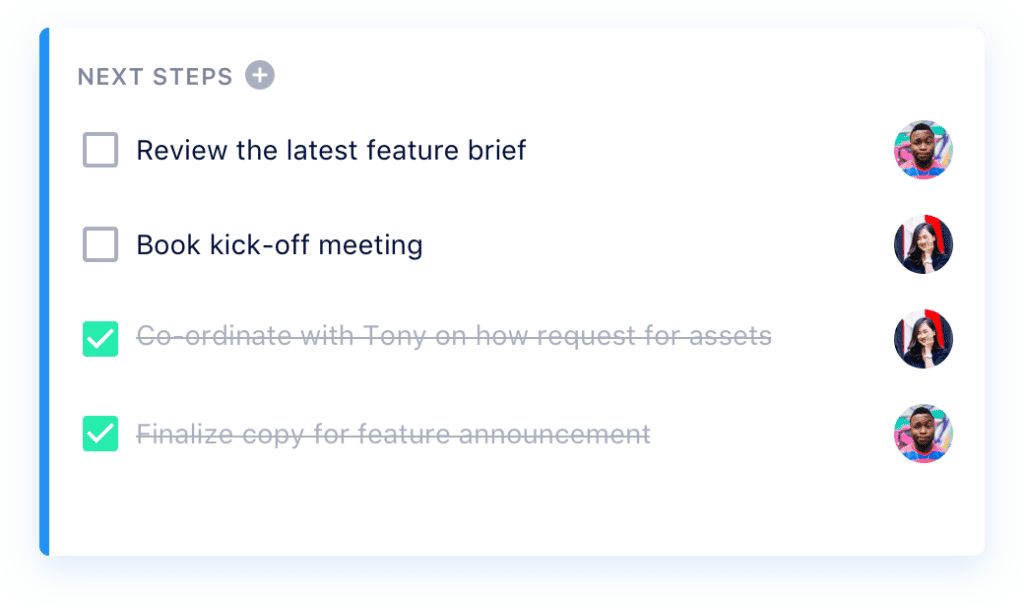
One easy way to foster a culture of accountability – or, if the damage has already been done, address a lack of accountability – is to make sure you’re assigning action items during meetings.
This is a perfect way to hold each and every member of your team accountable for their actions. In Spinach AI, for example, our Next Steps feature allows you to assign action items to team members, complete with deadlines, right in each meeting agenda item. You can’t close the agenda item until all the next steps are complete, so the team has a clear picture of what’s being done – and who needs to be held accountable for tasks that have been missed.
7. Use an accountability framework
A lack of accountability is rarely intentional. Often, it’s a result of other problems — one being unclear roles and responsibilities.
When there’s a lack of clarity around who’s responsible for what, it makes accountability nearly impossible. In fact, a Gallup study found that only 50% of employees strongly indicate that they know what’s expected of them at work.
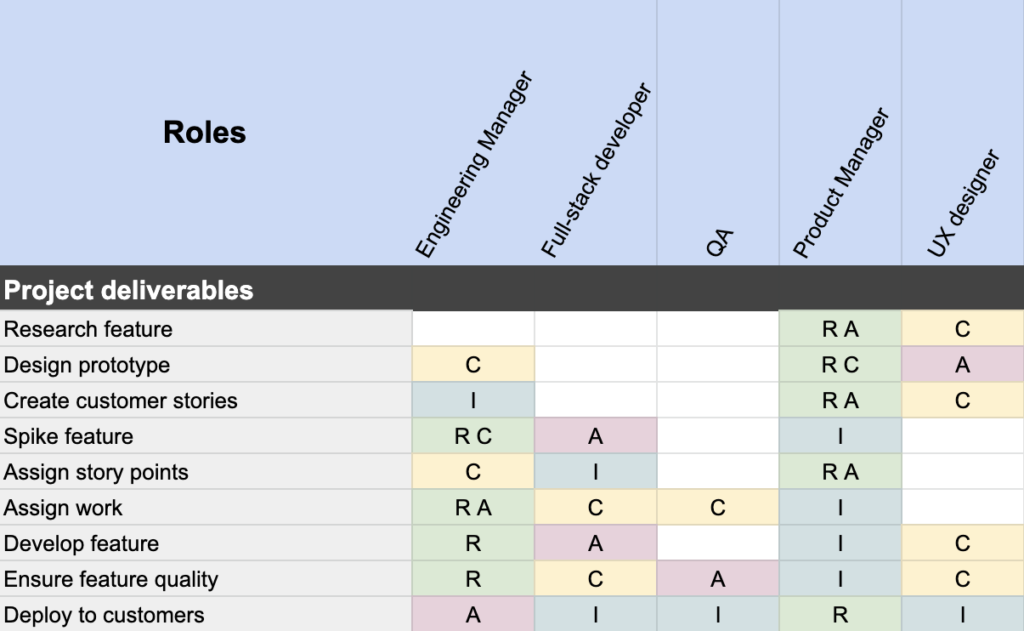
Luckily, accountability frameworks like the RACI matrix can help with this problem. Also known as a RACI chart, this accountability framework ensures everyone involved with a project is assigned a role every step of the way. These roles are broken out into 4 levels of accountability:
- Responsible: Those who are responsible for completing the task at hand.
- Accountable: Those who are ultimately accountable for the completion of the task or deliverable. This individual is also responsible for delegating the work to those who are responsible for completing it.
- Consulted: These individuals are typically the subject-matter experts on the task at hand. They are involved in the specific stage of the project in a consulting and advisory capacity.
- Informed: These are the individuals who are kept up-to-date on progress at each stage of the project. This is usually done in the form of one-way communication.
Here’s an example of what the RACI matrix would look like for an engineering team:
Bonus: holding coworkers accountable
Creating a culture of accountability on your direct team is one story. Holding your peers accountable is another one. How do you hold your coworkers accountable so you can optimize the way you work together across the whole organization?
Contrary to popular belief, holding your coworkers accountable isn’t about pointing fingers or assigning blame. It boils down to supporting one another. Here are some key things to consider to create more accountability with your coworkers:
- 🔍 Be transparent: Be open and honest with your colleagues. Sometimes, we hold our cards close due to tricky work politics, or working in silos. But, being open helps create accountability, both for yourself and your peers.
- 🤝 Support each other: Working in silos is a quick way to foster a lack of accountability for anything that happens beyond your team. But, the reality is that an organization is a puzzle and each team is a piece of the whole picture. You need to work together to achieve your company goals. Even if it might be ‘outside of your job description,’ see where you can support each other. Their problems are your problems too.
- 🗒 Don’t forget about peer-to-peer one-on-ones: One-on-ones are too often reserved for manager/direct report relationships. But peer-to-peer one-on-ones are an important part of building empathy and accountability through the organization. It’s easy to put the blame for a project gone wrong onto another team. But, if you’re connecting with your peers with recurring meetings, you can better understand blockers and limitations and have greater context to decisions being made on their team.
Wrapping up
All in all, fostering a culture of accountability on your team will not only improve employee morale and productivity, but it’ll also give your team the autonomy and sense of ownership they need to truly thrive. If you feel accountability is lacking on your team, it’s time to make some changes!
What you should do now
Next, here are some things you can do now that you've read this article:
- You should check out our features to see how Spinach can help you run effective one-on-ones.
- You should try Spinach to see how it can help you run a high performing org.
- If you found this article helpful, please share it with others on Linkedin or X (Twitter)

