HIPAA-Compliant AI Meeting Tools for Healthcare Teams (August 2026)
See how 8 HIPAA AI meeting tools compare in August 2026 across BAA scope, PHI governance, certifications, and subprocessor controls.
 Maintouch
Picking a HIPAA meeting AI tool sounds straightforward until you realize most compliance claims fall apart under a few basic questions: Does the BAA cover AI-generated summaries or just raw storage? Which tier do you need to actually get a BAA? What happens to PHI after it hits the model provider? These are the questions that matter, and the answers aren’t always in the marketing copy. Here’s how eight tools stack up when you dig in.
TLDR:
- Healthcare data breaches cost $7.42M on average; every AI meeting tool touching PHI requires a signed BAA.
- “HIPAA certified” software does not exist. HHS certifies nothing; a signed BAA covering AI outputs does.
- Many BAAs exclude AI-generated summaries entirely, leaving your most sensitive outputs unprotected.
- 17% of healthcare professionals admit using unauthorized AI tools, creating ungoverned PHI exposure.
- Spinach AI deploys company-wide with SOC 2 Type II, HIPAA compliance, zero LLM data retention, and a BAA on Enterprise engagements.
Why HIPAA Compliance Is a Live Risk for AI Meeting Tools
Healthcare meetings carry real PHI exposure. A care coordination call, a billing review, a telehealth session: each can surface patient names, diagnoses, insurance details, and treatment plans. Feed that audio into a general-purpose AI meeting tool without verifying its compliance posture, and you have a PHI exposure event waiting for a regulator to notice.

The financial stakes are concrete. average healthcare data breach costs $7.42 million (2025), the highest of any industry for 14 consecutive years. And 2025 closed as the worst year on record for large healthcare data breaches, with 772 incidents affecting roughly 138.5 million people, according to the HIPAA Journal.
If a tool processes PHI, it is a business associate under HIPAA. No carve-outs, no gray area.
What the $7.42M Breach Cost Means for AI Meeting Tool Decisions
Hacking and IT-related vulnerabilities drove a large share of those 772 breaches recorded in 2025, making third-party software (including AI meeting tools) a direct and growing part of the threat surface. Every tool that touches PHI during a telehealth session, billing review, or care coordination call is a business associate under HIPAA and must have a signed Business Associate Agreement in place before any patient data moves through it. The $7.42M figure is an average across all healthcare breaches; incidents involving systemic third-party exposure or prolonged unauthorized access routinely exceed it. That number also understates total organizational impact: it excludes regulatory penalties, reputational damage, and the cost of notifying affected patients, all of which compound the financial exposure. For a covered entity reviewing AI meeting tool options, the practical implication is straightforward: the cost of a breach dwarfs the cost of a rigorous vendor assessment. Selecting a tool without confirming its BAA scope, subprocessor chain, and data retention posture is not a minor compliance gap; it is a material financial risk sitting at the boundary of every covered call.
A 2026 industry survey found that 17% of healthcare professionals admit to using unauthorized AI tools, meaning the BAA gap is already widespread. Without a signed BAA, the covered entity carries the liability, regardless of which vendor’s tool caused the exposure.
What Actually Makes an AI Meeting Tool HIPAA Compliant
There is no such thing as HIPAA certification for software. HHS does not endorse or recognize any software certification, so a vendor claiming its product is “HIPAA certified” is describing something that does not exist.
What actually matters comes down to three things:
- A signed BAA that covers the specific features in use, including AI-generated summaries and transcripts
- Technical safeguards: encryption in transit and at rest, audit logging, and access controls
- An unbroken subcontractor chain, meaning the vendor’s own model providers operate under equivalent data-protection terms
That third point is where most tools fail quietly. As one 2026 BAA analysis notes, many tools that say “HIPAA compliant” will sign a BAA, then exclude the AI features from its scope entirely. The transcript is covered; the AI summary is not. Before any PHI touches a tool, confirm exactly which features the BAA covers.
Key Features to Review Before Choosing a HIPAA-Compliant AI Meeting Tool
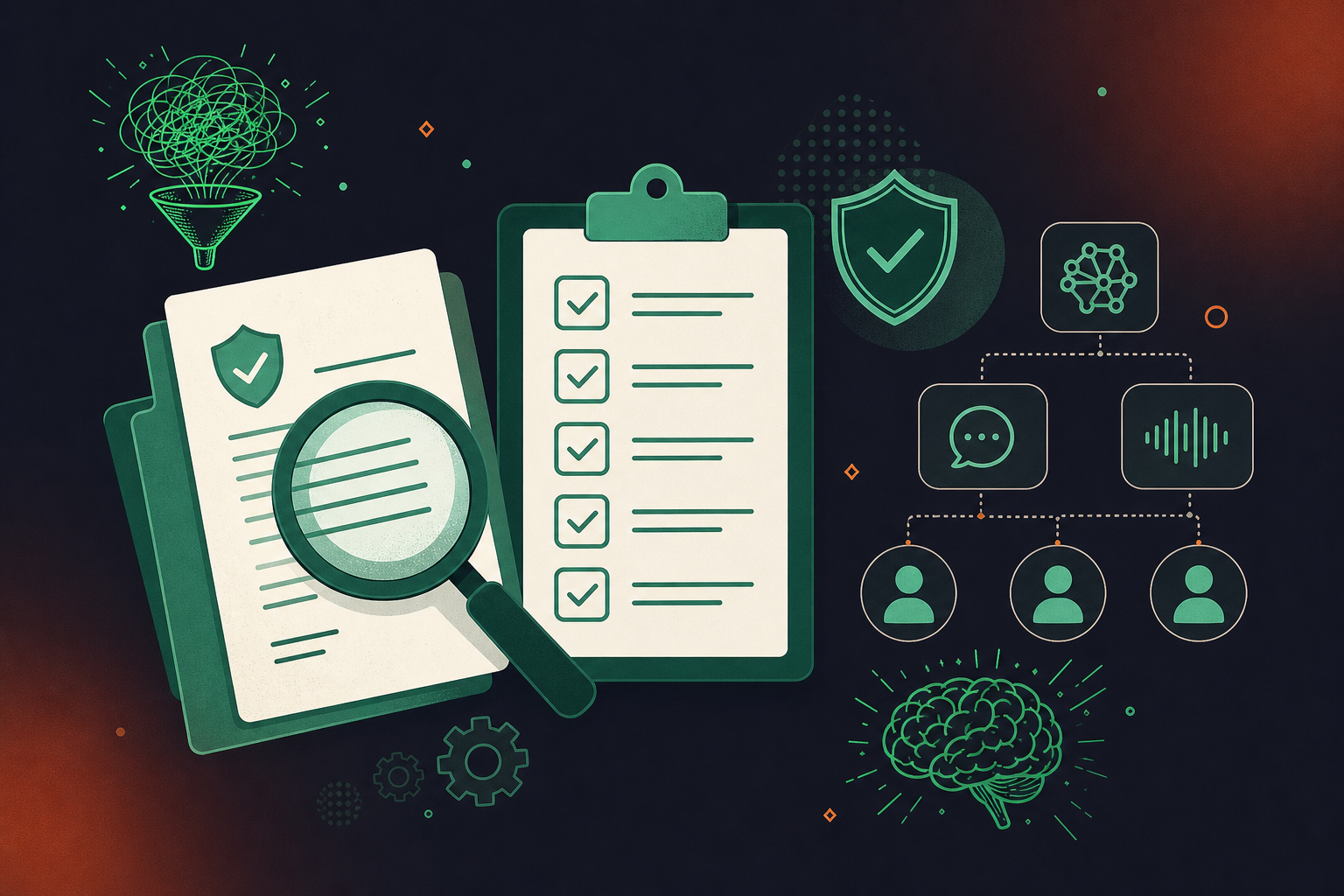
Before signing any BAA, verify what it actually covers. A BAA that protects stored recordings but excludes AI-generated summaries leaves your most sensitive outputs unprotected. Start your evaluation with these five checkpoints:
- BAA scope covers AI-generated outputs, including summaries, beyond raw storage or transcripts
- Subprocessor list is public and subprocessors are contractually barred from training on PHI
- Meeting data governance and retention is configurable per data type: transcript, summary, and video separately
- Audit logging and access controls meet the Security Rule’s technical safeguard requirements
- Meeting recording consent policies are transparent and configurable at the org level
One framing distinction worth keeping in mind: “HIPAA-eligible” means a tool can be configured to meet the standard. “HIPAA-compliant” depends entirely on how your organization deploys and governs it. The vendor’s posture is only half the equation.
annual BAA verification requirement would require business associates to verify, at least annually, that required technical safeguards are actually deployed, shifting the burden from self-attestation toward documented verification. Buyers negotiating BAA terms today should build that annual review expectation into the contract and avoid retrofitting it later.
The Top 8 HIPAA-Compliant AI Meeting Tools (August 2026)
These eight tools were assessed on BAA availability, certification posture, governance controls, and suitability for healthcare and compliance-focused organizations. For a broader comparison, see the best tools for AI meeting notes. Compliance tier restrictions are noted where relevant.
Tool | BAA Available | Certifications | Tier Restriction | AI Summaries Covered |
|---|---|---|---|---|
Spinach AI | Yes | SOC 2 Type II, HIPAA, GDPR | Enterprise | Yes (zero LLM data retention) |
Fellow | Confirm with sales | Enterprise security certifications, SSO | Not publicly specified | Not publicly documented |
Otter.ai | Yes | HIPAA (since July 2025) | Enterprise only | Confirmed for PHI scope |
Fireflies | Yes (must request) | HIPAA healthcare tier | Healthcare tier only | Subprocessors barred from ePHI storage |
Fathom | Not publicly documented | Not publicly documented | N/A | Not publicly documented |
Microsoft Teams / Copilot | Yes (HIPAA-eligible config) | HIPAA-eligible | Disables Copilot AI features | Partial (AI features disabled in HIPAA config) |
Read.ai | Verify directly | SOC 2 | Enterprise | Not publicly documented |
Krisp | Not applicable | Not documented | N/A | N/A (noise cancellation only, not meeting intelligence) |
1. Spinach AI
Spinach AI is an enterprise conversation intelligence system of record for conversation data, deployed company-wide under enforced policy. Where every other tool on this list is provisioned by individual users, Spinach is bought by the organization and deployed across Zoom, Google Meet, Microsoft Teams, Slack Huddles, and Webex in a single rollout. The structured outputs it delivers, such as decisions, action items with named owners, tickets, CRM records, and compliance-flagged summaries, are the product; the transcript is the input.
The compliance posture is foundational: SOC 2 Type II certified, GDPR compliant, and HIPAA compliant, with a BAA available on Enterprise and HIPAA engagements. No customer data trains AI models, and Spinach operates under zero data retention terms with its LLM subprocessors (OpenAI, Anthropic, Google), meaning PHI does not persist with model providers after processing.
The governance infrastructure maps directly onto this post’s evaluation criteria: PII redaction at the transcript level; configurable retention per data type, with transcript, summary, and video each set separately, from one week to indefinite; SAML SSO and SCIM provisioning; compliance agents that classify and flag regulatory and policy risk for human review; admin dashboard with audit logging and usage reporting; and bot consent mechanics configurable at the org level, including custom notification text and waiting-room admission after verbal consent.
For a healthcare organization replacing per-user note-taker sprawl with a single governed system, Spinach is the only entry here architected as an organizational system instead of a personal productivity tool.
2. Fellow
Fellow is a meeting management tool with strong agenda and action-item workflows. It has pursued enterprise security certifications and supports SSO. HIPAA-specific BAA availability should be confirmed directly with their sales team, as public documentation does not specify coverage scope as of August 2026.
3. Otter.ai
Otter announced HIPAA compliance in July 2025 following an independent assessment and signs a BAA covering PHI. BAA access is Enterprise-tier only; Basic, Pro, and Business customers cannot obtain one.
4. Fireflies
Fireflies launched a HIPAA-compliant healthcare tier, but the BAA must be requested explicitly. Default plans are not covered. Fireflies reports signing BAAs with its subprocessors barring training on or storage of ePHI.
5. Fathom
Fathom is well-regarded for transcript quality and ease of use. It targets individual users more than enterprise compliance buyers; the Spinach AI vs Fathom comparison covers that gap in detail. HIPAA BAA availability is not publicly documented as of August 2026.
6. Microsoft Teams Premium / Copilot
Teams offers a HIPAA-eligible configuration, but activating it disables a range of Copilot AI features. The deeper architectural issue: Teams is not an organizational system of record across all your meeting contexts. If your organization runs calls on Zoom or Google Meet alongside Teams, a native Teams solution captures only what happens inside Teams.
7. Read.ai
Read.ai offers enterprise security features including SOC 2 compliance. HIPAA BAA availability should be verified directly; their compliance documentation targets enterprise buyers.
8. Krisp
Krisp is primarily a noise-cancellation and audio-enhancement tool. It processes audio locally in many configurations, which limits PHI exposure, but it is not a meeting intelligence solution in the same category as the others here.
Common Pitfalls When Adopting AI Meeting Tools in Compliance-Sensitive Environments
Five mistakes account for most post-rollout compliance failures in compliance-sensitive environments:
- Using consumer or mid-tier accounts of tools that gate BAA coverage behind Enterprise plans, exposing PHI before the conversation is even over.
- Assuming a signed BAA covers AI-generated summaries when many vendor agreements explicitly exclude them.
- Skipping subprocessor verification, leaving model providers free to retain or train on PHI without your knowledge.
- Leaving data retention at default settings instead of configuring it per data type as your compliance requirements demand.
- Allowing staff to self-provision personal note-taking accounts outside IT review, creating shadow AI exposure with no audit trail, a risk pattern common among Fireflies.ai alternatives deployed without central governance.
That last point is the hardest to detect. The second most common gap is tier mismatch: an organization holds an enterprise BAA, but employees log into free or personal accounts that sit entirely outside it.
Both routes produce ungoverned PHI exposure. A centrally deployed, policy-enforced system removes the individual provisioning decision entirely, closing both gaps at once.
How the Proposed HIPAA Security Rule Update Affects AI Meeting Tool Decisions (2026)
As of July 2026, the proposed HIPAA Security Rule update remains a proposed rule, not final law. The NPRM was published in January 2025, the public comment period closed March 7, 2025, and the OMB’s Unified Agenda now targets July 2027 for final action.
Procurement leaders should treat the proposed requirements as a working checklist today. Current OCR enforcement already trends toward the same standards, and organizations caught underprepared at final adoption will have had two-plus years of lead time.
The changes most relevant to AI meeting tool buyers include:
- Mandatory annual vendor security verification, shifting from self-attestation to documented proof
- Universal encryption of ePHI, with no exceptions for legacy configurations
- MFA across all systems that handle ePHI
- Asset inventory requirements covering all technology that creates, receives, maintains, or transmits ePHI, plus a network map showing how ePHI flows through your systems
That last requirement has direct implications for AI meeting tool selection. Every AI meeting tool that touches a covered call would need to appear in your asset inventory with documented data-flow mapping. Organizations running multiple per-user tools across different teams face a materially harder inventory and verification burden than those running a single centrally governed system.
Spinach AI for Healthcare and Compliance-Bound Organizations
Spinach AI is an enterprise conversation intelligence system of record for conversation data, deployed company-wide under enforced policy. The deployment model is the critical distinction for compliance-bound organizations: individual note-taking tools provision per user, which creates PHI silos, ungoverned sharing, and no organizational record, the pattern documented in the Spinach AI vs MeetGeek comparison. Spinach deploys once across Zoom, Google Meet, Microsoft Teams, Slack Huddles, and Webex, captures conversations across the enterprise, centralizes that data in a single governed asset, and routes structured outputs such as decisions, action items with named owners, tickets, and compliance-flagged summaries into the tools that need them, all under org-level controls from day one.
The compliance posture is covered in full in the tool listing above: SOC 2 Type II, GDPR, HIPAA, zero LLM data retention, and a BAA on Enterprise and HIPAA engagements.
Revecore, a healthcare revenue cycle organization, runs Spinach with a white-labeled bot name and multiparty-consent workflows configured for their environment, handling healthcare-specific requirements without custom development.
Pricing: Starter is free; Pro is $2.90 per meeting hour; Business is $29/user/month monthly or $19/user/month billed annually. Enterprise is custom pricing; contact sales. The BAA is available on Enterprise and HIPAA engagements.
Final Thoughts on AI Meeting Tools and HIPAA Risk
Choosing a compliant tool is only half the job. The other half is deployment: who provisions accounts, which features the BAA covers, how retention is configured, and whether your subprocessor chain is airtight. Get those details locked down before your first covered call runs through any AI tool. Spinach AI handles those requirements at the organizational layer, with one governed system, enforced policy, and a BAA that covers the outputs your team actually uses. Get started with Spinach AI and replace per-user meeting tool sprawl with a single governed system of record.
A HIPAA-compliant AI meeting tool must have a signed Business Associate Agreement that explicitly covers AI-generated outputs — not just raw audio storage or transcripts. The BAA scope is the critical distinction: many tools sign a BAA but exclude summaries and AI-processed outputs from its coverage, leaving your most sensitive data unprotected. Before any PHI touches a tool, confirm the BAA covers every feature in use, verify the subprocessor list is public, and confirm model providers are contractually barred from training on or retaining PHI.
Otter and Fireflies both offer HIPAA tiers, but both require you to explicitly request a BAA and restrict it to their highest plan — and neither is built for company-wide governed deployment across Zoom, Google Meet, Teams, and Webex simultaneously. Spinach is the only option on this list architected as an organizational platform rather than a per-user note taker: one governed system with enforced policy, PII redaction at the transcript level, configurable retention per data type, and compliance agents that classify and flag regulatory risk for human review. For a healthcare organization managing PHI exposure across multiple teams and meeting platforms, that deployment model closes the shadow-IT and tier-mismatch gaps that Otter and Fireflies leave open.
No — Teams Copilot only captures what happens inside Teams, and enabling HIPAA-eligible configuration disables a range of Copilot AI features. If your organization runs calls across multiple platforms, a Teams-native solution leaves those conversations outside your governed record entirely. A cross-platform system deployed once across all your meeting environments avoids that coverage gap.
Request the BAA scope in writing before signing, and ask the vendor to confirm which specific features — transcription, AI-generated summaries, action items, and any downstream integrations — are covered and which are excluded. Check the subprocessor list to confirm that model providers such as OpenAI, Anthropic, or Google operate under zero data retention terms for your data. If the vendor cannot produce a public subprocessor list or confirm their LLM providers are contractually barred from training on PHI, treat the BAA as incomplete regardless of what it says on the cover page.
The proposed rule — published January 2025 and currently targeting a July 2027 final rule date — would require annual documented verification that technical safeguards are actually deployed, rather than self-attestation. For AI meeting tool buyers, this means every transcription service or meeting intelligence tool that touches a covered call would need to appear in your asset inventory with documented data-flow mapping. Organizations running multiple per-user tools across different teams face a materially harder compliance burden than those running a single centrally governed system — so procurement decisions made today will directly affect how much work the 2027 requirement creates.
A BAA is required but not sufficient on its own — HIPAA compliance also requires technical safeguards including encryption in transit and at rest, audit logging, access controls, and a complete subprocessor chain where model providers are contractually barred from retaining or training on PHI. Your organization’s deployment decisions matter too: who provisions accounts, which features are active, and how retention is configured all determine whether the BAA’s coverage is meaningful in practice. Treat the BAA as the legal foundation, not the finish line.
“HIPAA-eligible” means a tool can be configured to meet HIPAA requirements; “HIPAA-compliant” describes whether your specific deployment actually meets them. A vendor can offer all the right controls and still leave your organization exposed if accounts are self-provisioned outside IT review, retention is left at defaults, or the BAA excludes AI-generated summaries. The vendor’s posture is only half the equation — your configuration and governance practices complete it.
The BAA is available on Enterprise engagements only — it is not included on Starter, Pro, or standard Business plans. Enterprise pricing is custom; contact Spinach sales to scope a HIPAA engagement. Do not assume mid-tier plans carry BAA coverage, as deploying PHI through a non-Enterprise account creates ungoverned exposure regardless of the vendor’s overall compliance posture.
A centrally deployed system closes two gaps that per-user tools leave open: shadow IT exposure from staff self-provisioning personal accounts outside IT review, and tier mismatch where individuals log into free or lower-tier accounts that sit entirely outside the organization’s BAA. One governed system deployed company-wide with enforced policy means the provisioning decision is removed from individual employees entirely, and every covered call runs through the same auditable, BAA-covered environment.
Spinach operates under zero data retention terms with its LLM subprocessors — OpenAI, Anthropic, and Google — meaning PHI does not persist with model providers after processing. No customer data is used to train AI models, with no exceptions. Before selecting any HIPAA meeting AI tool, confirm that the vendor’s subprocessor agreements include contractual bars on training and retention, not just a general privacy policy reference.
Shadow AI risk in healthcare refers to staff using unauthorized AI tools — personal accounts, consumer-tier plans, or unapproved apps — outside IT and compliance review. A 2026 industry survey found 17% of healthcare professionals admit to using unauthorized AI tools, meaning PHI regularly moves through systems with no BAA, no audit trail, and no configurable retention. Centrally deploying a single governed HIPAA-compliant note taker with org-level provisioning removes the individual decision point that creates this exposure.
Spinach AI’s Enterprise plan supports configurable retention per data type — transcript, summary, and video can each be set separately, from one week to indefinite. This matters for regulated healthcare environments where different data types carry different retention obligations: some buyers need aggressive deletion for certain employee groups while preserving structured summaries for compliance review. Flat retention policies that treat all meeting data the same are often a poor fit for healthcare compliance requirements.
At minimum, request the vendor’s signed BAA scope in writing, their public subprocessor list with confirmation that LLM providers operate under zero data retention terms, evidence of SOC 2 Type II certification, documentation of encryption in transit and at rest, and audit logging capabilities. The proposed HIPAA Security Rule update — currently targeting a July 2027 final rule date — would require annual documented verification of technical safeguards, so building that review cadence into the initial contract terms is worth doing now rather than retrofitting it later.
Spinach’s bot is always visible and never covert — it can be renamed and rebranded with custom in-meeting notification text approved by your legal team, admitted from the Zoom waiting room only after verbal consent is given, and paused, resumed, or removed mid-meeting via direct commands. These controls are configurable at the org level, not left to individual users. Revecore, a healthcare revenue cycle organization, runs Spinach with a white-labeled bot name and multiparty-consent workflows configured for their environment.
The proposed rule would require a documented inventory of all technology that creates, receives, maintains, or transmits ePHI, plus a network map showing how ePHI flows through your systems. Organizations running multiple per-user AI meeting tools across different teams face a materially harder inventory and verification burden than those running a single centrally governed system — each separate tool becomes a line item requiring documented data-flow mapping, subprocessor verification, and annual review. Selecting one HIPAA-compliant meeting AI tool deployed company-wide reduces that burden to a single vendor relationship.
What you should do next
Next, here are some things you can do now that you've read this article:
- If communication is a challenge for your team, you should check out our library of meeting agenda templates.
- You should try Spinach to see how it can help you run a high performing org.
- If you found this article helpful, please share it with others on Linkedin or X (Twitter)

