European Enterprise GDPR Meeting Tool Compliance Guide (August 2026)
Learn how to meet GDPR requirements for AI meeting tools in August 2026. Covers DPA terms, lawful bases, sub-processors, and retention controls for enterprise
 Maintouch
Most European enterprise teams adopting AI meeting tools get the basics right and miss the details that actually matter to regulators. Things like whether your vendor’s Data Processing Agreement actually covers all the data flows, or whether consent is even a valid lawful basis for recording employee meetings. The specifics are what this guide is for.
TLDR:
- Meeting transcripts qualify as personal data under GDPR; voice recordings and behavioral inferences draw the strictest scrutiny from EU authorities.
- Your lawful basis for recording must be documented before the meeting starts; employee consent is frequently invalid due to power imbalance.
- A compliant vendor DPA must cover sub-processors, transfer mechanisms, per-record deletion, and data return at contract end.
- Shadow IT creates an audit gap: if employees use ungoverned tools, locating all records for a deletion request becomes impossible.
- Spinach AI is an enterprise conversation intelligence platform, deployed company-wide instead of per user, that joins Zoom, Meet, Teams, Slack Huddles, and Webex meetings with a visible bot, configurable retention per data type, and zero data retention at the LLM provider level.
Why Meeting Data Qualifies as Personal Data Under GDPR
Under GDPR, personal data means any information that can identify a living individual, directly or indirectly. Meeting recordings, transcripts, and AI-generated summaries routinely contain names, voices, job titles, and opinions, all of which qualify.
The regulation’s reach extends further than most teams expect. A transcript capturing someone’s health concern raised during a one-on-one or remote standup, or political views shared in a leadership call, touches special category data under Article 9, which carries stricter handling requirements than standard personal data.
For AI meeting tools in particular, three data types draw the most scrutiny from European data protection authorities: voice recordings (biometric-adjacent), verbatim transcripts, and behavioral inferences drawn from meeting patterns. For teams adopting automated meeting minutes, understanding these data categories is the first compliance step.
The Lawful Bases for Recording Meetings Under GDPR
GDPR does not prohibit recording meetings. It requires a documented lawful basis under Article 6, chosen before the recording begins, not retrofitted after the fact.
Three bases apply most often to enterprise teams:
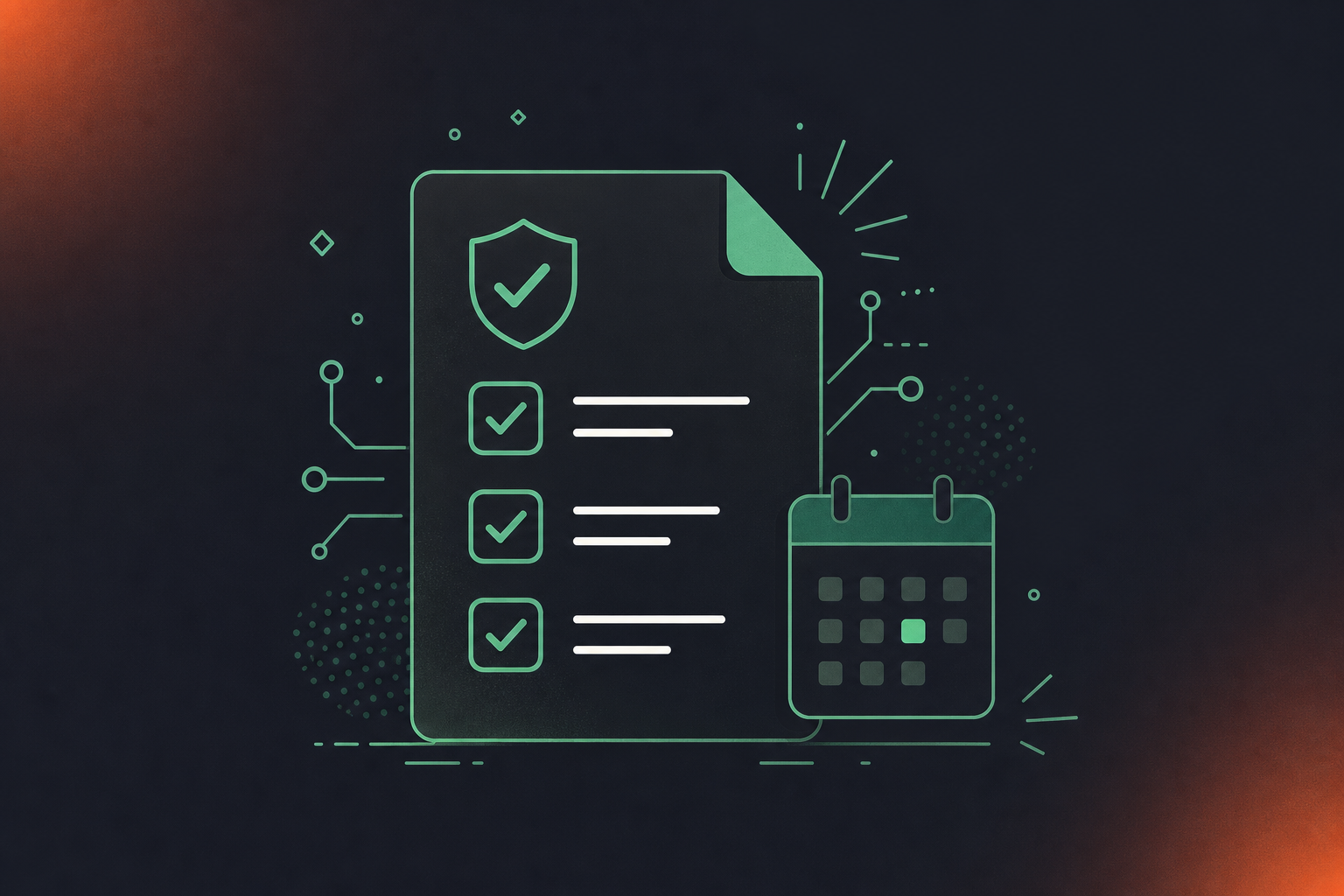
- Legitimate interest: the typical default for internal business meetings. This requires a documented balancing test showing your business need outweighs participant privacy rights, and that documentation needs to exist before anyone joins the call.
- Contractual necessity: applies when recording is required to perform a participant’s contract, not simply useful for managing one.
- Consent: appropriate when recording is optional and participants can decline without any professional consequence.
The employer-employee context is where teams most commonly get this wrong. Consent is frequently invalid in that relationship because the inherent power imbalance prevents employees from refusing freely. The EDPB Guidelines 05/2020 on consent confirm this explicitly, and European data protection authorities have acted on it in enforcement decisions. Legitimate interest or a specific legal obligation is the more defensible basis for recording employee meetings. Whatever you choose, document it first. Organizations deploying an enterprise conversation intelligence platform at scale need this documentation in place before any recording begins.
The Article 28 Requirement: What a Compliant Vendor DPA Must Cover
Under GDPR Article 28, any vendor that processes personal data on your behalf must sign a Data Processing Agreement. For AI meeting tools, that means the vendor is a data processor and your organization is the controller, and the DPA has to cover specific ground to be legally valid.
A compliant DPA must specify:
- The subject matter, duration, nature, and purpose of the processing, along with the types of personal data involved and the categories of data subjects (employees, clients, meeting participants).
- That the processor only acts on documented instructions from the controller and won’t process data for its own purposes.
- Subprocessor disclosure and approval requirements, including advance notice of any changes to the subprocessor list.
- Technical and organizational security measures under Article 32, covering encryption, access controls, and incident response.
- Data subject rights assistance, so the vendor can support your team when employees or participants submit access or deletion requests.
- Deletion or return of data at contract end, with written confirmation that copies have been destroyed.
Missing any of these elements puts the agreement out of compliance, regardless of how the vendor markets its GDPR posture. Reviewing the best tools for AI meeting notes against these criteria narrows the field quickly. Before signing, verify the DPA is a standalone document or a formally attached addendum, not buried in a terms-of-service page where obligations are harder to audit.
Recording Consent and Participant Notification
Recording consent rules vary by jurisdiction, and GDPR adds a layer that many AI meeting tools handle inconsistently. Under GDPR, recording a meeting where participants are EU data subjects requires a lawful basis, transparent notice, and in many cases explicit consent before the recording begins.
Spinach AI, an enterprise conversation intelligence platform deployed company-wide, handles this through a visible bot that joins the call, never covert capture. Organizations can set org-level bot naming and branding, configure custom legal-approved in-meeting notification text, and use pause, resume, or kick commands mid-meeting. The bot waits in the waiting room until admitted, which itself serves as a consent checkpoint.
For multiparty-consent jurisdictions within the EU, that admission step carries legal weight, not merely procedural significance.
Data Residency and Cross-Border Transfer Safeguards
Under GDPR, where data is stored and how it moves across borders matters as much as what is collected. European enterprise teams need to confirm that any AI meeting tool they adopt keeps conversation data within approved boundaries and transfers it only under valid legal mechanisms.
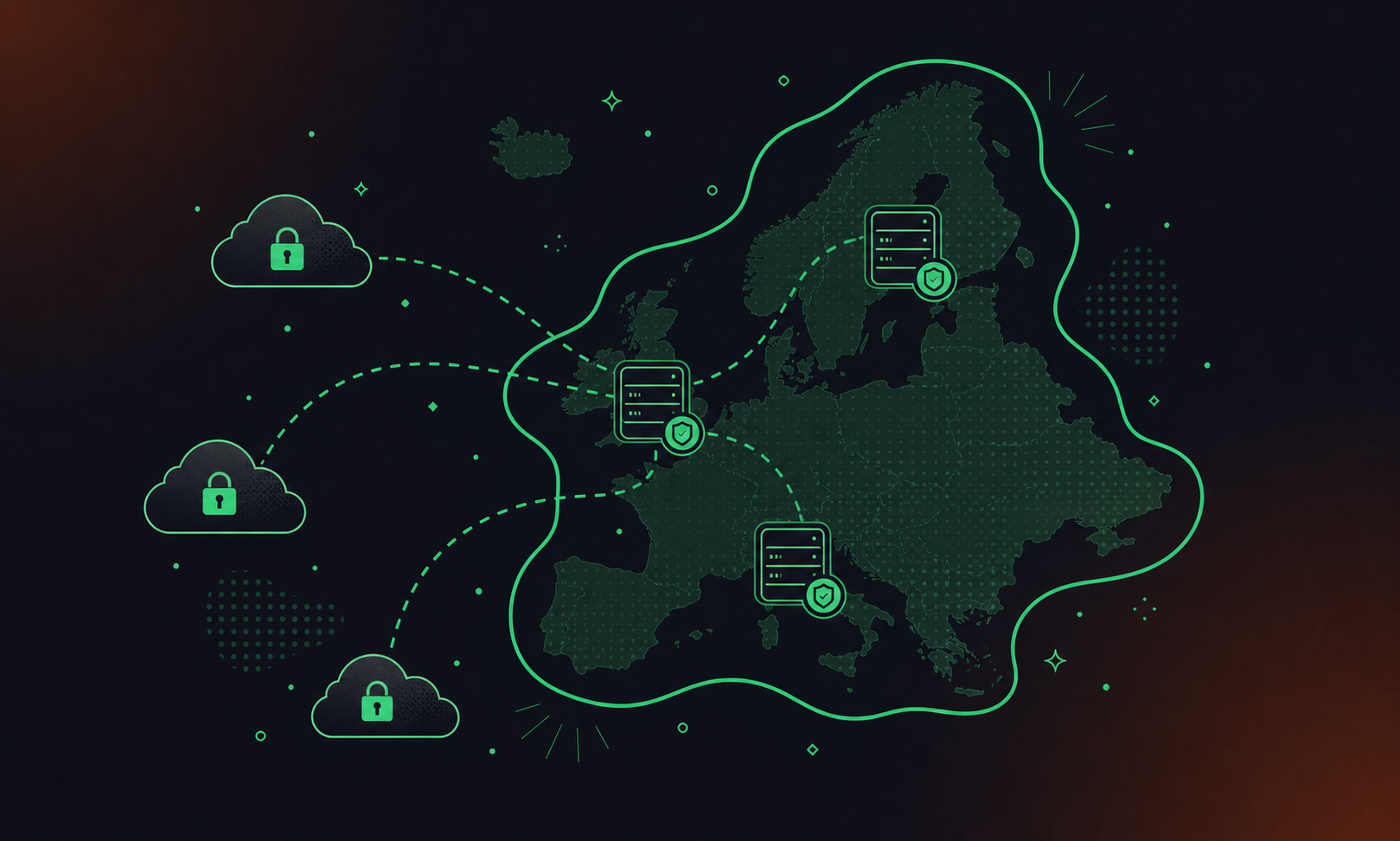
The two primary transfer mechanisms are Standard Contractual Clauses and adequacy decisions. SCCs are the more common path for US-based vendors, and any compliant tool should offer a signed Data Processing Agreement that specifies which SCCs apply and to which data flows.
For AI transcription tools, the relevant data flows include raw audio or video, transcripts, summaries, and any data routed to LLM providers for processing. Each hop requires a legal basis, and vendors that sub-process data through third-party AI models must disclose those sub-processors and cover them under the same transfer mechanisms.
Spinach AI is an enterprise conversation intelligence platform, the system of record for conversation data across Zoom, Google Meet, Microsoft Teams, Slack Huddles, and Webex. It is hosted on AWS and processed under GDPR-compliant terms, with zero data retention at the LLM provider level. Sub-processors are disclosed, and a Data Processing Agreement is available. Retention is configurable per data type, with transcript, summary, and video each set separately, from one week to indefinite on Enterprise plans, and flat one-year on Business plans.
When reviewing any vendor, ask for their sub-processor list, confirm each sub-processor’s transfer mechanism, and verify that the DPA covers all data types your meetings generate.
Retention Policies, Data Minimization, and the Right to Be Forgotten
Three GDPR articles hit AI meeting tools harder than any other: Article 5’s data minimization requirement, Article 17’s right to erasure, and Article 13’s transparency obligations around automated processing.
Data minimization means your meeting tool should capture only what’s necessary for a defined purpose. For AI note-taking, that typically means transcripts and summaries tied to specific business outcomes, not indefinite bulk recordings stored on the vendor’s servers.
The right to be forgotten creates a practical headache: if a participant requests erasure, your tool needs per-record deletion capability beyond account-level offboarding. Retention must be configurable by data type and tied to documented retention schedules.
Spinach AI handles this with configurable retention per data type (transcript, summary, and video) from one week to indefinite on Enterprise, and a flat one-year retention on Business plans.
Security Requirements Under GDPR Article 32
Article 32 requires “appropriate technical and organizational measures” to protect personal data, and the bar scales with risk. For enterprise deployments processing high volumes of sensitive conversations, GDPR meeting recording requirements set a materially higher threshold than a small team’s weekly all-hands.
Controls to verify during procurement:
- Encryption in transit and at rest for all recorded audio, video, and transcripts
- Access controls limiting who can view recordings and transcripts
- Audit logging capturing who accessed data and when
- MFA for administrative access
- Documented, verifiable data erasure processes
Meeting transcripts carry compounded PII exposure. A single call may contain payment card numbers, national IDs, or health disclosures: health disclosures trigger Article 9 special-category rules, and payment data may trigger PCI-DSS obligations alongside GDPR. Vague security language in a vendor’s documentation does not satisfy that standard.
The Shadow IT Risk: Ungoverned Meeting Tools Across the Enterprise
When employees choose their own AI meeting tools (comparing options like Spinach AI vs Fireflies.ai without IT sign-off), the organization ends up with fragmented data spread across personal accounts, inconsistent consent practices, and no audit trail. Under GDPR, that fragmentation is a liability: if a data subject submits an access or erasure request, your team needs to locate every record across every tool. With shadow IT, that’s often impossible.
The fix isn’t banning tools. It’s deploying one governed solution that meets GDPR requirements by default (a key distinction in comparisons like Spinach AI vs Fathom), so employees have no reason to reach for something ungoverned.
A GDPR Vendor Evaluation Checklist for Enterprise Procurement
When assessing AI meeting tools for GDPR compliance, procurement teams need a structured set of criteria before signing any contract. The questions below map directly to the obligations your DPO and legal team will raise.
Data Processing Agreements
Confirm the vendor offers a signed DPA that covers Article 28 requirements, names all sub-processors, and specifies data transfer mechanisms for any processing outside the EEA.
Storage and Retention Controls
- Transcript, summary, and recording retention should be configurable per data type, not set as a single blanket policy across all content.
- Verify whether retention rules can be enforced at the organizational level by an admin, or whether individual users control their own data. (On Business plans, retention is fixed at one year; per-type configurability is an Enterprise feature.)
Consent and Disclosure Mechanisms
- The recording bot must be visible to all participants. Confirm the vendor does not offer covert capture as a feature, which is a key differentiator when reviewing Otter.ai alternatives for accurate meeting notes.
- Check whether in-meeting notification text is customizable to meet your legal team’s approved disclosure language.
Data Residency and Sub-Processor Transparency
Vendors should publish a current sub-processor list and notify customers before adding new processors. If EEA data residency is a hard requirement, confirm whether the vendor supports it contractually, not solely in marketing copy.
Access Controls and Audit Logging
Confirm that admin-level audit logs are exportable on request and that access to meeting data can be scoped by role, team, or meeting type, criteria that matter when reviewing Otter.ai alternatives for your team, across the organization.
Evaluation Criterion | What to Verify |
|---|---|
DPA availability | Signed DPA with Article 28 clauses and sub-processor list |
Retention configurability | Per data type, admin-enforced, not user-controlled |
Consent disclosure | Visible bot, customizable notification text |
Data residency | Contractual EEA residency or approved transfer mechanism |
Audit logging | Exportable logs, role-scoped access controls |
GDPR Compliance Controls for Enterprise Meeting Data
Spinach AI is an enterprise conversation intelligence platform, the system of record for conversation data, deployed company-wide across Zoom, Google Meet, Microsoft Teams, Slack Huddles, and Webex. It captures conversations and turns them into governed, structured data under a SOC 2 Type II, GDPR, and HIPAA-compliant framework, hosted on AWS. Retention is configurable per data type, with transcript, summary, and video each set separately, from one week to indefinite on Enterprise plans, and flat one-year on Business plans.
The bot is always visible, never covert. Org-level bot renaming, custom in-meeting notification text, and pause/resume controls give your legal team the consent documentation they need under GDPR’s transparency requirements.
PII redaction operates at the transcript level, and Spinach does not use customer data to train AI models, with zero data retention passed to LLM providers.
Final Thoughts on GDPR Requirements for AI Meeting Recording Tools
Most GDPR gaps with AI meeting tools come from skipping the basics: no documented lawful basis, a DPA that buries the sub-processor list, or retention settings that nobody actually configured. Your DPO will find those gaps eventually, so it’s worth closing them before a data subject request does it for you. Spinach AI is built with those requirements in mind, with a visible bot, per-data-type retention controls, and a DPA ready for Enterprise engagements.
Under GDPR, personal data covers any information that can identify a living individual, which means meeting recordings, transcripts, and AI-generated summaries all qualify by default. Names, voices, job titles, and expressed opinions in a transcript are personal data; health concerns or political views raised in a call touch special category data under Article 9, which carries stricter handling requirements. If your tool captures voice audio, verbatim transcripts, or behavioral patterns from meeting activity, each of those data types requires a documented lawful basis, retention controls, and a compliant DPA with your vendor.
Spinach AI is the enterprise conversation intelligence system European procurement teams are looking for: deployed company-wide instead of as per-user accounts with inconsistent settings, with a signed Data Processing Agreement covering sub-processor disclosure, configurable retention per data type (transcript, summary, and video each set separately) from one week to indefinite on Enterprise plans, and zero data retention at the LLM provider level. The bot is always visible, never covert, with org-level branding and customizable legal-approved in-meeting notification text. Where individual AI note-takers (Otter, Fireflies, and similar tools) produce a different per-user tool across every team, with no organizational audit trail, no admin-enforced retention, and no single governed record, Spinach is the system an organization deploys once, company-wide, with enforced policy and a single governed data asset.
Otter and Fireflies are individual note-takers built for one person’s meetings. Deployed across a company, they produce a different tool per team, per-user retention settings no admin can enforce, and no organizational audit trail when a data subject submits an access or erasure request. Spinach AI is the system an organization deploys once, company-wide: admin-enforced retention rules per data type, org-level bot settings, and a single governed data asset, the architecture that makes a GDPR compliance audit tractable instead of impossible.
A compliant DPA must specify the subject matter, duration, nature, and purpose of processing; name all sub-processors and their transfer mechanisms; confirm the processor acts only on your documented instructions; cover data subject rights assistance; and require deletion or return of data at contract end with written confirmation. Check that the DPA is a standalone document or a formally attached addendum, because obligations buried in a terms-of-service page are harder to audit and harder to enforce. If the vendor’s sub-processor list is not current and publicly available, treat that as a gap before signing.
Consent is generally not a defensible lawful basis for recording employee meetings under GDPR, because the power imbalance in the employer-employee relationship means employees cannot refuse freely. European data protection authorities have found this repeatedly in enforcement decisions. Legitimate interest, supported by a documented balancing test showing your business need outweighs participant privacy rights, or a specific legal obligation is the more defensible basis for internal meeting recordings; document your chosen basis before the first recording begins, not after.
Legitimate interest requires a documented balancing test showing your business need outweighs participant privacy rights, and that documentation must exist before any recording begins. Contractual necessity applies only when recording is genuinely required to perform a participant’s contract, not merely useful for managing one. If your legal team cannot point to a specific contractual obligation, legitimate interest with a completed balancing test is typically the more appropriate basis for internal meetings.
When a participant submits a deletion request under GDPR Article 17, your team must locate and delete every record across every tool that captured their data. With ungoverned per-user tools spread across teams, locating all records is often impossible, which is why deploying one company-wide governed system with admin-enforced deletion controls is the architecture that makes erasure requests tractable.
Yes — each data type requires its own justified purpose tied to a documented lawful basis, because transcripts and AI-generated summaries are derivative personal data with their own retention and access implications. A recording captured under legitimate interest does not automatically cover indefinite retention of the summary or its use in downstream AI workflows. Your data processing documentation should specify the basis, purpose, and retention period for raw audio, verbatim transcripts, and structured summaries separately.
Shadow IT creates three compounding GDPR liabilities: inconsistent or absent consent disclosure, no admin-enforced retention policy, and no organizational audit trail when a data subject submits an access or erasure request. Because you remain the data controller regardless of which tool an employee chose independently, those individual tools’ DPAs — if they exist at all — do not transfer controller liability away from your organization.
A single governed deployment is the defensible GDPR position. Per-team tool selection produces different retention settings no admin can enforce, no central audit trail, and fragmented sub-processor relationships your DPO must review separately for each vendor. One company-wide tool with org-level retention controls and a single signed DPA is what makes a compliance audit tractable.
Special category data covers health information, political opinions, religious beliefs, biometric data, and several other sensitive categories that carry stricter processing requirements than standard personal data. A meeting transcript that captures a participant’s health concern raised in a one-on-one or a political view shared in a leadership call crosses into Article 9 territory, requiring an explicit legal basis beyond the standard Article 6 grounds and tighter access controls.
SCCs are contractual safeguards approved by the European Commission that allow personal data to transfer from the EEA to countries without an adequacy decision, such as the United States. For AI meeting tools, SCCs must cover every data flow — raw audio, transcripts, summaries, and any data routed to LLM providers for processing — and each sub-processor in the chain must be covered under the same or equivalent transfer mechanisms, not just the primary vendor relationship.
Article 32 requires technical and organizational measures proportionate to the risk, which for high-volume enterprise meeting data means encryption in transit and at rest for all recorded audio, video, and transcripts; access controls scoped by role; exportable audit logs; MFA for administrative access; and documented, verifiable data erasure processes. Vague security language in a vendor’s documentation does not satisfy the standard — ask for specifics on each control before signing.
Yes, and per-data-type retention configuration is precisely what GDPR’s data minimization principle calls for — retaining raw video indefinitely when only the structured summary is needed for business purposes is hard to justify in a balancing test. Spinach’s Enterprise plan lets admins set transcript, summary, and video retention separately, from one week to indefinite, so your documented retention schedule can match the actual business purpose for each data type.
Confirm the sub-processor list is current, publicly available, and covers every third-party that touches your data — including the LLM providers used to generate transcripts and summaries. Each sub-processor must have a valid transfer mechanism if it processes data outside the EEA, and the DPA must require advance notice before any new sub-processor is added. A static list buried in a legal archive with no notification process is a gap your DPO will flag during review.
What should you do now
Now that you've read this article, here are some things you should do:
- Our library of meeting agenda templates is designed to help you run more effective meetings.
- Check out Spinach to see how it can help you run a high performing org.
- If you found this article helpful, please share it with others on Linkedin or X (Twitter)

