How to Power Claude Agents with Conversation Data Using Webhooks (August 2026 Guide)
August 2026 guide to connecting conversation data to Claude agents via webhooks, covering setup, security, and structuring records for agent use.
 Maintouch
Getting a Claude agent to query your structured data is the easy part. Getting it to reason on the full picture, including what your team actually decided in meetings, requires a layer most setups skip entirely. This guide walks through exactly how webhooks connect that conversation data to your agents.
TLDR:
- Webhooks cut quota waste on Claude agents by firing only on state changes, not on continuous polling intervals
- 46% of organizations cite system integration as their top agent scaling challenge, with data access right behind it (Anthropic, 2026)
- Your Claude agent’s answers are technically correct but wrong in practice when conversation data (decisions, commitments, action items) never reaches a structured corpus
- Raw transcript text is not agent-ready; each data type needs typed fields with owners, dates, and meeting source before the webhook fires
- Spinach AI captures conversation data across Zoom, Google Meet, Microsoft Teams, Slack Huddles, and Webex into one governed organizational corpus that Claude agents can query directly via API and webhooks on Enterprise
What Webhooks Are and Why They Matter for Claude Agents
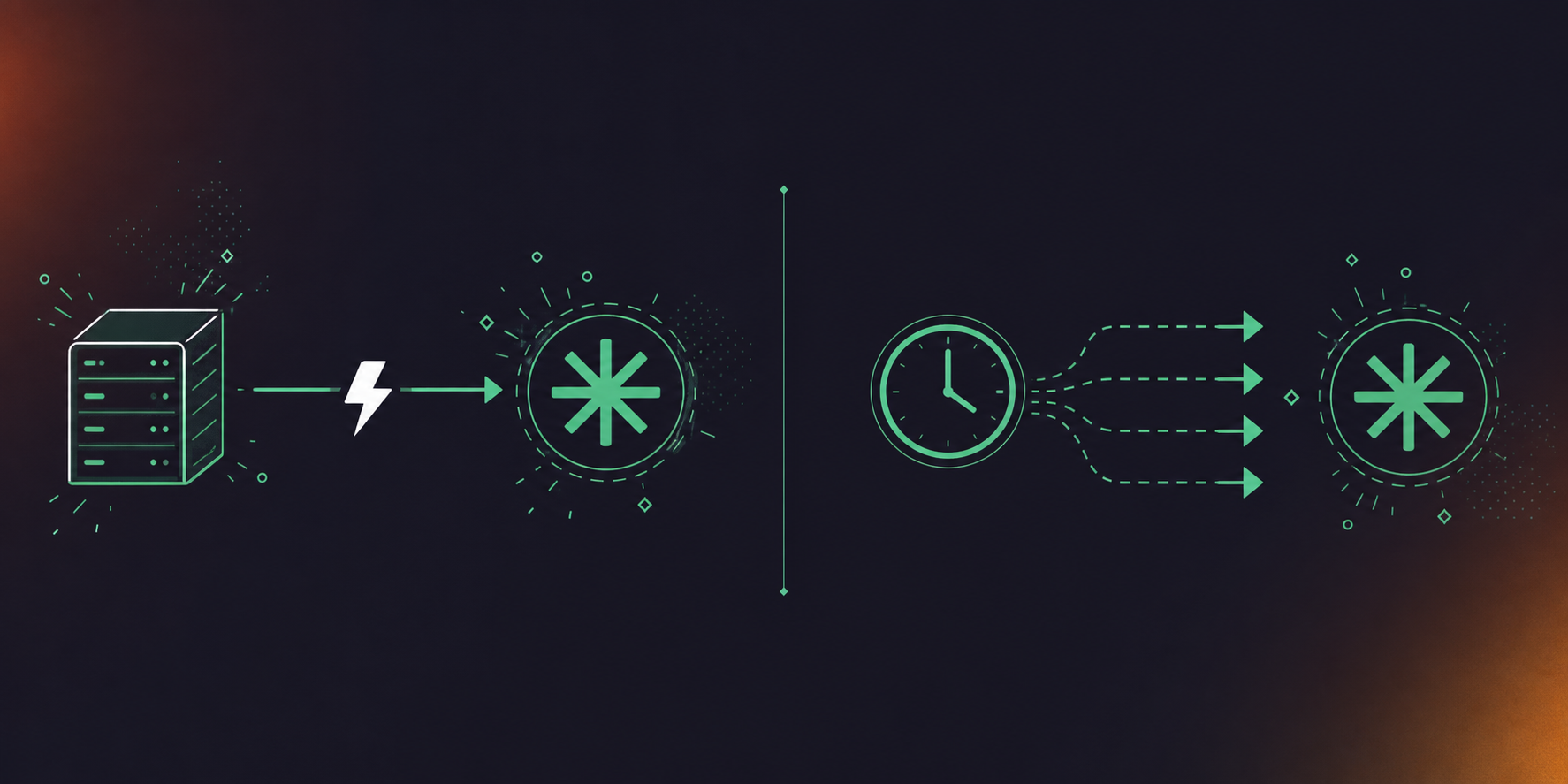
A webhook is an HTTP callback that notifies an external system when something changes, without requiring that system to ask repeatedly.
Claude agents run asynchronously, often for extended periods. If your system needs to know when an agent run completes or fails, polling the API burns quota on every interval regardless of whether anything happened. Webhooks invert that: the notification arrives when the state changes, and only then. As Hookdeck documented in July 2026, Claude Managed Agent webhooks are HTTP callbacks that notify your application of major state changes in long-running agent sessions, and they are the primary way to react to agent activity asynchronously without polling the API.
Webhooks are not a feature inside Claude agents. They are the infrastructure layer that makes your agents addressable by the rest of your organization’s stack.
The Webhook Mechanism Defined
Each webhook event carries an event type, a resource identifier, and a timestamp. The payload is intentionally thin: it tells you something happened, and you fetch the full object separately. This keeps delivery fast and retry logic simple. Anthropic ships these with HMAC signing, replay protection, and at-least-once delivery guarantees. Verifying signatures and handling duplicates still sits with your receiving server.
Webhooks vs. Polling for Agentic Workflows
Approach | Latency | Quota Cost | Reliability | Setup and Runtime Cost |
|---|---|---|---|---|
Polling | High (interval-bound) | High (continuous requests) | Missed transitions possible | Low setup, high runtime cost |
Webhooks | Near-real-time | Low (event-driven) | At-least-once delivery | Higher setup, lower runtime cost |
Why Claude Agents Adoption Is Accelerating in 2026
Claude surpassed OpenAI in US business AI spending share as of May 2026, according to the Ramp AI Index, and Anthropic is powering thousands of organizations including public enterprises. These are not pilot numbers.
The Agent Integration Gap
According to Anthropic’s 2026 State of AI Agents report, more than half of organizations (57%) now deploy agents for multi-stage workflows, with 16% running cross-functional processes across multiple teams. The capability question has largely been settled. The deployment question has not.
The same report found that 46% of organizations cite integration with existing systems as their primary scaling challenge, with 42% naming data access and quality right behind it. The LLM can reason. What it often cannot do is reach the data that would make that reasoning useful. That gap is where most production agent deployments stall, and it is exactly what the rest of this guide covers.
Conversation Data as Claude Agents’ Context Blind Spot
Most enterprise knowledge lives in structured systems: tickets, CRM records, docs. Claude agents can reach all of that. What they cannot reach is the conversation layer: the decision made on Tuesday’s architecture call, the commitment a VP made in a leadership forum, the blocker a customer named on a sales call that never made it into a ticket.
What Gets Left Out of Every Meeting
Individual per-user note takers fragment this further. Every team ends up with a different AI meeting notes tool, producing records that are invisible to any agent querying the organizational corpus. Native meeting AI from Zoom, Microsoft Teams, or Google Meet does not solve this without a centralization layer built on top: there is no queryable organizational record, only per-person exports.
Why Gaps in Conversation Data Degrade Agent Output
The failure mode is subtle. Ask a Claude agent to summarize project status and it will produce an answer that is accurate against Jira and Confluence. What it will miss is the decision made in last week’s planning meeting to deprioritize a feature that Jira still shows as in-progress, or the customer commitment made on a sales call that never reached the CRM. The agent’s answer is technically correct but wrong in practice, and the same gap shows up across every function. A finance agent surfacing budget variance misses the verbal approval given in a leadership forum; a CS agent preparing for a renewal misses the product concern raised on a call three weeks earlier. This is a core challenge for engineering teams who rely on agents for project intelligence. The same problem appears when an agent prepares an executive briefing: it surfaces the metrics but not the context behind why a number moved, because that context exists only in a conversation no structured system captured.
How Webhooks Give Claude Agents Access to Conversation Data
A webhook server exposes conversation data as structured, queryable endpoints. When a new meeting record lands, a webhook event fires with an event type and identifier. The agent then fetches the full object via a GET call, processes it, and routes outputs. As Anthropic’s platform docs note, this design avoids delivering stale data on retries.
The agent is no longer limited to what a user types into a prompt. It can pull from a governed organizational corpus of conversation data.
What Claude Agents Can Now Do
With conversation data exposed through a webhooks server, a Claude agent can:
- Automatically create action items from meeting transcripts and named owners from last week’s product meeting, without manual re-entry or prompt engineering around incomplete context.
- Surface a decision made three months ago along with the rationale behind it, making institutional memory queryable instead of buried in recordings.
- Find context from a customer call before an account review, so the agent enters the conversation already informed.
- Cross-reference commitments made across multiple meetings in a project, catching gaps that no single participant would catch alone.
Routines can also be triggered by an HTTP POST from any external system, meaning the agent acts the moment a meeting ends instead of waiting for a scheduled run. For Teams users, pulling Microsoft Teams transcripts into Codex is a direct path to this pattern.
Setting Up a Webhooks Server for Conversation Data
Setting up a webhooks server for conversation data involves more setup and runtime cost than most teams anticipate. As Digital Applied documented in July 2026, webhook coverage expanded with four environment and three memory-store event types, and sessions can now be seeded with up to 50 initial events per call. The same source notes that deduplication, ordering tolerance, freshness budgets, and auto-disable behavior are all problems your team will own in production.
SDK and Tooling Choices
Python and TypeScript/Node SDKs are both available. Teams building on Zoom can also connect Claude Code to Zoom transcripts directly. The Anthropic SDK’s unwrap() helper handles signature verification and payload parsing together. Local development requires a stable public HTTPS URL, so teams typically run a tunnel tool during prototyping.
Structuring Conversation Data for Agent Consumption
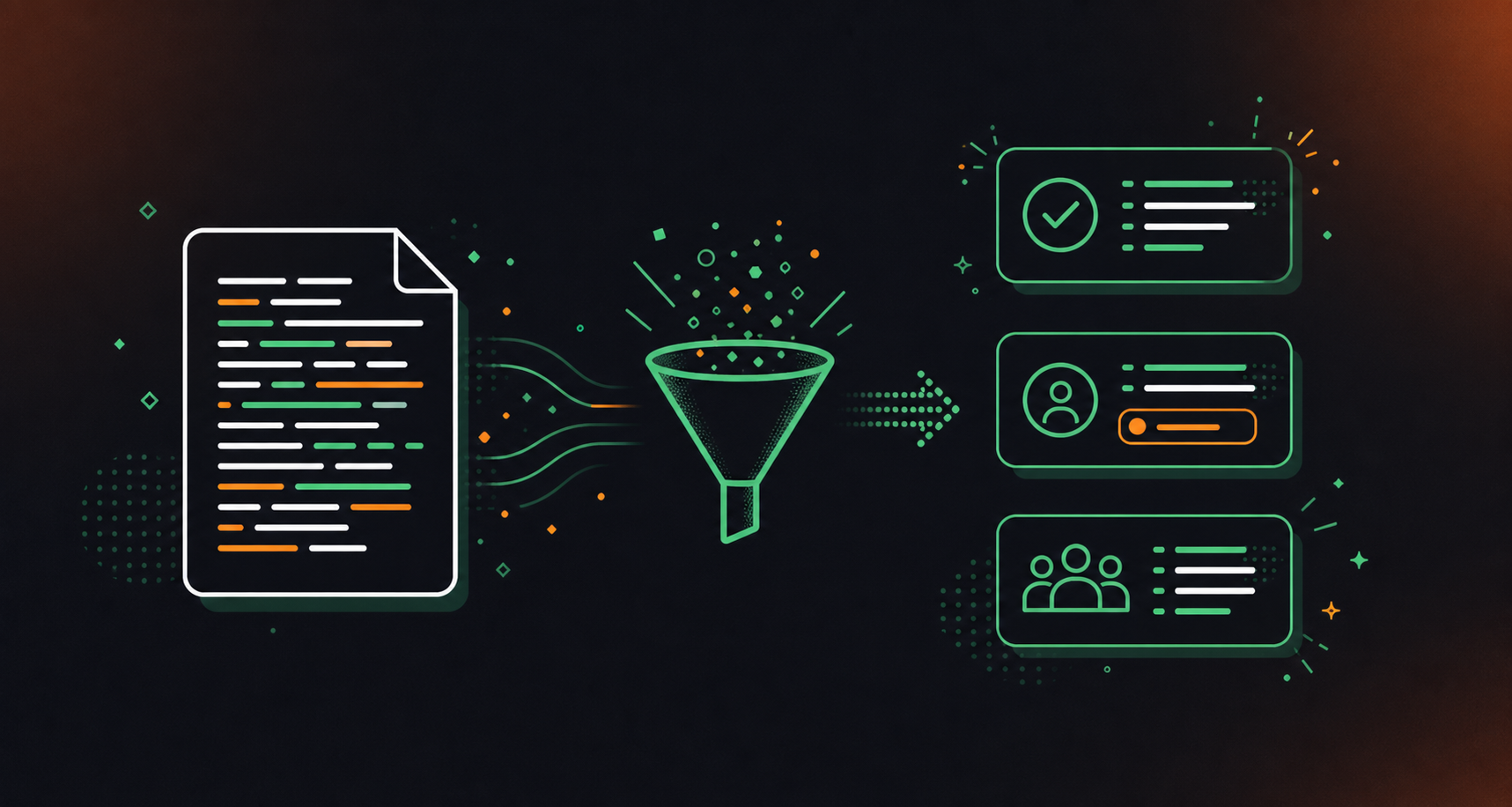
Raw transcript text is not agent-ready. Each data type needs distinct, typed fields:
Data Type | Raw Form | Agent-Ready Form |
|---|---|---|
Meeting decisions | Free-text transcript | Typed decision record with rationale and date |
Action items | Verbal commitments | Structured item with owner, due date, and meeting source |
Participant context | Speaker names in transcript | Named participant with role and meeting history |
Cross-meeting context | Separate per-meeting files | Unified queryable corpus with meeting IDs |
Building this transformation layer is where most DIY builds stall. A purpose-built solution handles it before the webhook fires. Spinach structures this for Claude via its MCP connector for meeting transcripts, converting governed conversation data into agent-ready records without a custom pipeline.
Connecting Your Webhooks Server to Claude Agents
Once your server is ready, registration takes a few minutes inside the Claude Console.
Configuration in the Claude Console
- Go to Manage > Webhooks in the Claude Console, provide an HTTPS endpoint URL with port 443 and a publicly resolvable hostname, then select which event types the endpoint will receive. It only gets events it subscribes to.
- Copy the generated
whsec_-prefixed signing secret immediately; it displays once.
Authentication and Signature Verification
- Every delivery includes
webhook-id,webhook-timestamp, andwebhook-signatureheaders. - The SDK’s
unwrap()helper verifies the signature and parses the event together, throwing on invalid signatures or payloads older than five minutes. SetANTHROPIC_WEBHOOK_SIGNING_KEYto your signing secret in the environment.
Testing the Connection
- Return any 2xx to acknowledge; a 3xx disables the endpoint immediately.
- Anthropic retries up to three times with jittered exponential backoff between 5 and 120 seconds. After all retries fail, the event is dropped, so check against the API if you need a complete event log.
- Monitor endpoint health proactively: the auto-disable threshold can silently stop all agent notifications if a downstream dependency becomes flaky.
Security Considerations for Conversation Data via Webhooks
Enterprise conversation intelligence data carries a different risk profile than a knowledge base article. Strategic decisions, personnel discussions, competitive commitments, and financial terms all move through meeting transcripts. Any webhook pipeline that routes this data into downstream agents must treat it accordingly.
Specific Risk Vectors
- Prompt injection: a participant reading a crafted statement aloud can embed malicious instructions in the transcript. If that transcript reaches a Claude agent unsanitized, the agent may act on the injected content instead of the legitimate task.
- Data exfiltration: insufficiently scoped webhook permissions can expose meeting records across organizational or regulatory boundaries the original recording never intended to cross.
- Access control drift: as meeting corpora grow, access grants made at onboarding extend to conversations those users should no longer reach. Permissions must be enforced at the data source, not assumed stable.
- Compliance exposure: healthcare, financial services, and legal organizations operate under retention, disclosure, and consent requirements. Routing meeting data subject to those requirements into a downstream agent without honoring them creates liability at every hop.
Enterprise-Grade Controls for Conversation Data
These controls cannot be retrofitted after a DIY webhook server is running in production. They must exist at the data source before the first event fires. Buyers assessing any conversation data pipeline should require: user-based permission enforcement at the source layer, PII redaction before transcript content enters the pipeline, configurable retention per data type, audit logging for every access event, and verifiable consent records for all recorded participants. Webhook security best practices also recommend least-privilege authorization and behavioral monitoring to detect anomalies in payload volume and source attribution over time.
Spinach AI applies PII redaction at the transcript level, including structured identifiers such as payment card and national ID numbers, and stores no voice biometrics or biometric identifiers. On Enterprise, retention is configurable per data type, with transcript, summary, and video each settable independently from one week to indefinite. Audit logging and access monitoring are included.
“Every interaction within the enterprise within 3 years will be recorded and I think the default is going to be record on.” Thomas Laffont, Co-Founder, Coatue
A webhook server without source-level controls is not ready for that environment.
Powering Claude Agents With Meeting Intelligence Through Spinach
Spinach AI is an enterprise conversation intelligence platform, the system of record for conversation data, that makes this practical at organizational scale. Where individual AI notetakers solve one person’s problem, Spinach is deployed company-wide: it captures every conversation across Zoom, Google Meet, Microsoft Teams, Slack Huddles, and Webex (video, audio, transcript, screen share, and in-meeting chat) and centralizes it in one governed, AI-ready corpus, not fragmented across individual accounts. The transcript and recording are the input step; structured, governed, routable conversation data is what the platform produces.
There are two distinct things Spinach provides here, and they’re worth separating.
What Spinach Provides to the Pipeline
- Capture every conversation across the enterprise, record-by-default, across every meeting tool and modality, producing structured decisions, action items with named owners, and participant context
- Centralize every conversation in one organizational record a Claude agent can query directly, with no custom centralization layer to build
- Manage access and policy with user-based permission enforcement, PII redaction at the transcript level, configurable retention per data type (transcript, summary, and video set independently, from one week to indefinite on Enterprise), policy-based classify-and-flag for regulatory risk, and admin audit logging
- Power agents and workflows via API and webhooks on Enterprise, connecting the governed corpus to Claude agents directly without a custom pipeline in between
What Claude Agents Gain From It
With Spinach’s corpus available, a Claude agent can retrieve decisions with rationale attached, surface commitments by participant across any time range, and query institutional context through Ask Spinach or a custom agent framework. The agent operates on what the organization actually decided, beyond what made it into a ticket.
If data access and quality is the blocker on your Claude agent deployment, connecting Spinach’s governed conversation corpus to your agents removes the need to build that centralization layer from scratch.
Final Thoughts on Building Claude Agents That Work With Real Organizational Context
Most of what your organization actually knows lives in conversations, not in tickets or docs. Your Claude agent can query every structured system you have and still miss the decision that changed the project direction last Thursday. Webhooks are the right delivery mechanism for that context, but only once you have a governed corpus worth delivering. That’s the part worth getting right before anything else.
Build your conversation data layer for Claude.
Register your Spinach Enterprise webhook endpoint in the Claude Console under Manage > Webhooks, provide a publicly resolvable HTTPS endpoint on port 443, and subscribe to the event types your agent needs. When a meeting ends, Spinach fires a webhook event with an event type and resource identifier; your Claude agent fetches the full structured record — decisions, action items with named owners, participant context — via a GET call and routes it into whatever workflow follows. API and webhooks are available on Spinach’s Enterprise plan.
Building your own pipeline gives you control but puts deduplication, ordering tolerance, freshness budgets, PII redaction, access scoping, and auto-disable recovery entirely on your team — and those problems compound quickly against a growing meeting corpus. Spinach’s MCP connector on Business and Enterprise handles the transformation from raw conversation data to agent-ready structured records before the webhook fires, so your Claude agent receives typed decision records, named action-item owners, and participant context without a custom pipeline in between. If your organization needs API-level access for a fully custom integration, that sits on Enterprise.
Prompt injection is a real and specific threat in this pipeline: a meeting participant reading a crafted statement aloud can embed malicious instructions directly into the transcript, and if that transcript reaches a Claude agent without sanitization, the agent may act on the injected content rather than its legitimate task. The defense must exist at the data source before the webhook fires — not as a post-processing step on the agent side. Spinach applies PII redaction at the transcript level and enforces user-based permissions at the source, so the data entering the pipeline is governed before your agent ever sees it.
A Claude agent querying structured systems returns answers that are accurate against those systems but blind to anything that only existed in a conversation. A feature deprioritized three standups ago still shows as in-progress in Jira; a customer commitment made on a sales call that never reached the CRM simply does not appear. The gap is that decisions with rationale, verbal commitments, and cross-functional context have no system of record unless conversation data is captured, centralized, and made queryable — which is what connecting a governed corpus like Spinach’s to your agent pipeline resolves.
Start at spinach.ai — the free trial runs 14 days with no credit card required, and you sign up via Google or Microsoft. The MCP connector for Claude is included on Business and Enterprise; API and webhooks for custom agent pipelines are available on Enterprise. If you’re evaluating the full webhook-based integration for a production Claude agent deployment, contact Spinach’s sales team to discuss Enterprise.
Spinach structures four distinct data types before the webhook fires: typed decision records with rationale and date, action items with named owners and due dates, participant context with role and meeting history, and cross-meeting context unified under meeting IDs in a single queryable corpus. Raw transcript text is never passed directly to your Claude agent — each field is typed and sourced so the agent can reason on it immediately without a custom transformation layer.
API and webhooks are available on Enterprise only — they are not included on Starter, Pro, or Business plans. If your Claude agent deployment requires a fully custom pipeline pulling from Spinach’s governed conversation corpus, contact Spinach’s sales team for Enterprise pricing and configuration details.
Claude Managed Agent webhooks deliver event types tied to major state changes in long-running agent sessions, each carrying an event type, resource identifier, and timestamp. Anthropic guarantees at-least-once delivery, so duplicate events are possible — your receiving server must implement deduplication logic, and you should reconcile against the API if you need a complete event log after retries are exhausted.
Spinach applies PII redaction at the transcript level, including structured identifiers such as payment card and national ID numbers, before data enters any downstream pipeline. This means the governed corpus your Claude agent queries has already had sensitive identifiers removed at the source — the redaction is not a post-processing step on the agent side.
The MCP connector on Business and Enterprise is the faster path if you want Claude to query structured meeting context without building a custom pipeline — it handles the transformation from raw conversation data to agent-ready records and includes OAuth with admin approval. API and webhooks on Enterprise are the right choice when you need a fully custom integration, event-driven triggers the moment a meeting ends, or connection to systems outside the MCP scope.
A 3xx response disables the endpoint immediately, while non-2xx responses trigger up to three retry attempts with jittered exponential backoff between 5 and 120 seconds. After all retries fail, the event is dropped — so you should reconcile against the Anthropic API directly if a complete event log matters for your Claude agent workflow.
Individual note-takers are built for one person’s meetings and produce per-user records that are invisible to any agent querying an organizational corpus — every team ends up with a different tool, different formats, and no unified queryable record. Spinach deploys company-wide under enforced policy, capturing conversations across Zoom, Google Meet, Teams, Slack Huddles, and Webex into one governed data asset that a Claude agent can query directly without a centralization layer built on top.
The controls that cannot be retrofitted after deployment include: user-based permission enforcement at the data source, PII redaction before transcript content enters the pipeline, configurable retention per data type, audit logging for every access event, and verifiable consent records for all recorded participants. Spinach applies each of these at the source layer on Enterprise, including configurable retention per data type from one week to indefinite for transcript, summary, and video independently.
Yes — when conversation data is captured into a unified organizational corpus rather than per-meeting files, a Claude agent can cross-reference commitments made across multiple meetings in a project, surface decisions with their rationale from any point in time, and find context from a customer call before an account review. This cross-meeting retrieval is what makes the agent’s answers operationally useful, not just accurate against the most recent meeting.
Polling burns API quota on every interval regardless of whether agent state has changed, introduces interval-bound latency, and risks missing state transitions between checks. Webhooks invert this: your system receives a notification only when a state change actually occurs, quota cost stays low, and the agent can act the moment a meeting ends or a workflow step completes rather than waiting for the next scheduled poll.
What to do now
Now that you've read this article, here are some things you should do:
- If communication is a challenge for your team, you should check out our library of meeting agenda templates.
- Check out Spinach to see how it can help you run a high performing org.
- If you found this article helpful, please share it with others on Linkedin or X (Twitter)

