Meeting Data and Common Management Challenges (Sep 2026)
Meeting data gives managers visibility into decisions, owners, and blockers. See how it solves common management challenges. September 2026.
 Maintouch
A lot of management challenges look like people problems on the surface. Someone dropped the ball, two teams weren’t aligned, feedback came too late. But trace most of them back and you’ll find the same thing: a conversation happened that nobody recorded well enough to act on. That’s a fixable problem.
TLDR:
- Managers account for at least 70% of the variance in team engagement scores, per Gallup’s 2026 data.
- Accountability breaks down when meetings produce decisions but no named owner, deadline, or written record.
- Unproductive meetings cost US professionals $259 billion annually, per Pumble’s 2026 roundup of industry data.
- Most management challenges trace back to a documentation gap, not a people problem.
- Spinach AI joins meetings across Zoom, Meet, Teams, Slack Huddles, and Webex, delivering decisions and action items with named owners into Jira, Salesforce, HubSpot, and Slack when the meeting ends.
Management Challenge | Root Cause | Fix |
|---|---|---|
Low employee engagement | Unclear expectations and closed feedback loops, not hiring | Structured visibility into what’s happening week to week |
Accountability breakdowns | Meetings produce decisions but no named owner, deadline, or written record | Capture decisions and owners during the meeting, not after |
Cross-team misalignment | A conversation happened somewhere that never reached the people who needed it | Shared, searchable record of decisions teams can reference without asking a manager |
Conflict avoidance | Hard conversations delayed, letting problems compound quietly | Name the behavior pattern early, before it becomes a team culture problem |
Meeting overload | Alignment breakdowns that generate more meetings to repair them | Structured outputs from every meeting so alignment doesn’t break in the first place |
Weak team culture | Actual norms (what gets praised, what gets ignored) diverge from stated values | Consistent, visible behavioral decisions, not inspirational messaging |
First-time manager struggles | IC skills don’t transfer to management; identity shift is avoided | Close every commitment loop, set expectations before work starts, build a real feedback cadence |
Why Management Challenges Are Getting Harder to Solve
Distributed teams, faster hiring cycles, and pressure to adopt AI tools have added layers of complexity that managers a decade ago did not face. Expectations have risen too: managers are now responsible for performance, alignment, culture, and retention, often without the visibility to act on any of them confidently.
The numbers reflect the strain. According to Gallup’s 2026 Global Workplace report, only 20% of employees worldwide were engaged at work in 2025. Managers account for at least 70% of the variance in team engagement, meaning the gap between high- and low-performing teams runs directly through management quality.
The Employee Engagement Gap
Engagement is largely a management problem, not a hiring one. More telling: managers account for at least 70% of the variance in team engagement scores. Engagement is largely a management problem, not a hiring one.
The common misdiagnosis is treating it as a morale issue and responding with perks or offsites. The actual driver is usually structural: unclear expectations, decisions made without context, or feedback loops that never close. Managers without visibility into what’s happening week to week react to symptoms, not causes.
Accountability and Follow-Through Breakdowns
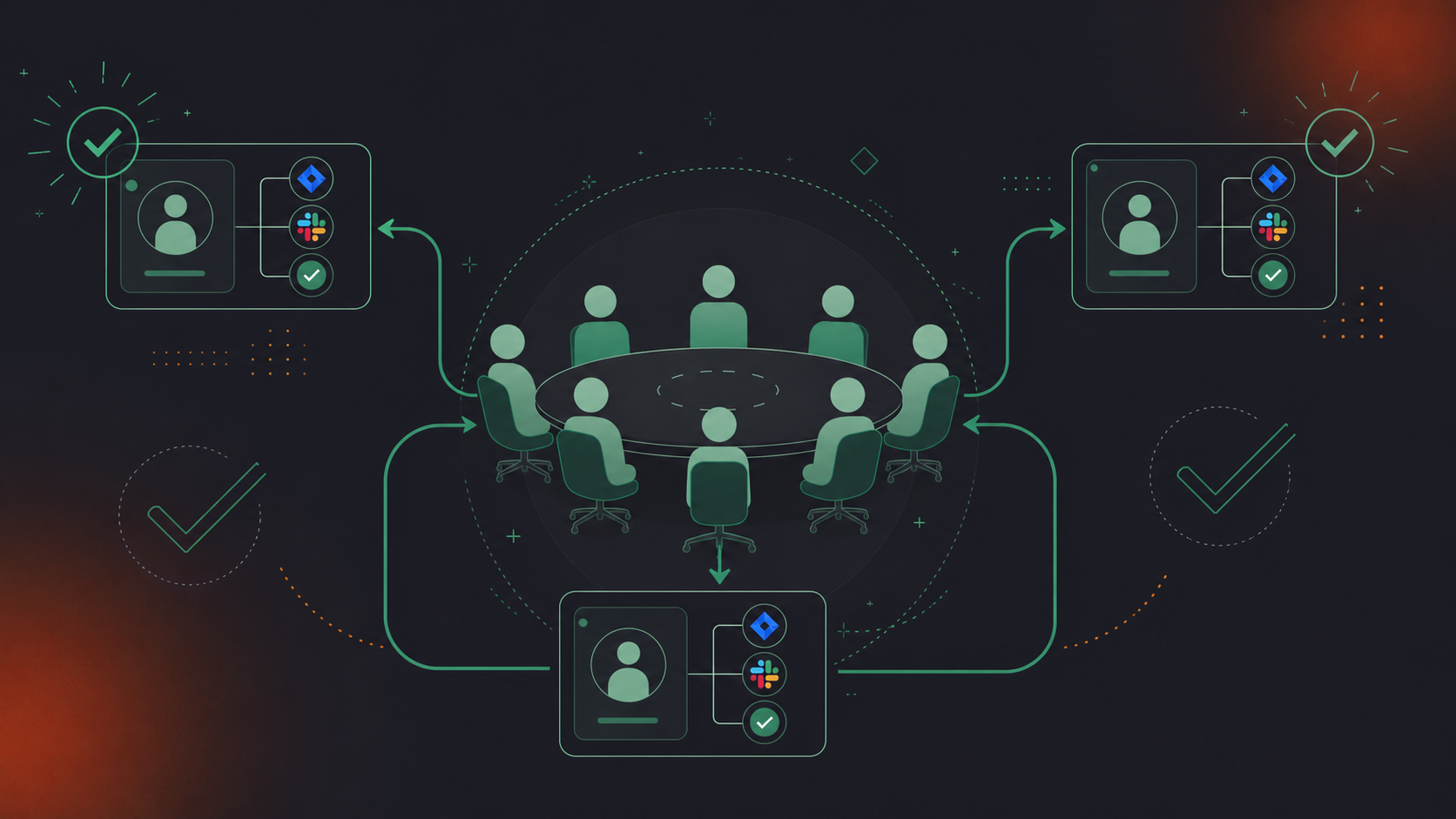
Meetings produce decisions. What they rarely produce is a clear owner, a deadline, and a record anyone can refer back to. That gap is where accountability breaks down.
The problem compounds as teams grow. In a five-person team, everyone remembers what was agreed. At twenty people running multiple workstreams, memory is not a system. Without a written record tied to a specific person, follow-through becomes optional by default.
The failure usually happens quietly. No one announces they forgot an action item. Work stalls, surfaces later as a blocker, or gets redone by someone else. By the time a manager notices, the cost is already paid.
The fix is capturing decisions and owners during the meeting using a structured meeting notes action items template, not reconstructing them afterward from incomplete notes.
Communication Failures Across Teams and Levels
Research is consistent on this: managers undercommunicate far more often than they overcommunicate, and the cost falls on their teams. A Stanford GSB study (Sept 2022) found that employees judge undercommunicating managers as uncaring, while overcommunication is merely frustrating. Leaving people in the dark reads as a leadership failure, not a time-saving choice.
The more common failure is context that gets stranded at one level. A management meeting decision gets made on a Monday planning call. By Wednesday, two teams are building toward conflicting outcomes because neither heard the rationale. No one lied. The information just stopped moving.
Cross-team misalignment is where this gets expensive. When product hears one priority and engineering hears another, the rework comes out of sprint capacity. When sales commits to a timeline that engineering never agreed to, the gap shows up in a customer call nobody was prepared for. The root cause is almost always the same: a conversation happened somewhere that never reached the people who needed it.
Keeping Teams Aligned Without Over-Managing
The tension is real: give teams too much autonomy and misalignment builds quietly; check in too often and you signal distrust, which kills the autonomy you were trying to preserve.
Over-monitoring has a cost. When managers request constant status updates or sit in on every decision, teams stop making independent calls. They wait. Velocity drops, and the manager becomes the bottleneck they were trying to avoid.
The alternative is structured visibility: clear ownership of outcomes, predictable check-in points, and a shared record of decisions that teams can reference without asking a manager to reconstruct context from memory.
Performance Management Done Right
Vague expectations do more damage than most managers realize. When “good work” is defined loosely, people optimize for the wrong things, and by the time a performance conversation happens, both sides are surprised.
Effective performance management comes down to two habits: setting clear expectations at the start, and closing the feedback loop before problems compound. Feedback that arrives quarterly is rarely actionable. By then, the behavior is ingrained, the project is finished, and the conversation feels more like a verdict than a correction.
The underlying pattern in most underperformance cases is a misalignment that was visible much earlier in one-on-one meetings, project reviews, or planning calls, and never got named. That’s a documentation problem as much as a feedback problem.
Managing Difficult Conversations and Conflict
Avoiding conflict is a choice with consequences. When managers delay a hard conversation, the person performing poorly often assumes things are fine, the team reads the silence as tolerance, and the problem compounds.
The conversations that matter most are also the most avoided: telling someone their work is missing the mark, naming a behavior pattern that’s affecting the team, or making clear that a decision was wrong. These require real conflict management skills. These aren’t comfortable, but they’re the job.
The failure mode is letting something sit through several one-on-ones, hoping it resolves. It usually doesn’t. When the conversation finally happens, it carries the weight of every time it was skipped, making it harder for both sides to handle productively. Left unaddressed, interpersonal friction becomes an unspoken rule about who does and doesn’t collaborate, and that’s a team culture problem that arrived quietly.
Time Management and Meeting Overload
Executives spend up to 23 hours a week in meetings, according to Pumble’s 2026 meeting statistics. That’s not a calendar problem. It’s a management problem.
When the majority of a manager’s week is consumed by meetings, everything else gets compressed: one-on-ones get shortened, coaching conversations get skipped, and strategic thinking gets pushed to evenings that never quite arrive. Many of those meetings exist because alignment broke down somewhere, so the fix generates more of the same problem.
Meeting overload also creates a false sense of productivity. A full calendar feels like work, but time in a meeting is time not spent on decisions and context-setting that actually move a team forward. Running effective team meetings is the difference. Managers who are over-scheduled tend to under-coach, and that shows up in engagement and retention before it shows up anywhere obvious.
Building and Maintaining Team Culture
Culture is built in the small moments: what gets praised in a team standup, what gets ignored after a mistake, how a manager responds when someone raises a concern nobody wants to hear. These are the leadership habits that promote team collaboration. Stated values don’t shape behavior. Consistent, visible decisions do.
When turnover is high or teams are growing fast, culture degrades before anyone names it. New hires absorb the actual norms, not the handbook version. If the actual norm is “don’t push back on leadership,” that spreads. If it’s “ship fast and fix later,” new engineers learn that by watching what gets celebrated, not by reading a wiki page.
Weak culture shows up in patterns: low candor in retros, decisions that reverse without explanation, credit that flows unevenly. These are management problems wearing a culture label. The fix is behavioral, not inspirational.
The First-Time Manager Transition
The skills that made someone a strong individual contributor rarely prepare them for management. Writing code, closing deals, or shipping design doesn’t teach you how to hold someone accountable, run a productive one-on-one, or give feedback that lands without damaging trust.
The identity shift is the hardest part. New managers often keep doing the work they were good at because management feels ambiguous and uncomfortable. The result is a team that’s under-directed while their manager stays busy doing the wrong things.
Delegating to former peers adds another layer. The person who used to review your pull requests now reports to you. The social dynamics don’t disappear because the org chart changed.
Three habits matter most in the first six months:
- Close the loop on every commitment made in a meeting, so nothing falls through between conversation and execution.
- Set explicit expectations before work starts, not after something goes sideways.
- Build a real feedback cadence instead of waiting for a formal review cycle to surface problems that have been obvious for weeks.
How Meeting Data Gives Managers Better Visibility
Structured meeting data closes the information gap that sits underneath most management challenges. When every one-on-one, planning session, and team sync produces a consistent record of decisions, owners, and blockers, all captured and centralized in a single organizational record instead of scattered across individual tools, managers stop relying on recall to know what’s actually happening across their teams.
The visibility this creates goes beyond notes. A searchable record across ten consecutive weekly syncs shows whether commitments are carrying forward or quietly dropping. Patterns that were invisible in the moment become legible over time: the blocker that surfaced in three sprint reviews before anyone escalated it, the team member who consistently owns items that never close.
The underlying requirement is consistency. Visibility only accumulates when meeting data is captured the same way across every conversation, not selectively logged by whoever happened to be paying attention that day.
How Meeting Conversations Become a Management Asset
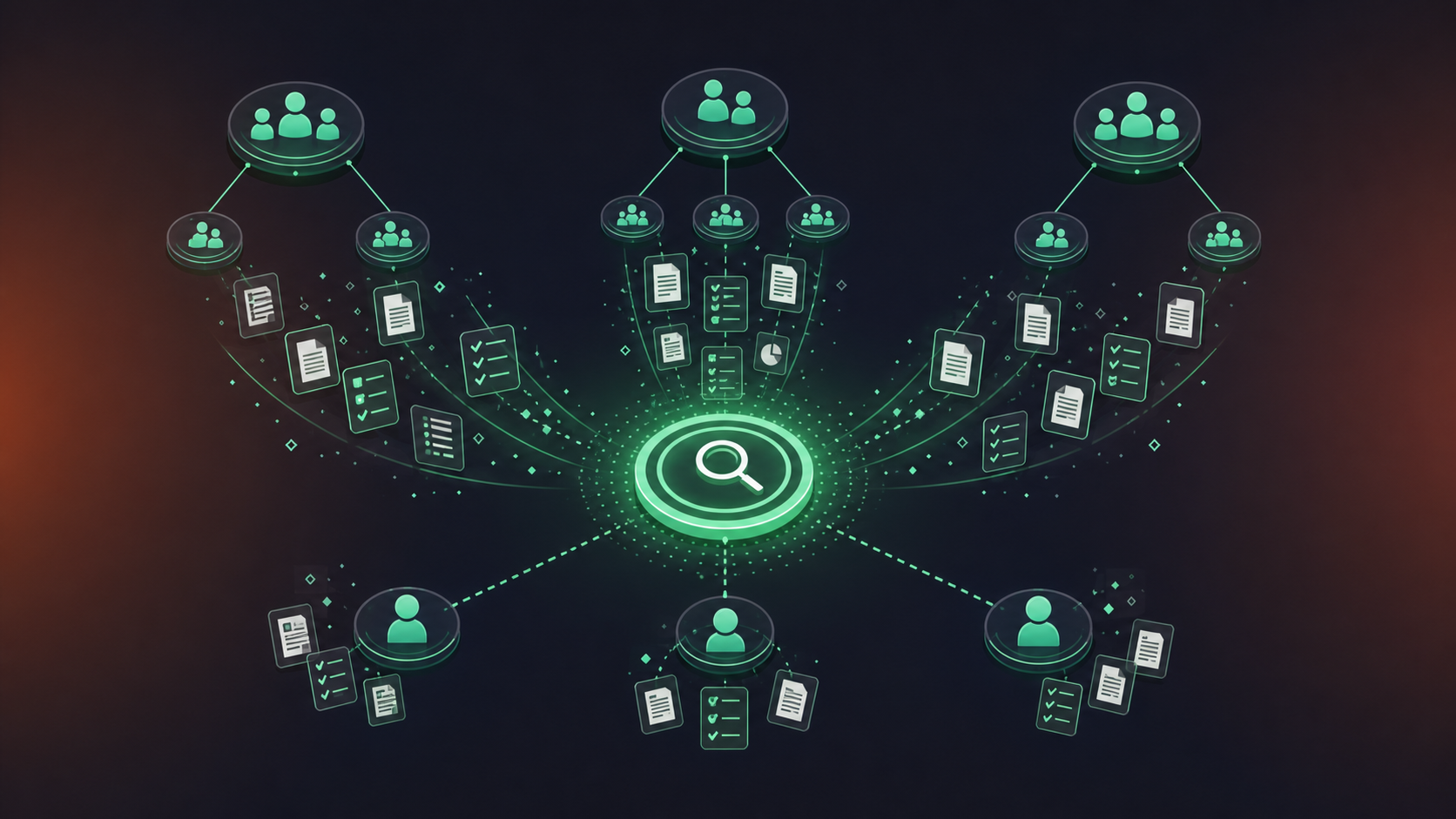
Spinach AI is an enterprise conversation intelligence system. It serves as the system of record for conversation data. Where individual AI note takers solve one person’s problem, Spinach is deployed company-wide to capture, centralize, and govern every conversation the organization has, turning unstructured dialogue into a structured, AI-ready data asset that powers both people and downstream systems.
In practice: Spinach joins meetings across Zoom, Google Meet, Microsoft Teams, Slack Huddles, and Webex, captures during the meeting, and delivers structured outputs when the meeting ends. Decisions and action items with named owners route automatically into Jira, Linear, Salesforce, HubSpot, Slack, and other tools, with no manual re-entry and no reconstruction after the fact.
For the management challenges covered in this article, the organizational scope is what matters. Accountability gaps close when every commitment is recorded with an owner across the whole company, and not merely in one person’s notes. Alignment breakdowns become traceable when the decisions that caused them exist in a single, searchable record that any team can reference. The Ask Spinach assistant lets managers and executives query across every team’s conversations, so context that used to stop at one level of the org can travel to the people who need it.
Spinach is powering thousands of organizations including public enterprises, with plans starting free and paid tiers from Pro through Enterprise for organizations that need governed, company-wide deployment.
Final Thoughts on Managing Teams Through Common Leadership Challenges
The management challenges worth solving are the ones that compound quietly: missed follow-through, context that stops moving, feedback that arrives too late. None of them require a new philosophy. They require better visibility into what’s happening between meetings, and a consistent record of what was decided when you were in them. Get started with Spinach to see what that looks like for your team.
Otter.ai and Fireflies are built for one person’s meetings — each team member ends up with a different tool, producing scattered notes and no shared organizational record. Spinach AI is deployed company-wide, so every one-on-one, planning session, and team sync produces a consistent, searchable record of decisions and owners that managers can actually query across teams. When accountability gaps and misalignment are the real problem, per-person note takers don’t close the loop — a governed organizational record does.
Capture decisions and named owners during the meeting, not afterward from memory, so every commitment is tied to a specific person and a searchable record. Spinach AI joins meetings on Zoom, Google Meet, Microsoft Teams, Slack Huddles, and Webex, then routes action items with named owners into Jira, Salesforce, HubSpot, and Slack when the meeting ends. A searchable record across consecutive syncs makes it visible when commitments are carrying forward or quietly dropping — patterns that are invisible in the moment become clear over time.
The root cause of most cross-team misalignment is a conversation that happened somewhere and never reached the people who needed it — not a shortage of meetings. Structured visibility closes that gap: a shared record of decisions that teams can reference without asking a manager to reconstruct context from memory. Spinach AI’s Ask Spinach assistant lets managers and executives query across every team’s conversations, so context that used to stop at one level of the org can travel to the people who need it.
Close the loop on every commitment made in a meeting, set explicit expectations before work starts, and build a real feedback cadence rather than waiting for a formal review cycle. The key is making accountability structural — a written record of who owns what, visible to everyone — rather than relying on memory or status-update requests that signal distrust. When every meeting produces a consistent record of decisions and owners automatically, new managers spend less time chasing context and more time on the coaching work that actually moves teams forward.
Yes. Spinach AI captures meetings across Zoom, Google Meet, Microsoft Teams, Slack Huddles, and Webex, then routes structured outputs — decisions, action items with named owners, tickets, and CRM records — directly into Jira, Linear, Salesforce, HubSpot, and other tools when the meeting ends. No manual re-entry, no reconstruction after the fact. CRM integration includes custom field mapping on Salesforce, and Jira and Linear support bi-directional linking, so Spinach connects discussions to existing tickets and proposes new ones for newly scoped work.
When a conversation happens but produces no written record of what was decided and who owns it, accountability breaks down by default — not because anyone failed, but because memory is not a system. The decisions, owners, and context that teams need to act exist in the meeting but never make it into a searchable, shareable record, so misalignment and missed follow-through appear to be people problems when they are actually information problems.
According to Gallup’s 2026 State of the Global Workplace report, managers account for at least 70% of the variance in team engagement scores — meaning the gap between high- and low-performing teams runs directly through management behavior, not hiring or perks. The practical implication is that improving visibility, expectation-setting, and feedback loops at the management level moves engagement more than culture initiatives do.
Unproductive meetings cost US professionals $259 billion annually, according to Pumble’s 2026 meeting statistics — and that figure compounds when meeting overload squeezes out the coaching, feedback, and decision-making time that actually moves teams forward. For managers, the hidden cost is not just the meeting itself but the one-on-ones that get shortened and the strategic work that gets pushed to time that never arrives.
Feedback that arrives quarterly is rarely actionable — by then, the behavior is established and the conversation feels like a verdict. Set a recurring feedback cadence tied to active work cycles, and surface misalignments in one-on-ones or project reviews as they appear, not after a formal review cycle forces the conversation.
Per-person notes produce per-person records — when someone leaves, forgets, or was not in the room, the decision context disappears. A shared, consistent record of what was decided, who owns it, and when it was agreed is what makes accountability structural rather than optional, and it scales where individual memory does not.
Managers who scale well build structural visibility — clear ownership of outcomes, predictable check-in points, and a shared record teams can reference without asking a manager to reconstruct context from memory. Managers who become bottlenecks tend to substitute presence for process, which trains teams to wait for approval instead of making independent calls.
Look for patterns: low candor in retros, decisions that reverse without explanation, credit that flows unevenly, or conflict that nobody names. These behaviors usually reflect consistent management decisions — what gets praised, what gets ignored after a mistake, how concerns are received — rather than a values gap that perks or offsites can fix.
Spinach joins meetings on Zoom, Google Meet, Microsoft Teams, Slack Huddles, and Webex and captures video, audio, transcript, screen share, and in-meeting chat. When the meeting ends, it delivers structured outputs — decisions, action items with named owners, tickets, and CRM records — routed directly into tools like Jira, Linear, Salesforce, HubSpot, and Slack, with no manual re-entry required.
MCP is included on Business and Enterprise plans — it is not available on Pro or Starter. Business is $29 per user per month (or $19 per user per month billed annually), and Enterprise is custom pricing. If your team needs the Claude or ChatGPT connector to query conversation data across meetings, Business is the entry point.
The Spinach bot is always visible and never covert — it can be renamed and rebranded with a custom in-meeting notification message, and organizations can use pause, resume, or kick commands mid-meeting. On the data side, no customer data is ever used to train AI models, Spinach holds zero data retention terms with LLM providers, and Enterprise customers can configure retention per data type — transcript, summary, and video — from one week to indefinite.
What to do now
Next, here are some things you can do now that you've read this article:
- You should check out our library of meeting agenda templates for every type of meeting.
- Learn more about Spinach and how it can help you run a high performing org.
- If you found this article helpful, please share it with others on Linkedin or X (Twitter)

