Cross-Functional Team Collaboration Guide (September 2026)
Stop context loss from breaking your cross-functional teams. This September 2026 guide covers ownership frameworks, meeting records, and smarter
 Maintouch
Most cross-functional teams don’t fail because they meet too rarely or with the wrong people. They fail because a decision made in Tuesday’s product sync never reached the engineer building against the old assumption on Friday. Getting collaboration right means fixing how context travels after the meeting ends, beyond how people show up to it.
TLDR:
- 75% of cross-functional teams are dysfunctional (Harvard Business Review, 2015), with decisions made in meetings that never reach the teams who need them
- Fix context loss by capturing three things in every meeting: what was decided, who owns it, and what done looks like
- Use RACI or DACI frameworks to assign one named owner per decision before work starts, not after conflict surfaces
- Track leading indicators like repeated agenda items and decision-to-execution lag to catch process failures early
- Spinach AI is the system of record for conversation data, an enterprise conversation intelligence system deployed company-wide that joins meetings across Zoom, Google Meet, Microsoft Teams, Slack Huddles, and Webex, captures conversations during the meeting, and delivers structured outputs (decisions, action items with named owners, tickets, and CRM records) routed into the tools each function already uses, from Jira and Linear to Salesforce and HubSpot, without manual re-entry
What Cross-Functional Collaboration Actually Means
Cross-functional collaboration is when people from different departments, each with distinct goals, metrics, and toolsets, work together toward a single shared outcome. Think engineering, marketing, sales, and legal on the same project, each bringing its own priorities. The work only moves when those priorities align.
That convergence is the hard part. Departmental cooperation means sharing information or coordinating handoffs. Cross-functional collaboration goes further: joint decision-making, shared accountability, and outcomes that no single function owns alone.
The failure modes are completely different. A siloed team fails quietly, within its own walls. A cross-functional team fails loudly, in the gap between teams, after meetings where everyone assumed alignment happened but no shared record confirmed it did.
Why Cross-Functional Collaboration Breaks Down
A Harvard Business Review study found that 75% of formally created cross-functional teams are dysfunctional. A Gartner survey of 329 marketing leaders and 78 leaders from other functions (May 2024) found 84% report high “collaboration drag,” and organizations with that drag are 37% less likely to hit revenue and profit goals.
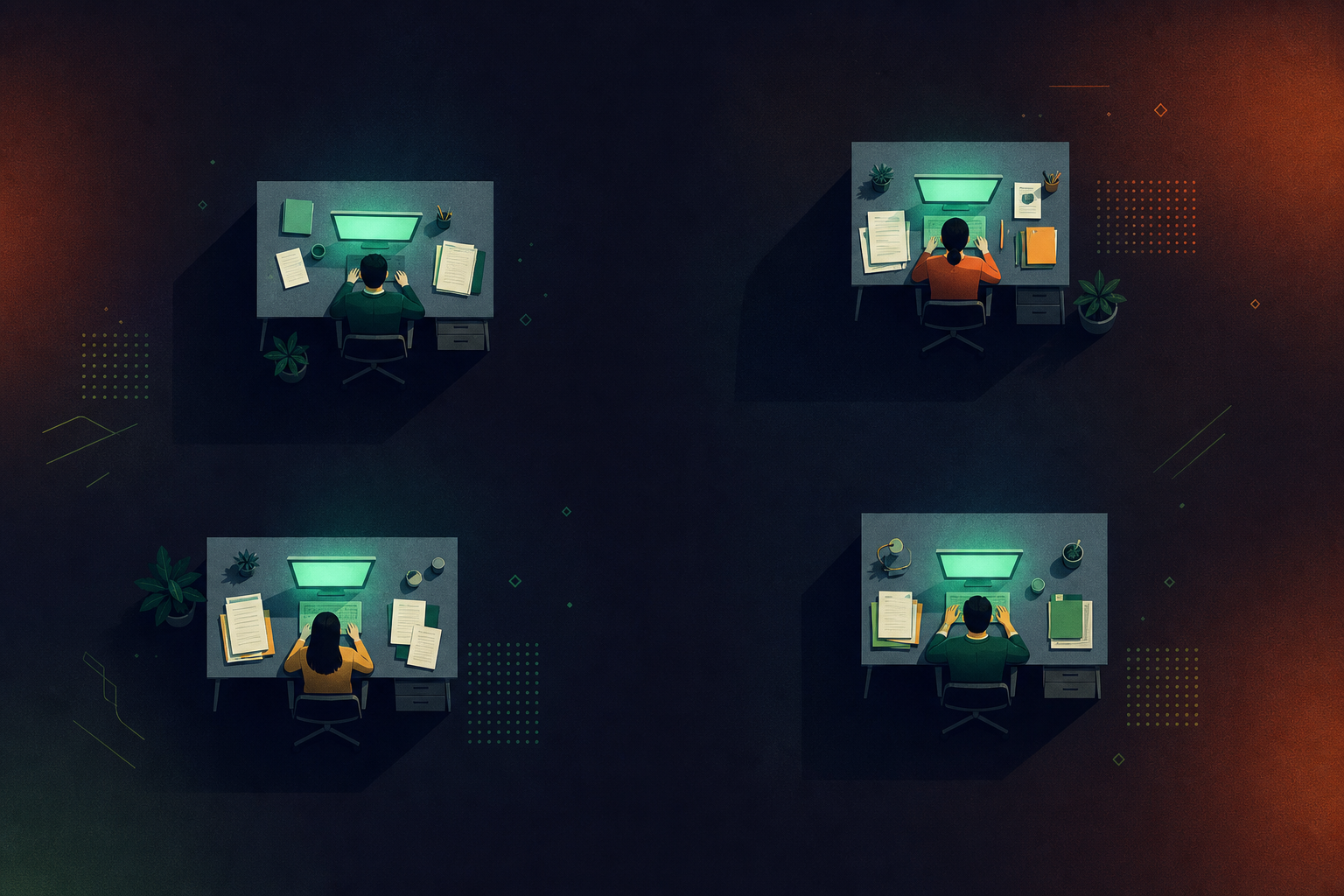
The reasons cluster around three patterns: each function optimizes for its own KPIs so shared goals get deprioritized when they conflict with departmental targets; ownership is rarely explicit so decisions get relitigated in the next meeting because no record survived the handoff; and context stays trapped in individual inboxes, Slack threads, or personal notes, invisible to the other functions who needed it to act.
The Meeting Context Problem
Meeting context loss is different from poor communication. Teams can have strong relationships, clear agendas, and regular syncs and still watch work stall because a decision made three weeks ago in a cross-functional sync never made it into any system anyone else could find.
The pattern is familiar: engineering builds against an assumption quietly reversed in a product sync. Legal flags a constraint sales already worked around on a customer call. Finance questions a commitment leadership made in a planning session with no written record. Each team was present for its own conversations. None had access to the others.
What makes this a distinctly cross-functional problem is the distance between the moment of decision and the moment of consequence. Weeks pass. By the time the dependency surfaces, the original context exists only in someone’s memory, or not at all.
“Every interaction within the enterprise within 3 years will be recorded and I think the default is going to be record on.” — Thomas Laffont, Co-Founder, Coatue
The organizational cost is rework, relitigated decisions, and slower launches. None of these show up as a “meeting problem” in a post-mortem. They show up as misalignment, missed deadlines, or duplicated effort. The root cause, a piece of context that left the meeting and never arrived anywhere retrievable, goes unexamined.
Benefits of Effective Cross-Functional Collaboration
When cross-functional collaboration works, the gains show up in places that matter to the business.
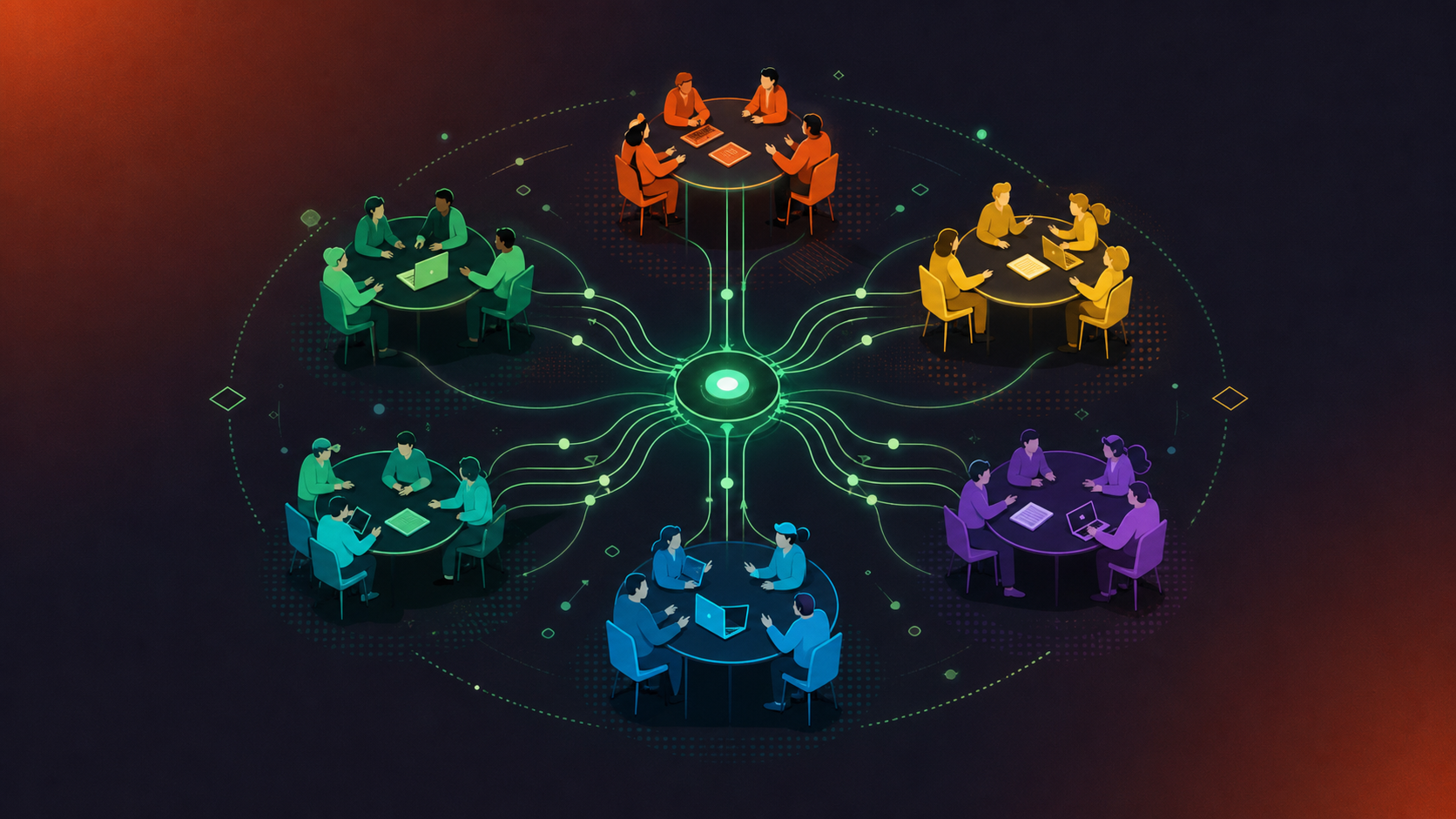
- Faster decisions: fewer handoff loops mean fewer “let me check with my team” delays. Decisions made once, with the right people present, stay made.
- Better problem-solving: diverse functional inputs surface tradeoffs that single-department teams miss entirely. Engineering knows what’s technically feasible; sales knows what the customer actually asked for.
- Tighter alignment: shared context means downstream teams aren’t rebuilding assumptions from scratch every sprint.
- Higher engagement: people who understand how their work connects to other functions are less likely to feel like order-takers executing in a vacuum.
- Organizational agility: when functions share information continuously instead of waiting for milestone gates, course corrections happen earlier and cost less.
These are execution outcomes, visible in cycle times, rework rates, and whether launches happen on the date they were originally scoped.
Align Teams Around Shared Goals Before the First Meeting
Shared goals aren’t set in the first meeting. They’re brought into it, already agreed on. When each function arrives with its own definition of success, the meeting becomes a negotiation before it can be a coordination.
The fix requires work before anyone joins a call. Document one goal statement that every participating function signs off on: one sentence, one outcome, no functional sub-clauses. If engineering, marketing, and sales can’t agree on that sentence before the kickoff, the project isn’t ready to run cross-functionally yet.
Make it visible somewhere every function actually checks. A shared doc that never gets linked in Slack is decorative. When this step is skipped, the function that talks loudest wins the framing, and the others deprioritize quietly afterward.
Define Roles, Ownership, and Decision Rights
Unclear ownership is where cross-functional projects quietly die. Two functions both think they own the decision, or neither does and everyone waits.
A RACI matrix or DACI framework applied before work starts cuts this off early. RACI (Responsible, Accountable, Consulted, Informed) assigns one accountable owner per decision. DACI (Driver, Approver, Contributor, Informed) works better for cross-functional product decisions where a single driver needs input from multiple stakeholders. The format matters less than the rule: one name per outcome, no shared ownership.
Every action item leaving a cross-functional meeting needs an owner by name, a deadline, and a clear definition of done. Without all three, the item gets relitigated in the next meeting while both functions assume the other was handling it. Mapping functional boundaries once, at project start, keeps that conflict from surfacing mid-sprint.
Build Psychological Safety and Trust Across Functions
Cross-functional teams fail interpersonally before they fail on execution. Engineers and marketers don’t just have different tools; they have different risk tolerances, different vocabularies for the same concepts, and different norms around what’s safe to say out loud.
Building psychological safety closes the gap between what people know and what they share. When a sales rep won’t flag that a customer already rejected the feature being built, or when a PM won’t admit their timeline slipped, the cost lands on every other function at the worst possible moment.
A few conditions that help:
- Surface blockers early, well before status updates. If bad news only travels upward at milestones, the cross-functional cost is compounding rework.
- Reward people who flag disagreement before a decision is finalized, not after.
- Keep meeting recaps neutral and factual. Summaries that read like performance assessments push people toward self-editing, not candor.
Trust builds with repetition. When teams see that context shared in one meeting actually shows up in the next decision, that sharing becomes the norm.
Build Shared Communication Norms
Cross-functional teams almost always run on mismatched toolchains. Engineering lives in Slack and Jira. Marketing tracks work in Asana or Monday. Sales updates HubSpot and sends email threads. When no one has agreed on where decisions land or how updates travel, every team defaults to its own system, and information stops crossing functional lines.
A short, explicit communication agreement made at project start can fix this. It needs to answer four questions:
- Where do decisions get recorded after a meeting?
- Which channel gets cross-functional status updates, and how often?
- Who is responsible for routing information from one function’s system to another’s?
- What counts as a decision versus an open question still in discussion?
That last question is underrated. Without a clear line between “decided” and “still open,” meeting participants leave with different interpretations, and the next sync restarts from scratch. Keep the shared record somewhere all functions can reach without a special login or a forwarded invite.
How to Run Cross-Functional Meetings That Preserve Context
Cross-functional meetings fail at the output stage more often than the input stage. The agenda was clear. The right people attended. But three days later, engineering is building against one set of assumptions and marketing is working from another, because no durable record survived the room.
Agenda design is the first fix for effective team meetings. Separate informational items from decision-making items before the meeting starts. Informational updates belong async, read before the call. Meeting time is for decisions that require cross-functional judgment. When every agenda item becomes a discussion topic, decisions get buried and never formally closed.
During the meeting, three things need capturing in real time: what was decided, who owns it, and what “done” looks like. Without a named owner, the action item is decorative. Without a definition of done, two functions will interpret completion differently and neither will flag the gap until it’s expensive.
The post-meeting record is where most cross-functional context dies. A long transcript serves no one. What other functions need is a short, structured summary: decisions made, open questions with owners, and meeting notes action items with deadlines, stored somewhere every function can reach without tracking down a calendar invite.
For recurring cross-functional meetings, using a weekly sync template means the previous session’s summary opens the next one. When teams see that last week’s decisions are the first line of this week’s agenda, the discipline around capturing decisions mid-meeting improves on its own.
Common Cross-Functional Collaboration Challenges by Team Type
The friction between functions isn’t generic. It shows up in predictable, specific ways depending on which teams are working together.
Team Pairing | Common Failure Mode | Root Cause | Where Context Gets Lost |
|---|---|---|---|
Product & Engineering | Spec drift | Requirements updated in Confluence/Notion; Engineering builds against an older version discussed two sprints ago | Decision made in a product sync never reaches the Jira ticket where engineers are working |
Sales & Marketing | Pipeline handoff misalignment | Marketing qualifies leads against one criteria set; Sales quietly adjusts expectations on calls without updating a shared record | No shared record updated after the call, so the next campaign targets the same wrong profile |
Go-to-Market (Legal, Product, Sales) | Launch readiness gaps | Each function assumes another owns final sign-off; constraint flagged in legal review never reaches sales enablement | Dependency only surfaces at launch, when the cost is highest |
Product and Engineering
Spec drift is the common failure: Product updates requirements in a Confluence doc or Notion page, Engineering keeps building against the version discussed two sprints ago, and neither team flags the gap until QA. The root cause is usually a decision made in a product sync that never reached the Jira ticket where engineers were actually working.
Sales and Marketing
Pipeline handoff misalignment is the typical pattern. Marketing qualifies a lead against one set of criteria; Sales works that lead and quietly adjusts expectations on a call. Neither team updates a shared record, so the next campaign targets the same wrong profile.
Go-to-Market Teams
Launch readiness gaps surface when Legal, Product, and Sales each assume someone else owns final sign-off. A constraint flagged in a legal review never reaches the sales enablement team building the pitch deck, and the dependency only surfaces at launch, when the cost is highest.
In each case, a decision or constraint existed somewhere in the organization and never crossed the functional line where it was needed.
Skills That Drive Effective Cross-Functional Collaboration
Five competencies show up consistently in cross-functional teams that actually ship.
- Clear communication without jargon: engineering and marketing use the same words to mean different things. The skill is translating, not simplifying. Say “we need this by sprint close on Friday” instead of “soon.”
- Decisive decision-making: cross-functional meetings stall when no one is willing to call a decision closed. The person with this skill names the outcome, confirms it, and moves on.
- Conflict resolution across functions: disagreements between departments are usually about priorities, not people. Separate the functional incentive from the interpersonal friction, then tackle the incentive directly. Team collaboration leadership habits also shape how openly people surface these conflicts.
- Basic project management literacy: tracking dependencies, flagging blockers early, and distinguishing a milestone from a task are table-stakes for anyone owning a cross-functional workstream.
- Relationship-building across organizational lines: trust built informally is what makes people flag a problem before it escalates. One short async check-in beats a monthly status meeting.
These are learnable through repetition, not personality type.
Measuring Whether Cross-Functional Collaboration Is Working
Most teams try to improve cross-functional collaboration without first defining what working looks like. The signals are concrete once you know where to look.
Lagging indicators tell you what already happened: did the project ship on time, how often did dependencies surface late? These arrive too slowly to course-correct mid-project.
Leading indicators are more useful. Track how often the same unresolved issue appears across consecutive meeting agendas. Relitigated decisions are the clearest signal that a prior meeting produced no durable record.
A few metrics worth tracking explicitly:
- Repeated agenda items: any issue discussed in two consecutive cross-functional meetings without a named resolution is a process failure
- Decision-to-execution lag: measure days between when a decision is recorded and when the assigned owner acts on it
- Late dependency discovery rate: how often a blocker from one function surfaces inside another function’s sprint after work has already started
- Meeting effectiveness survey questions: brief pulse surveys after recurring syncs catch interpersonal and structural friction before it becomes churn
The goal is a short feedback loop that tells you whether your communication norms are holding. Knowing how to lead a meeting well is what makes that loop close faster.
How to Keep Cross-Functional Meeting Context Intact
Spinach AI is the system of record for conversation data, an enterprise conversation intelligence system deployed company-wide, and it is not a per-person note-taker. It joins meetings on Zoom, Google Meet, Microsoft Teams, Slack Huddles, and Webex, capturing every conversation in full: video, audio, transcript, screen share, and in-meeting chat. When the meeting ends, Spinach delivers structured outputs, including decisions, action items with named owners, tickets routed to Jira or Linear, and CRM records updated in Salesforce or HubSpot, directly into the systems each function already uses.
The critical difference from individual note-takers is where that output lives and who governs it. When every team runs its own separate note-taker, you get shadow IT, uncontrolled sharing, and no organizational record anyone can find or query. Spinach is the platform an organization deploys once, company-wide: one governed data asset, not per-user silos. Collections automatically group meetings by participant, title, or series, so a product sync and an engineering standup touching the same workstream are findable together. Ask Spinach lets anyone query across the full organizational corpus. The constraint flagged in a legal review last Tuesday is retrievable by the sales enablement team building the pitch deck today.
For organizations running compliance-sensitive and standard functions side by side, Spinach’s compliance agents (Enterprise) monitor conversation data against customer-supplied rule sets and flag regulatory and policy risk for review. PII redaction operates at the transcript level. Retention is configurable per data type, so transcript, summary, and video can each be set separately, from one week to indefinite on Enterprise. Get started with Spinach AI.
Final Thoughts on Getting Cross-Functional Team Collaboration Right
The meeting was fine. The agenda was clear. The right people showed up. And still, three days later, two functions are working from different assumptions. That’s the cross-functional context problem in a sentence, and it’s solvable. Start with shared goals and defined ownership, keep the record somewhere everyone can reach, and deploy Spinach AI as the organizational system of record for every cross-functional conversation, with structured outputs, named owners, and decisions routed to each function’s tools when the meeting ends.
Otter.ai and Fireflies are built for one person’s meetings: they solve an individual’s note-taking problem, not an organization’s context problem. When engineering, marketing, and sales each run separate individual note-takers, you get a different tool per team, uncontrolled sharing, and no single organizational record anyone outside that meeting can find or query. Spinach AI is the enterprise conversation intelligence platform an organization deploys once, company-wide. It provides one governed data asset with enforced policy, so a constraint flagged in a legal review is retrievable by the sales enablement team building the pitch deck the next day, without anyone manually forwarding a transcript.
No. As of July 2026, Zoom AI Companion delivers individual productivity features (summaries, action items) and does that well, but its architecture is not an organizational system of record. To query all of a company’s conversation data with Claude or ChatGPT on a native Zoom stack, you either build a centralization layer on their API or ask every employee to share every meeting by hand. A dedicated platform like Spinach AI captures across Zoom, Google Meet, Microsoft Teams, Slack Huddles, and Webex into one governed, queryable data asset with policy-based sharing enforced org-wide.
Spinach AI captures decisions and action items during the meeting, then routes structured outputs (named owners, tickets linked to existing Jira or Linear issues, and CRM records updated in Salesforce or HubSpot) when the meeting ends. The key is that output goes to the system where each function already works, so engineering sees it in Jira and sales sees it in HubSpot, without anyone re-keying from a transcript.
The cost shows up as rework, relitigated decisions, and late-surfacing blockers, not as a line item labeled “meeting problem.” A Gartner survey of 329 marketing leaders and 78 leaders from other functions (May 2024) found 84% report high collaboration drag, and organizations with that drag are 37% less likely to hit revenue and profit goals. The root cause in most cases is a decision that left the meeting and never arrived anywhere the next function could find it.
Track leading indicators alongside lagging ones. The most reliable signal is repeated agenda items: any issue discussed in two consecutive cross-functional meetings without a named resolution is a process failure, not a personality conflict. Pair that with decision-to-execution lag (the days between when a decision is recorded and when the assigned owner acts) and late dependency discovery rate, meaning how often a blocker from one function surfaces inside another function’s sprint after work has already started.
Capture three things in real time during every meeting: what was decided, who owns it, and what done looks like. When those three elements live in a shared record every function can reach without tracking down a calendar invite, the next meeting opens on last week’s decisions instead of reopening them.
Use DACI when a single driver needs structured input from multiple stakeholders before a decision closes — it’s better suited to cross-functional product work where one person needs to move without waiting for full consensus. RACI works well for execution-heavy workstreams where the accountable owner is clear and the consulting parties are fixed; the non-negotiable rule for either framework is one named owner per outcome, with no shared accountability.
Agree on four things before the project starts: where decisions get recorded after a meeting, which channel carries cross-functional status updates, who routes information from one function’s system to another’s, and what counts as a decision versus an open question still in discussion. Without that agreement, every function defaults to its own toolchain and information stops crossing functional lines.
Decision-to-execution lag is the number of days between when a decision is recorded and when the assigned owner acts on it — it’s a leading indicator of whether your communication norms are holding across functions. Tracking it tells you whether decisions made in cross-functional meetings are actually reaching the people who need to act, before the gap becomes a missed deadline or duplicated work.
Yes. Spinach AI joins meetings across Zoom, Google Meet, Microsoft Teams, Slack Huddles, and Webex from one company-wide deployment, capturing decisions and action items with named owners and routing structured outputs into the tools each function already uses — Jira and Linear for engineering, Salesforce and HubSpot for sales — without separate integrations or manual re-entry per platform.
Informational updates belong async — read before the call so meeting time stays reserved for decisions that require cross-functional judgment. When status updates consume live meeting time, decisions get buried and never formally closed, which is the root cause of repeated agenda items in the next sync.
Spec drift happens when a decision made in a product sync never reaches the Jira ticket where engineers are actually working — requirements update in Confluence or Notion, but the build continues against the version discussed two sprints ago. The fix is routing structured decision outputs directly into the ticket at meeting end, so the record lives where engineers work rather than in a doc they’d have to find separately.
Surface blockers well before status updates, reward people who flag disagreement before a decision is finalized rather than after, and keep meeting recaps neutral and factual — summaries that read like performance assessments push people toward self-editing instead of candor. Trust builds through repetition: when teams see that context shared in one meeting actually shapes the next decision, sharing becomes the norm.
Retention should be configurable per data type — transcript, summary, and video — so legal and finance can apply the retention windows their regulatory requirements demand without forcing the same policy on every function. Spinach AI’s Enterprise tier sets each data type separately, from one week to indefinite, and compliance agents monitor conversation data against customer-supplied rule sets, classifying and flagging regulatory and policy risk for human review.
Write one sentence naming one outcome with no functional sub-clauses, and get every participating function to sign off before the kickoff meeting — if the teams can’t agree on that sentence in advance, the project isn’t ready to run cross-functionally yet. Make it visible somewhere every function actually checks; a shared doc that never gets linked in Slack is decorative and won’t hold alignment when departmental priorities conflict.
What should you do now
Next, here are some things you can do now that you've read this article:
- Our library of meeting agenda templates is designed to help you run more effective meetings.
- You should try Spinach to see how it can help you run a high performing org.
- If you found this article helpful, please share it with others on Linkedin or X (Twitter)

