How to Power Claude Agents with Conversation Data Using MCP (August 2026 Guide)
Learn how MCP gives Claude agents access to meeting decisions and action items in August 2026, with governed permissions and full speaker attribution.
 Maintouch
Building Claude agents for internal use tends to follow the same pattern: connect the structured sources, ship something useful, and then hit a ceiling. The ceiling is usually context. Your agents can tell you what the Jira ticket says, but not what drove the decision that created it. That context lives in your meetings, and getting it into Claude through MCP is more straightforward than most teams expect.
TLDR:
- MCP collapses what could be 1,000 separate integrations into one server any compliant agent can query
- Your Claude agents answer from docs and tickets because meeting decisions never reach a queryable form
- Raw transcripts are not agent-ready; you need structured outputs with speaker attribution and permission enforcement
- Indirect prompt injection is the top MCP security risk: adversarial content in a retrieved summary can redirect agent behavior
- Spinach AI is the enterprise conversation intelligence platform and system of record for conversation data, deployed company-wide across Zoom, Meet, Teams, Slack Huddles, and Webex, with a pre-built MCP server on Business and Enterprise plans
What MCP Is and Why It Matters for Claude Agents
MCP, or Model Context Protocol, is an open standard that defines how AI agents connect to external data sources. Learn more about what an MCP server does, turning what used to be a custom wiring job into a repeatable, interoperable pattern.
For Claude agents, the ceiling on usefulness is set by what the agent can read. Without a standardized access layer, every new data source means another one-off integration, another failure point, another engineering sprint.
The Integration Problem MCP Solves
Before MCP, every AI application needed its own connector to every data source. Connecting 10 AI applications to 100 tools up to 1,000 separate integrations. MCP collapses that into one server any compliant agent can query. It has since been adopted across major AI vendors, which is what makes it a foundation worth building on, not a bet on a single vendor’s API.
Why Claude Agent Adoption Is Accelerating in 2026
More than 57% of organizations now deploy agents for multi-stage workflows, and 80% of respondents report measurable economic impact from agents today, according to Anthropic’s 2026 State of AI Agents Report. These are production systems with real dependencies, not pilots.
Claude in Enterprise Production
The clearest public signal is Deloitte’s rollout across approximately 470,000 employees. At that scale, Claude is embedded in how the organization thinks, decides, and acts. Commercially, more than 1,000 enterprise customers now each spend over $1 million annually with Anthropic, with large accounts growing nearly 7x year over year as of April 2026.
At this depth of adoption, the bottleneck moves. The question stops being whether Claude can reason well and starts being what data Claude can actually reach. An agent querying only structured databases or public documents will miss most of what drove any given decision, because those decisions happened in calls, standups, and cross-functional reviews that were never captured in a queryable form.
Conversation Data as Claude Agents’ Context Blind Spot
Conversation data is where most agent pipelines go blind. Claude agents get wired to CRMs, knowledge bases, and ticket systems first because those are the obvious structured sources. What never makes it into that pipeline is the most context-rich data the organization actually produces: what got said in meetings.
What Agents Miss When Meetings Go Unstructured
When a Claude agent is asked why a product decision went a certain way, it answers from the Confluence page or the Jira ticket. Those artifacts captured the outcome, not the reasoning. The actual call where direction was set, the competing priorities that got weighed, the blocker that shifted the timeline: none of that exists in a queryable form. The agent answers accurately from what it can reach, and misses the context that actually explains it.
The Shadow IT Problem in Conversation Capture
Informal notetaker deployments compound this further. One team runs Otter, another uses Fathom, a third relies on the native Zoom summary. Each person’s meetings stay in their own account. No policy governs what gets captured, how long it’s retained, or who can query it. A Claude agent connecting to this environment inherits the fragmentation and returns answers shaped by whichever slice of the organization happened to store something reachable.
Individual AI note takers are built for one person’s meetings. Deployed across a company, they produce shadow IT, uncontrolled sharing, and no organizational record. Spinach AI is the enterprise conversation intelligence platform built to close that gap: the system of record for conversation data, deployed company-wide with enforced policy, so every conversation becomes a governed, queryable data asset that is as retrievable by your Claude agents as any structured database.
How MCP Gives Claude Agents Access to Conversation Data
MCP runs on a client-server model where Claude acts as the client and the conversation data repository acts as the server. Tools define what the agent can query, and the protocol runs over two transport layers: stdio for local processes and HTTP with Server-Sent Events for remote servers, with JSON-RPC 2.0 handling the message format. Any developer comfortable with JSON parsing can implement it.
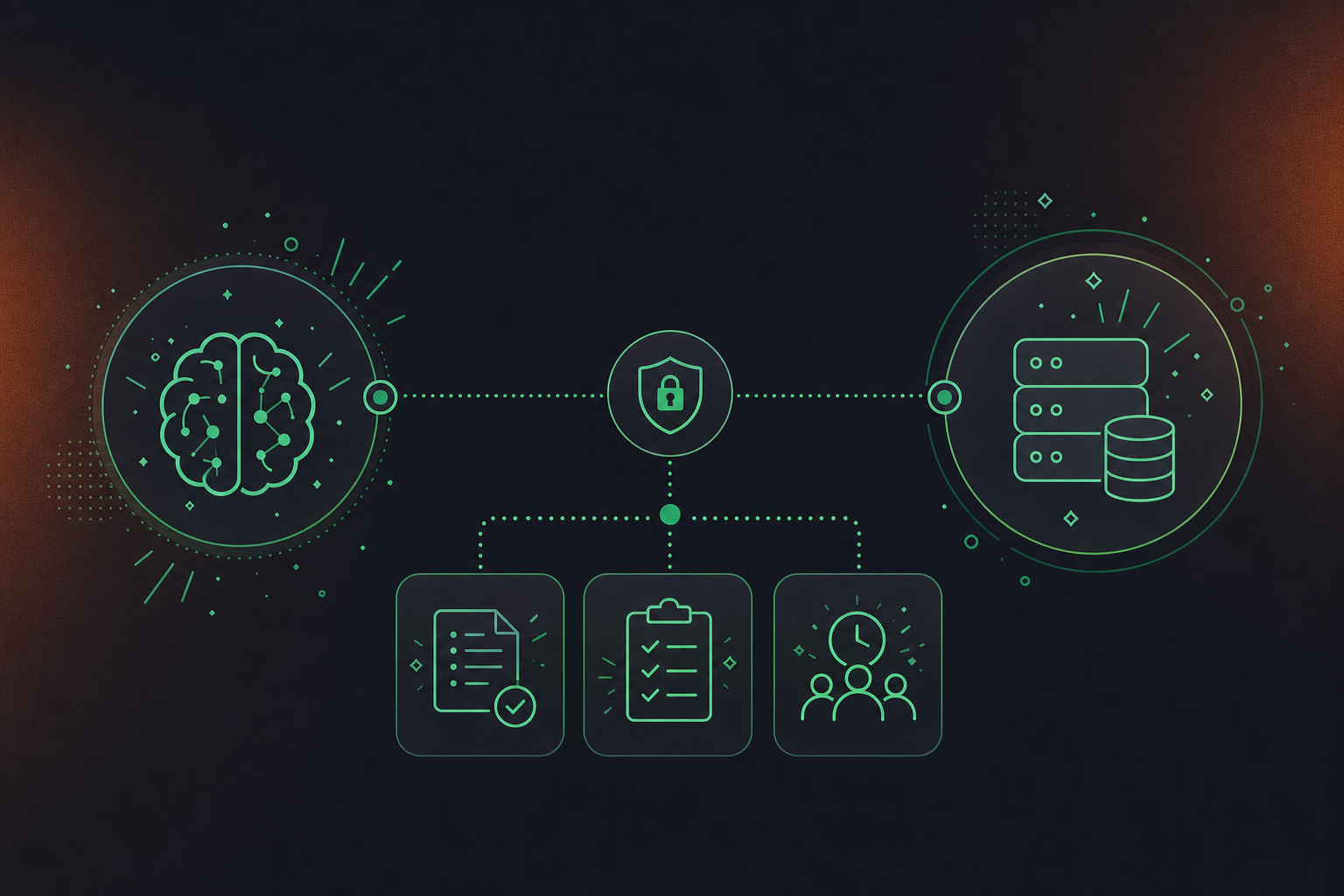
- Claude connects to the conversation data repository as an MCP client; the server exposes structured tools that define what the agent can query
- Raw transcripts are not queryable by default; the data layer must process meetings into decisions with speaker attribution, action items with named owners, and participant history before Claude can return useful answers
- OAuth scoping means Claude only surfaces meetings each authenticated user is authorized to access; permission enforcement happens at the data layer, not at query time
- Spinach AI’s MCP server ships the processing, retrieval, and permission layers pre-built, available on Business and Enterprise plans
- Once connected, Claude can answer queries about pricing decisions, sprint action items, customer commitments, and team blockers directly from the meeting corpus, with attribution to the source meeting and participants
Spinach AI’s MCP server exposes decisions, action items from meeting transcripts with named owners, summaries, and participant history from across the full organizational corpus, with access enforced per user via OAuth and admin approval. Once connected, Claude draws on what was actually said in meetings, beyond what made it into a doc or ticket.
Agent query | Without MCP | With MCP and conversation data |
|---|---|---|
“What did we decide on the pricing model?” | No meeting context | Returns decision, meeting date, and participants |
“What action items came out of the last sprint review?” | Ticket system only | Named owners, source meeting, open status |
“What has the customer said about timeline?” | No call context | Cross-meeting customer context with attribution |
“What are this week’s team blockers?” | Structured data only | Blockers surfaced from standups and syncs |
The gap here is attribution. Claude can return who said what, in which meeting, and when, instead of a generic summary stripped of context and ownership.
Setting Up an MCP Server for Conversation Data
Getting an MCP server running takes a few engineer-weeks for a basic SaaS surface for a basic SaaS surface, and with auth and policy enforcement for internal data exposure, that build scope grows considerably.
There are two core engineering decisions that shape how long this takes and how well it holds up in production.
- SDK and transport selection: Anthropic publishes official SDKs in Python and TypeScript; stdio for local development, HTTP with Server-Sent Events for remote production deployments
- Conversation data structuring: raw transcripts must be processed into decisions with speaker attribution, action items with named owners, and participant history before Claude can return useful answers
- Retrieval and indexing design: unstructured transcript text is not queryable by default; a retrieval index is a separate engineering requirement on top of the processing layer
- Auth-aware permission enforcement: user-scoped OAuth and least-privilege tool definitions must be built before any production deployment; permission gaps surface only when tested against meetings the authenticated user did not attend
- Pre-built alternative: Spinach AI’s MCP server ships the processing, retrieval, and permission layers already solved, available on Business and Enterprise plans, so the build scope is the agent logic and not the data infrastructure
SDK and Transport Selection
Anthropic publishes official SDKs in Python and TypeScript. Both support the same wire protocol: stdio works for local development and testing, while HTTP with Server-Sent Events is the production pattern for remote deployments where Claude connects over a network. Pick the language your team already owns.
Structuring Conversation Data for Agent Consumption
A raw transcript is not agent-ready data. Before a single tool call returns useful context, the transcript needs processing into structured outputs: decisions with speaker attribution, action items with named owners, structured meeting notes with meeting metadata, and participant history that maps names to meetings over time. Retrieval design, indexing, and user-scoped permission enforcement are separate engineering requirements on top of that. An agent that queries unstructured transcripts returns walls of text, not answers.
A purpose-built MCP server for conversation data ships that processing layer already solved. The alternative is building a transcript processing pipeline, a retrieval index, and an auth-aware permission layer before writing a single tool definition.
Connecting Your MCP Server to Claude Agents
Once the MCP server is built and deployed, connecting it to Claude is a configuration task, not an engineering one.
Where MCP Configuration Lives in Claude
In Claude Desktop, MCP server connections are configured in the settings panel under “Integrations” or “Connected tools,” depending on your Claude version. Via the Claude API, server configuration is passed at the session level. You need three things: the server URL, authentication credentials, and the tool manifest that tells Claude what queries it can issue.
Authentication and Permission Scoping
Spinach AI’s MCP server uses OAuth. Claude requests access, the user or admin authorizes it, and the resulting token scopes what data is retrievable per user. For enterprise deployments, admin approval at the org level is required before any user can connect. User-based permission enforcement means Claude only surfaces meetings each individual is authorized to access. The MCP server is available on Business and Enterprise plans only, not on Pro.
Testing the Connection
Issue a test query against a known meeting and confirm the tool call returns structured data: decision text, owner attribution, and meeting date. Then test permission boundaries by querying a meeting the authenticated user did not attend. If that query returns data, the permission layer has a gap and the deployment is not production-ready.
Security Considerations for Conversation Data via MCP
Conversation data contains personnel discussions, customer commitments, and strategic decisions that cause real damage if surfaced to the wrong user or redirected by a malicious query.
Prompt Injection and Context Manipulation
The primary MCP-specific risk is indirect prompt injection: adversarial content embedded in a retrieved meeting summary can redirect agent behavior and trigger unintended tool calls. Veeam’s MCP security research identifies this as the top new risk MCP introduces into enterprise deployments. Input validation and output sandboxing are required controls before any production deployment.
Data Exfiltration and Access Control Drift
MCP server permissions accumulate. An agent with overly broad access can query well beyond what any individual user is authorized to see. User-scoped OAuth and least-privilege tool definitions are the floor, not optional settings.
Compliance Exposure in High-Stakes Environments
In healthcare, financial services, and legal contexts, conversation data carries specific handling requirements. An MCP server that exposes this data without controls at the data layer creates compliance exposure a standard API review will not catch.
Risk | What it looks like in practice | Enterprise control required |
|---|---|---|
Prompt injection | Adversarial content in a transcript redirects agent actions | Input validation, output sandboxing |
Data exfiltration | Agent queries data beyond the user’s authorized scope | User-scoped OAuth, least-privilege tool definitions |
Access control drift | Permissions accumulate across users over time | Regular access audits, admin enforcement |
Compliance exposure | Sensitive conversation data surfaced without governance | SOC 2, HIPAA controls at the data layer; BAA for HIPAA |
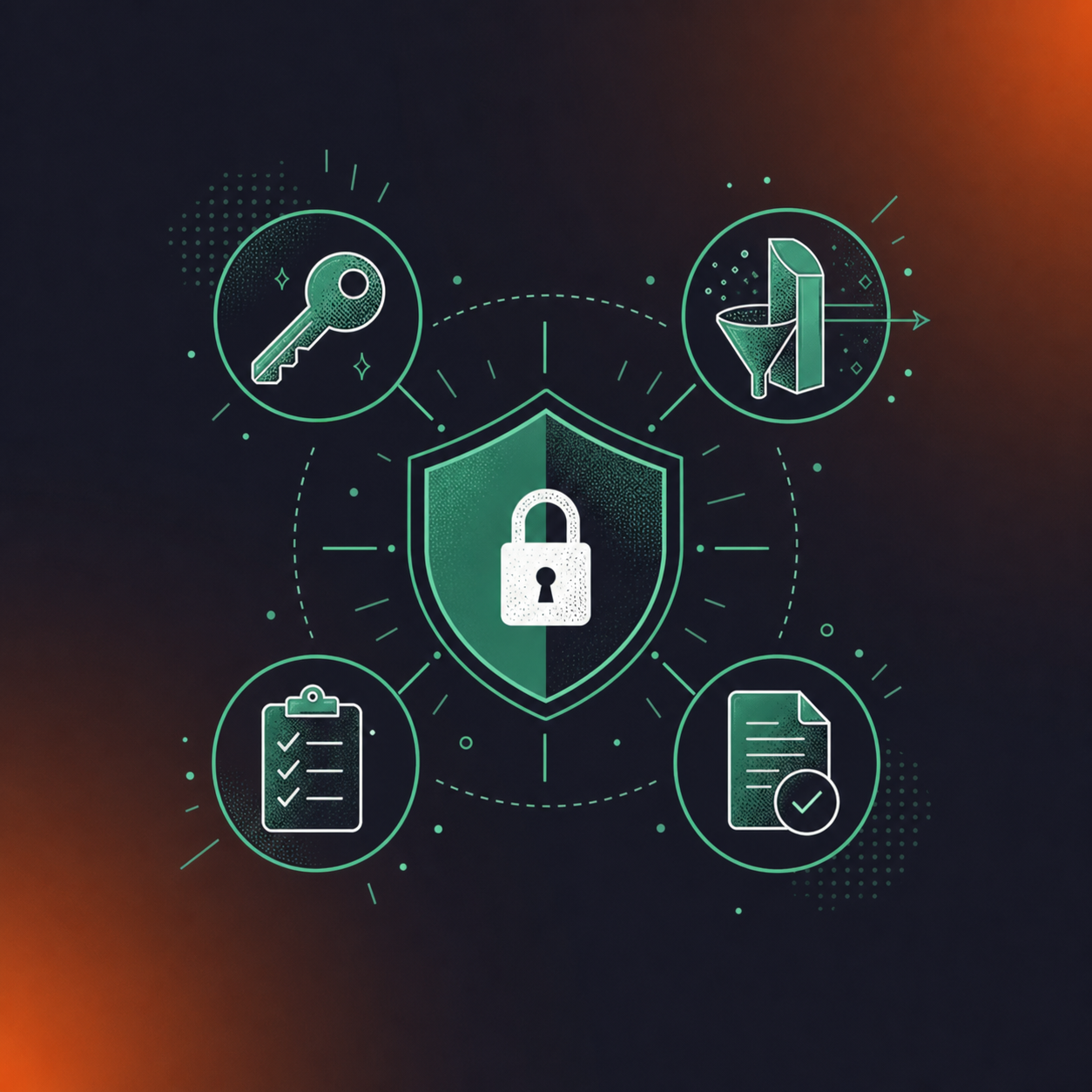
Before deploying any MCP server against meeting data, ask: Are permissions enforced per user at the data layer? Is there a BAA in place if the corpus includes HIPAA-covered conversations? Who has admin visibility into what the agent can query?
Powering Claude Agents With Meeting Intelligence Through Spinach
Spinach AI is an enterprise conversation intelligence platform that joins meetings across Zoom, Google Meet, Microsoft Teams, Slack Huddles, and Webex, capturing every conversation into one organizational corpus instead of per-user accounts. As the system of record for conversation data, Spinach turns unstructured dialogue into governed, AI-ready knowledge: decisions with speaker attribution, action items with named owners, and structured outputs routed into downstream tools. Governance controls include SAML SSO, SCIM provisioning, configurable retention per data type, compliance agents (Enterprise) that classify and flag regulatory risk for review, and PII redaction at the transcript level. The pre-built MCP server ships with OAuth, admin approval, and user-based permission enforcement on Business and Enterprise plans.
- Captures conversations across Zoom, Google Meet, Microsoft Teams, Slack Huddles, and Webex, covering every modality, all in one organizational corpus
- Stores meetings centrally in one organizational corpus, not in per-user accounts, so Claude queries the full organizational record, not one person’s slice of it
- Governance controls include SAML SSO, SCIM provisioning, configurable retention per data type, compliance agents (Enterprise) that classify and flag regulatory risk for review, and PII redaction at the transcript level
- Pre-built MCP server ships with OAuth, admin approval, and user-based permission enforcement, available on Business and Enterprise plans
- Eliminates the shadow-IT fragmentation of per-user notetakers by replacing them with a single governed platform deployed company-wide
What Claude Agents Gain From Spinach
Claude agents querying Spinach get action items with named owners, decisions with full participant attribution, cross-meeting context for ongoing projects, and participant history that maps who has been involved in which conversations across the organization. Because Spinach is the organizational system of record for conversation data, not a per-user note-taker, agents draw on the full governed corpus instead of whichever slice one person happened to store.
- Action items with named owners: not a generic summary, but a structured record of who committed to what and in which meeting
- Decisions with full participant attribution: Claude can return who made the call, who was in the room, and when it happened
- Cross-meeting context for ongoing projects: Claude can surface how a topic has evolved across multiple calls instead of answering from a single session
- Participant history that maps which people have been involved in which conversations across the organization, relevant when Claude needs to identify who owns a topic or escalation path
- Source meeting attribution on every answer: Claude cites the meeting, date, and participants instead of returning an unsourced summary
From Individual Notes to an Organizational Record
A folder of personal notes gives Claude fragments (similar patterns apply when you power ChatGPT agents with conversation data). A governed corpus gives Claude every consequential conversation the organization has had, with policy-enforced sharing and a single MCP server deployed once. That means decisions from a leadership review six months ago are as queryable as last week’s sprint retro, and the agent draws on the full organizational record instead of whatever one person happened to store in their account. The infrastructure difference matters because shadow-IT fragmentation goes beyond producing incomplete answers: it makes the gaps invisible. When Claude returns an answer shaped by whichever slice of the organization stored something reachable, there’s no signal that most of the relevant context was never reached at all.
- Per-user notetakers (Otter, Fathom, native Zoom summaries) each store data in isolated accounts, so Claude inherits that fragmentation and returns answers shaped by whichever slice of the organization stored something reachable
- Spinach captures into a single organizational corpus, so Claude queries the full record instead of one person’s meetings
- Policy-enforced sharing means access rules are set at the org level, not meeting-by-meeting, with no manual export or re-sharing required before Claude can query
- One MCP server deployed once covers the entire organization, with no per-user configuration and no tool sprawl across teams
If your Claude agents are answering from documents and tickets while the actual decisions live in meetings, connect them to Spinach’s MCP server for meeting notes and close that gap.
Final Thoughts on Building Claude Agents That Can Query Your Meeting Data via MCP
Conversation data is the last major blind spot in most Claude agent deployments, and it stays blind because meetings were never built to be queryable. MCP changes the connectivity side of that equation, but you still need a governed corpus on the other end. Spinach AI is the enterprise conversation intelligence platform that provides exactly that: the system of record for conversation data, deployed company-wide, with every conversation captured, centralized, and governed before a single agent query runs. Getting there from a pile of per-user notetaker accounts is a much bigger lift than connecting a purpose-built MCP server to an organizational record that already exists. Spinach’s pre-built MCP server ships with OAuth, admin approval, and user-scoped permissions already in place, available on Business and Enterprise plans.
Connect Claude to a purpose-built MCP server that exposes structured conversation outputs, including decisions with speaker attribution, action items with named owners, and participant history, via OAuth-scoped tool calls. A raw transcript is not enough; the data layer must process meetings into queryable structured records before Claude can return useful answers. Spinach AI’s MCP server ships that processing layer pre-built, with user-based permission enforcement, and is available on Business and Enterprise plans.
Individual notetakers like Otter and Fathom store data in per-user accounts with no enforced policy, so Claude inherits that fragmentation and returns answers shaped by whichever slice of the organization happened to store something reachable. Spinach captures every conversation into a single governed organizational corpus, meaning Claude queries the full record, not one person’s meetings, with access enforced per user at the data layer.
Building your own requires a transcript processing pipeline, a retrieval index, and an auth-aware permission layer before you write a single tool definition. A realistic estimate is several engineer-weeks for a basic surface, more for auth and policy enforcement in production. A pre-built MCP server for conversation data ships those layers already solved. If your team’s time is better spent on the agent logic than the data infrastructure, the pre-built path is the faster one.
Issue a test query against a known meeting and confirm the tool call returns structured data, including decision text, owner attribution, and meeting date. Then test permission boundaries by querying a meeting the authenticated user did not attend; if that query returns data, the permission layer has a gap and the deployment is not production-ready.
The floor is user-scoped OAuth and least-privilege tool definitions to prevent access control drift, plus input validation and output sandboxing to block indirect prompt injection, where adversarial content embedded in a retrieved summary redirects agent behavior. In healthcare or financial services contexts, the MCP server must enforce compliance controls at the data layer itself; a standard API review will not catch exposure from a server that lacks them. If the corpus includes HIPAA-covered conversations, a BAA must be in place before deployment.
MCP is an open standard that defines how AI agents connect to external data sources, collapsing what would otherwise be thousands of one-off integrations into one server any compliant agent can query. Before MCP, connecting 10 AI applications to 100 tools required up to 1,000 separate integrations — each a custom build and a separate failure point. With MCP, Claude connects to any compliant server using the same wire protocol, which is what makes it a foundation worth building on across data sources, including conversation data.
MCP runs on two transport layers: stdio for local processes and HTTP with Server-Sent Events for remote servers, with JSON-RPC 2.0 handling the message format. Stdio works for local development and testing; HTTP with Server-Sent Events is the production pattern when Claude connects to your server over a network. Pick based on where your server runs — local dev uses stdio, remote deployments use HTTP with SSE.
Docs and tickets capture outcomes, not the reasoning that produced them — the call where direction was set, the competing priorities that got weighed, and the blockers that shifted the timeline never make it into a queryable form. Claude answers accurately from what it can reach, which means it returns what the ticket says without the meeting context that explains why. Connecting Claude to a governed conversation data corpus via MCP closes that gap by making meeting decisions as queryable as any structured database.
A raw transcript is not agent-ready data — it must be processed into structured outputs before Claude can return useful answers. That means decisions with speaker attribution, action items with named owners, meeting metadata, and participant history that maps names to meetings over time. An agent querying unstructured transcript text returns walls of text, not answers; the processing and retrieval layer is a separate engineering requirement on top of transcription.
The top MCP-specific risk is indirect prompt injection: adversarial content embedded in a retrieved meeting summary can redirect agent behavior and trigger unintended tool calls, a risk Veeam’s MCP security research identifies as the leading new threat MCP introduces into enterprise deployments. Access control drift is the second — MCP server permissions accumulate, and an agent with overly broad access can query well beyond what any individual user is authorized to see. User-scoped OAuth, least-privilege tool definitions, input validation, and output sandboxing are required controls before any production deployment.
OAuth scoping is applied at the data layer so Claude only surfaces meetings each authenticated user is authorized to access — permission enforcement happens when the data is retrieved, not at query time. For enterprise deployments, admin approval at the org level is required before any user can connect. Testing permission boundaries by querying a meeting the authenticated user did not attend is a required pre-production check: if that query returns data, the permission layer has a gap.
The MCP server is included on Business and Enterprise plans only — it is not available on Pro or Starter. Business is priced at $29 per user per month (or $19 per user per month billed annually) and includes the MCP server with OAuth, admin approval, and user-based permission enforcement. The API and webhooks, which support custom export pipelines, are Enterprise-only with custom pricing.
When teams run separate tools — one using Otter, another Fathom, a third relying on the native Zoom summary — each person’s meetings stay in their own account with no enforced policy governing what gets captured or who can query it. A Claude agent connecting to that environment inherits the fragmentation and returns answers shaped by whichever slice of the organization happened to store something reachable. The deeper problem is that the gaps are invisible: Claude returns an answer with no signal that most of the relevant context was never reached at all.
Yes — Spinach AI’s MCP server ships the transcript processing pipeline, retrieval index, and auth-aware permission layer pre-built, available on Business and Enterprise plans, so the build scope is the agent logic rather than the data infrastructure. Building your own is possible using Anthropic’s official Python or TypeScript SDKs, but a realistic estimate is several engineer-weeks for a basic surface, and considerably more when auth and policy enforcement for internal data exposure are included. If your team’s time is better spent on agent logic than data infrastructure, the pre-built path is the faster one.
A purpose-built MCP server for conversation data exposes decisions with speaker attribution, action items with named owners, meeting summaries with metadata, and participant history that maps which people have been involved in which conversations across the organization. Every answer Claude returns includes source meeting attribution — the meeting date and participants — rather than an unsourced summary. That attribution matters when Claude needs to identify who owns a topic, trace how a decision evolved across multiple calls, or surface a customer commitment with the context of who made it and when.
What to do now
You made it to the end of this article! Here are some things you can do now:
- You should check out our library of meeting agenda templates for every type of meeting.
- Check out Spinach to see how it can help you run a high performing org.
- If you found this article helpful, please share it with others on Linkedin or X (Twitter)

