How to Automatically Create Jira Tickets From Zoom Meeting Notes in March 2026
Learn how to automatically create Jira tickets from Zoom meeting notes in March 2026. Save 10-15 hours monthly with AI-powered automation that captures action items.
 Maintouch
Every meeting ends the same way: someone scrambles to document action items in Jira before context evaporates. You’re either typing frantically during discussions or spending 30 minutes afterward recreating everything from memory and chat logs. Automatically creating Jira tickets from Zoom meetings captures every commitment as it happens and pushes tickets to your backlog without anyone switching tabs. Your team focuses on solving problems while your backlog updates itself.
TLDR:
- Connect AI meeting assistants to Zoom and Jira once to auto-generate tickets from discussions
- Teams recover 10-15 hours monthly by eliminating post-meeting ticket documentation work
- Name assignees and use clear action verbs during meetings to improve ticket accuracy
- Review draft tickets before publishing to catch mistakes and verify proper context
- Spinach captures action items in real-time and creates Jira tickets with full context in one click
Why Automate Jira Ticket Creation From Zoom Meeting Notes
Your team just wrapped a productive Zoom meeting. Someone mentioned three bugs, two feature requests, and a technical debt item that needs attention. Now what?
If you’re like most teams, you’re frantically scrolling through the chat, replaying the recording, or relying on memory to manually create Jira tickets. This process eats up 15-30 minutes after every meeting. Multiply that across weekly standups, sprint planning, and client calls, and you’re looking at hours of administrative overhead each month.
Manual ticket creation breeds inconsistency. Different team members write tickets differently. Context gets lost. Priority levels vary. Critical details mentioned verbally never make it into the ticket description.
Automation captures meeting discussions in real time and converts them into properly formatted Jira tickets without human intervention.
Understanding the Zoom to Jira Automation Workflow
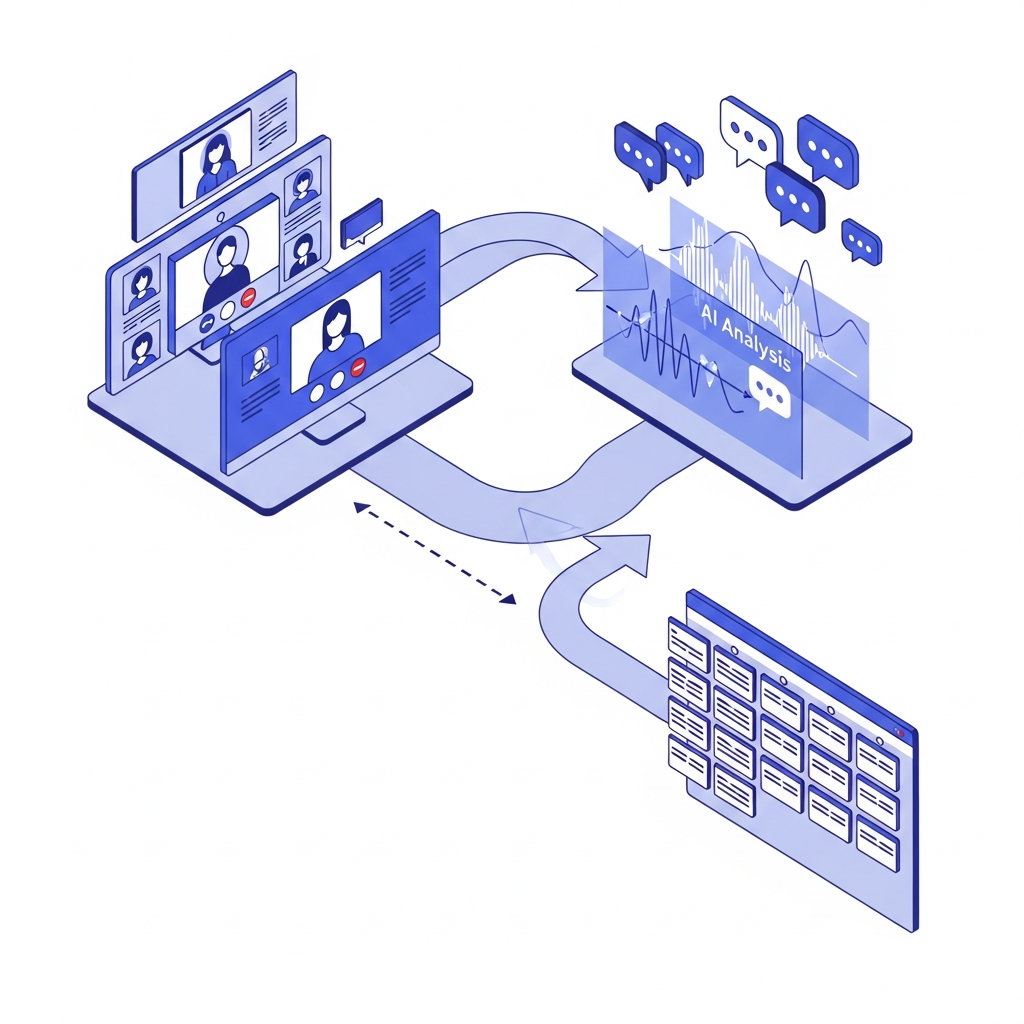
The workflow connects three stages that preserve meeting context.
An AI meeting assistant joins your Zoom call, records the conversation, and transcribes everything spoken. It identifies individual speakers and timestamps, creating a searchable record.
Next, AI analyzes the transcript to identify actionable items like commitments, bug reports, feature requests, and technical tasks. It captures surrounding context including why the work matters, who requested it, and any constraints discussed.
Finally, the system creates Jira tickets automatically from these action items. Each ticket includes the extracted task as the title, relevant discussion context in the description, and metadata like assignees mentioned by name. The ticket links back to the exact moment in the meeting recording where it was discussed.
This process preserves the full story behind each task, delivering tickets with customer impact, reproduction steps, and technical considerations captured automatically while you focused on the conversation.
Prerequisites for Setting Up Automatic Ticket Creation
You need four things before turning on automation.
First, verify admin access in Jira for project management. You’ll need permission to create tickets in your target project and configure integrations. Most automation tools require project admin rights at minimum.
Second, identify your target Jira workspace, project, and default issue type. Will action items become tasks, stories, or bugs? Decide this now to save configuration time later.
Third, connect your Zoom account. If using an AI meeting assistant, you’ll need calendar access so it can join meetings automatically. For Zoom AI Companion exports, verify you have recording permissions turned on.
Fourth, brief your team on speaking clearly about action items during meetings. Mention assignees by name, state deadlines explicitly, and flag items that need documentation. Clear verbal cues help AI accurately extract and categorize tasks.
Method 1: Using AI Meeting Assistants With Native Jira Integration
AI meeting assistants like Spinach offer the fastest path from Zoom meetings to Jira tickets.
Connect your calendar once, and the assistant joins your Zoom calls automatically. During the meeting, it transcribes conversations and identifies action items as they’re discussed. When someone says “Hey Spinach, create a ticket,” it flags that item for documentation.
After the meeting, review draft tickets in the assistant’s dashboard. Each ticket includes the action item as the summary, conversation context in the description, and the assignee if mentioned by name. Select your Jira project, adjust fields if needed, and create tickets with one click.
This method works across meeting types without changing your workflow. Spinach supports Jira alongside Asana, Linear, ClickUp, Trello, and Monday.com, letting you route different action items to the right project management tool.
AI Meeting Assistant | Jira Integration Method | Real-Time Action Item Capture | Setup Time | Additional Project Management Tools Supported |
|---|---|---|---|---|
Spinach | Native one-click integration with direct ticket creation from dashboard | Yes, capture action items during meetings with voice commands | Under 5 minutes with calendar and Jira connection | Asana, Linear, ClickUp, Trello, Monday.com |
Zoom AI Companion | Requires middleware automation tools like Zapier to parse summaries and create tickets | No, generates broad meeting summaries after recording completes | 15-30 minutes to configure Zapier workflows and field mapping | Requires separate automation workflows for each tool |
Generic Meeting Bots | Export transcript manually then copy-paste into Jira or use API integrations | Limited, requires manual review of full transcript to identify action items | Varies by tool, typically 10-20 minutes plus manual processing per meeting | Depends on specific tool capabilities and available integrations |
Method 2: Connecting Zoom AI Companion to Jira Through Automation Tools
Zoom AI Companion generates meeting summaries when you record calls. These summaries sit in Zoom’s cloud with basic action items and discussion points.
Moving these into Jira requires middleware automation tools like Zapier. Set up a Zap that triggers when your Zoom recording completes. Extract the AI Companion summary, then parse the text to identify action items based on Zoom’s formatting patterns.
Each parsed action item becomes a Jira ticket. Map the action text to your ticket summary field and route meeting notes to the description. You’ll need to manually set project, issue type, and priority since Zoom summaries lack this metadata.
This works if you already pay for Zoom’s AI Companion feature. The catch is less accuracy than dedicated meeting tools because Zoom produces broad summaries instead of precise action item extraction.
Configuring Ticket Templates and Field Mapping
Proper field mapping turns raw meeting transcripts into actionable Jira tickets. Without it, you get cluttered descriptions, missing assignees, and uniform priorities that force manual cleanup later.
Start with ticket descriptions. Map the relevant meeting discussion context to Jira’s description field, beyond the action item itself. Include why the work matters, any constraints mentioned, and customer impact. Some tools let you choose between full transcript excerpts or AI-generated summaries, which helps considering 67% of meetings end without clear summaries.
Configure assignee detection by name recognition. Set fallback rules for unassigned items by routing them to a team lead or leaving them for manual triage. Map priority and issue type based on keywords like “urgent” or “blocker” to trigger high priority automatically. This is particularly valuable when using Jira for scrum workflows.
Best Practices for Meeting Structure to Optimize Ticket Creation
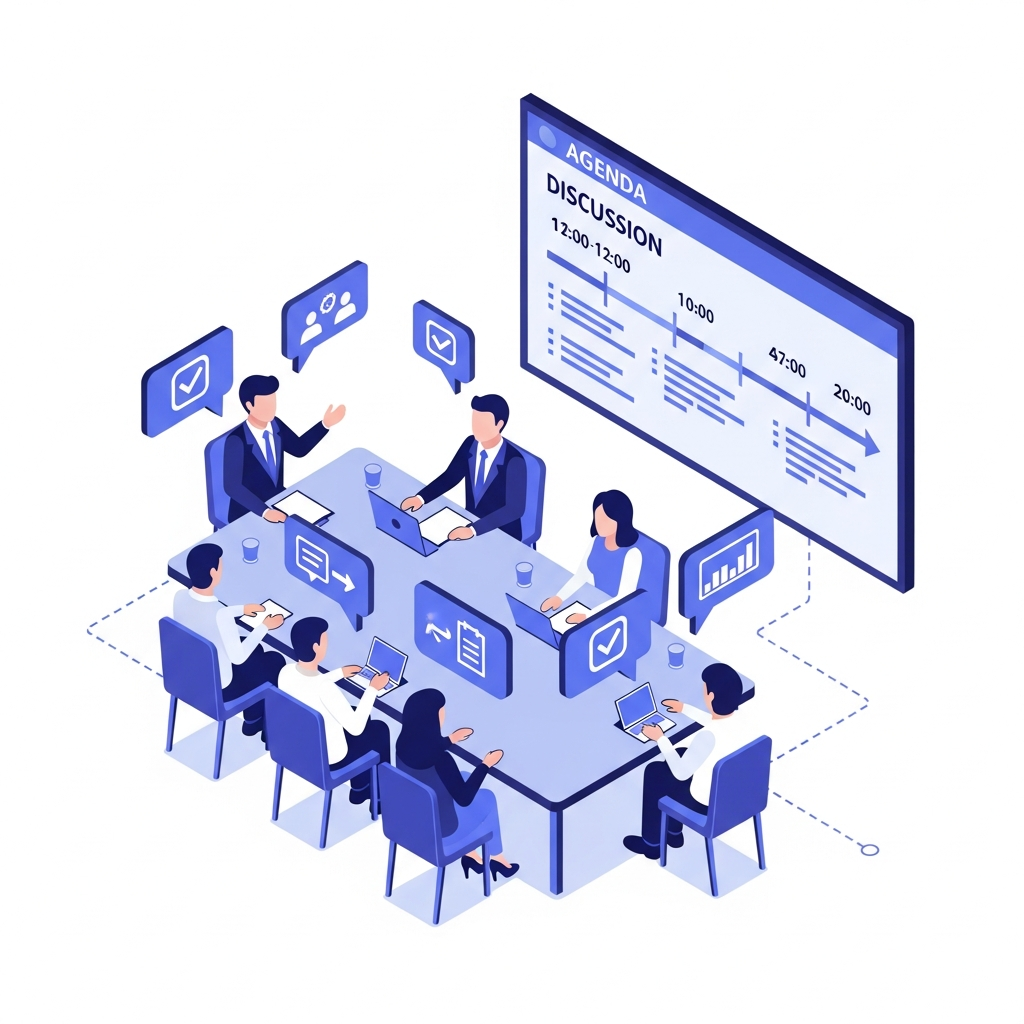
The quality of your automated tickets starts with how you structure meetings. Your AI assistant works best when given clear signals to extract.
Start action items with specific verbs: “create,” “update,” “fix,” or “investigate.” Say “Create a user authentication flow” instead of vague language like “we should think about authentication.” Direct phrasing gives AI the extraction cues it needs.
Name assignees during discussions. “John will fix the login bug” beats “someone needs to handle that.” Clear attribution means properly assigned tickets without cleanup later.
Reference existing Jira numbers when discussing ongoing work. Mention “This relates to PROJ-123” during the conversation. AI meeting assistants detect these references and link tickets automatically.
Reserve your final 10 minutes for action item recap. State explicitly what needs documentation. This concentrated timespan gives AI a focused extraction zone and improves accuracy.
Brief external participants that your meeting assistant creates tickets from discussions. Transparency sets expectations and encourages clearer communication from everyone on the call.
Handling Edge Cases and Quality Control
Automation saves time but makes mistakes. Your job is catching them before they hit your backlog.
Review tickets in draft mode before publishing. Spinach and similar tools hold tickets for approval, giving you time to scan summaries for clarity, verify descriptions contain enough context, and check assignees are correct. This review process resembles backlog refinement where you confirm tickets are ready for action. A five-minute review after meetings catches most issues.
Some meetings generate zero actionable work. Strategy sessions, brainstorms, and retrospectives rarely need tickets. Configure your meeting assistant to skip ticket creation for specific recurring meetings, or delete draft tickets when none apply.
Duplicate detection gets tricky when multiple meetings reference the same issue. Before creating new tickets, check if someone already documented the bug discussed. Link related tickets together instead. Some tools detect existing ticket numbers mentioned during conversations and auto-link instead of creating duplicates.
Build a correction workflow for mistakes that slip through. Assign someone, such as your scrum master, to audit automated tickets weekly. They’ll spot patterns like misassigned owners, incorrect priorities, or vague descriptions. Feed corrections back by updating meeting guidelines.
Human judgment stays in the loop. Automation speeds up documentation, but you decide what qualifies as a real ticket, what priority makes sense, and when context needs clarification.
Measuring the Impact of Automated Ticket Creation
Track time savings by comparing manual ticket creation hours before and after automation. Survey your team on how long they spent documenting meeting outcomes monthly, then measure the same period post-automation. Most teams recover 10-15 hours per month across the organization.
Assess ticket quality through completion rates. Well-formed automated tickets get closed faster because they contain proper context. Track average time-to-completion and rejection rates where developers send tickets back for clarification.
Monitor what percentage of meeting action items actually become tickets. Before automation, verbal commitments disappear. After automation, you’ll see 80-90% conversion rates because nothing relies on memory.
Measure adoption by tracking how many meetings generate automated tickets versus manual entries. Research shows up to 50% of work activities can be automated, and high adoption rates prove you’re capturing that value. When most project work originates from automated meeting capture, you’ve achieved real ROI.
How Spinach AI Automates Zoom Meeting to Jira Ticket Creation
Spinach joins your Zoom meetings through calendar integration, transcribes conversations, and spots action items as they happen, making it perfect for remote standups. Say “Hey Spinach, create a ticket” during the call to flag items for Jira.
After the meeting, review draft tickets in the Spinach dashboard. Each includes the action summary, context explaining why the work matters, and assignees mentioned by name. Select your Jira project, adjust fields if needed, and push tickets with one click.
Spinach connects meeting capture through ticket creation without switching tools. Your team stays in the conversation while AI handles documentation, turning verbal commitments into tracked work items.
Final Thoughts on Meeting to Ticket Automation
The teams that automate Jira ticket creation from Zoom meetings spend less time on administrative work and more time shipping features. You capture every commitment made during calls without relying on memory or manual note-taking. Your tickets include proper context, clear assignees, and links back to the original discussion. Connect your tools once and let automation handle the rest.
With an AI meeting assistant like Spinach, you can start creating automated tickets within minutes—just connect your calendar and Jira workspace once, and the assistant joins your Zoom calls automatically from that point forward.
Review draft tickets before publishing them to your Jira backlog—most tools hold tickets for your approval, giving you time to verify summaries, add missing details, and correct any misassigned owners before they reach your team.
Yes, you can configure routing rules based on keywords, meeting type, or manual selection during the review phase—for example, sending bugs to your engineering project while routing feature requests to your product backlog.
Your team will get better results by stating action items clearly with specific verbs like “create” or “fix,” naming assignees explicitly, and mentioning existing ticket numbers when relevant, but automation works without perfect phrasing.
Most teams recover 10-15 hours per month across the organization by eliminating the manual work of replaying recordings, transcribing action items, and formatting Jira tickets after every meeting.
What to do next
Now that you've read this article, here are some things you should do:
- Our library of meeting agenda templates is designed to help you run more effective meetings.
- Learn more about Spinach and how it can help you run a high performing org.
- If you found this article helpful, please share it with others on Linkedin or X (Twitter)

