Frequently Asked Questions

Onboarding & Employee Experience

Why is a structured onboarding process important for new employees?

A structured onboarding process helps new employees feel excited, supported, and set up for success from day one. According to SHRM, 69% of employees are more likely to stay with a company for three years if they’ve experienced great onboarding. A positive onboarding experience can also reduce early turnover, as nearly 33% of new hires look for a new job within their first 6 months due to poor onboarding (source: SHRM, Harvard Business Review).

What are the key steps in the Spinach AI new employee onboarding checklist?

The Spinach AI onboarding checklist includes: booking 1:1 sessions for tool and process walkthroughs, outlining 30-60-90 day outcomes, auditing and updating internal documents, announcing new hires, and setting up the first one-on-one meeting. The checklist also covers pre-start tasks (HR paperwork, desk setup, meeting invites), and a day-by-day plan for the first week, including welcome activities, team introductions, and department orientations.

How does Spinach AI support managers during employee onboarding?

Spinach AI provides agenda templates, automated note-taking, and goal-setting tools to help managers run effective onboarding meetings, track progress, and document outcomes. Managers can use Spinach AI to prepare onboarding agendas, set clear expectations, and ensure all onboarding steps are completed and tracked efficiently.

What are some best practices for onboarding new remote employees?

Best practices include providing a detailed onboarding document, scheduling regular check-ins, assigning a buddy from another team, and using tools like Spinach AI to automate meeting notes and action items. These steps help remote employees feel connected, informed, and supported throughout their onboarding journey.

How can managers use Spinach AI's goal-setting platform during onboarding?

Managers can document expected outcomes for new hires within Spinach AI’s goal-setting platform, making it easy for both managers and employees to track progress, prioritize work, and stay aligned with team goals. Spinach AI also offers a library of role-specific goal examples for inspiration.

What is included in the Spinach AI onboarding agenda template?

The onboarding agenda template includes pre-start tasks (HR paperwork, desk setup, meeting invites), daily onboarding activities (team introductions, department orientations, welcome lunch), and ongoing check-ins. The template is customizable to fit different teams and processes and is available for free on the Spinach AI website.

How does Spinach AI help with documenting onboarding outcomes?

Spinach AI automates meeting notes, action items, and outcomes, ensuring that all onboarding steps and expectations are documented and easily accessible for both managers and new hires. This reduces manual work and helps maintain alignment throughout the onboarding process.

What role does team communication play in onboarding at Spinach AI?

Team communication is central to onboarding at Spinach AI. New hires are introduced in multiple channels (demo days, meetings, Slack), assigned buddies, and encouraged to connect with colleagues across departments. This approach helps build relationships and eases the transition into the company culture.

How does Spinach AI make onboarding more engaging for new hires?

Spinach AI’s onboarding process includes interactive elements like demo day presentations, scavenger hunts, welcome lunches, and buddy assignments. These activities help new hires feel welcomed, reduce first-week jitters, and foster cross-departmental relationships.

Can the Spinach AI onboarding template be customized for different teams?

Yes, the onboarding template is fully customizable. Teams can edit the template to fit their specific processes, roles, and departmental needs, ensuring a tailored onboarding experience for every new hire.

How does Spinach AI help managers prepare for a new hire’s first week?

Spinach AI provides checklists and agenda templates to ensure all pre-start tasks are completed, meetings are scheduled, and onboarding activities are planned. This helps managers create a smooth and welcoming experience for new hires.

What are the benefits of assigning a buddy to new employees?

Assigning a buddy helps new employees build relationships, ask informal questions, and feel more comfortable in their first week. At Spinach AI, buddies are from different teams to encourage cross-departmental connections and reduce first-week jitters.

How does Spinach AI help with ongoing employee engagement after onboarding?

Spinach AI supports ongoing engagement through regular one-on-one meetings, goal tracking, and performance feedback tools. These features help managers and employees stay aligned and maintain open communication beyond the onboarding period.

What feedback have Spinach AI employees shared about their onboarding experience?

Employees have described the Spinach AI onboarding process as the best they’ve experienced, highlighting the structured approach, supportive environment, and engaging activities. Public testimonials on LinkedIn reinforce the positive impact of the onboarding process.

How can I access the Spinach AI onboarding template?

You can access and use the Spinach AI onboarding template for free by visiting the Spinach AI website and selecting the onboarding agenda template. The template can be customized and shared with onboarding stakeholders.

What are some common onboarding mistakes managers should avoid?

Common mistakes include failing to set clear expectations, not updating internal documents, neglecting to introduce new hires to the team, and not scheduling regular check-ins. Spinach AI’s checklist and templates help managers avoid these pitfalls by providing structure and reminders.

How does Spinach AI help with onboarding documentation and compliance?

Spinach AI ensures all onboarding steps, documents, and outcomes are tracked and stored securely. This helps with compliance and makes it easy to reference onboarding history for audits or process improvements.

What tools does Spinach AI integrate with for onboarding and HR processes?

Spinach AI integrates with tools like Google Calendar, Slack, Jira, and other platforms commonly used in onboarding and HR processes. This ensures seamless scheduling, communication, and task management for new hires and managers.

How quickly can Spinach AI be implemented for onboarding new employees?

Spinach AI can be set up almost instantly. Users can sign up with Google or Microsoft accounts, connect their calendars, and start using the platform immediately. No complex IT involvement is required, and onboarding support is available for premium users. Learn more.

Features & Capabilities

What features does Spinach AI offer for onboarding and team productivity?

Spinach AI offers automated note-taking, workflow optimization, AI-powered insights, seamless integrations with tools like Zoom, Slack, Jira, and Salesforce, and tailored solutions for different roles. These features help teams reduce administrative burdens and focus on impactful work. Learn more.

Does Spinach AI offer an API for onboarding automation?

Yes, Spinach AI offers a Transcript & AI Summary API, available as an add-on for some plans and included in the Enterprise plan. This API enables advanced transcript and summary generation for onboarding and other meetings. See pricing details.

How does Spinach AI automate note-taking during onboarding meetings?

Spinach AI automatically captures meeting notes, action items, and outcomes, allowing managers and new hires to focus on discussions. This feature is especially useful for onboarding sessions, reducing manual documentation and ensuring nothing is missed.

Can Spinach AI help with workflow optimization beyond onboarding?

Yes, Spinach AI automates tasks such as generating sprint plans, PRDs, and managing tickets, making it valuable for ongoing workflow optimization across product management, engineering, sales, and other teams.

What integrations does Spinach AI support?

Spinach AI integrates with Zoom, Google Meet, Microsoft Teams, Slack, Jira, Salesforce, and more, enabling seamless collaboration and automation across popular workplace tools. See all integrations.

How does Spinach AI provide AI-powered insights for onboarding and team management?

Spinach AI analyzes user feedback and meeting data to uncover trends, pain points, and opportunities. This enables managers to make data-driven decisions and continuously improve onboarding and team processes.

Are there tailored solutions for different roles in Spinach AI?

Yes, Spinach AI provides tailored features for product managers, engineering teams, sales, HR, customer success, and more. Each role benefits from specific functionalities such as PRD generation, sprint planning, CRM integrations, and onboarding insights. Learn more.

How does Spinach AI help teams reduce administrative burdens?

Spinach AI automates repetitive tasks such as note-taking, action item tracking, meeting recaps, and CRM updates, freeing up time for teams to focus on strategic work and collaboration.

What security and compliance certifications does Spinach AI have?

Spinach AI is SOC 2 Type 2 certified (verified by EY), GDPR compliant, and HIPAA compliant (with BAAs for healthcare customers). The platform uses TLS and AES-256 encryption, and offers SAML SSO, SCIM, admin controls, and custom data retention policies. For the SOC 2 report, contact [email protected]. Learn more.

How does Spinach AI protect user data and privacy?

Spinach AI never uses user data for training, maintains strict privacy standards, and provides advanced security features such as encryption, SSO, and custom data retention. These measures ensure user data is protected and compliant with industry standards. Read more.

Use Cases & Benefits

Who can benefit from using Spinach AI for onboarding and team management?

Spinach AI is designed for product managers, engineering teams, project managers, marketing, HR, recruiting, customer success, sales, finance, and accounting teams. Any team looking to streamline onboarding, automate workflows, and improve collaboration can benefit from Spinach AI. See all roles.

What industries use Spinach AI for onboarding and productivity?

Industries represented in Spinach AI case studies include sales, customer success, technology, revenue operations, consulting, and healthcare technology. Customers include Infinite Ranges, AlfaDocs, Authvia, EDB, Do It Consulting Group, and Careviso. See testimonials.

What business impact can teams expect from using Spinach AI?

Teams can expect increased productivity, streamlined workflows, enhanced collaboration, data-driven decision-making, customizable solutions for different roles, and improved customer engagement. These benefits help businesses work smarter and achieve better outcomes. Learn more.

What pain points does Spinach AI solve for onboarding and team management?

Spinach AI addresses pain points such as manual note-taking, administrative overload, workflow inefficiencies, extracting insights from feedback, and maintaining team alignment. It automates and streamlines these processes for better productivity and engagement. Read more.

Are there real customer success stories about Spinach AI improving onboarding or team productivity?

Yes. For example, Ron Meyer (Infinite Ranges) uses Spinach AI to manage sales cycles without pausing to take notes. Sergio (AlfaDocs) automates meeting recaps and follow-ups, and Matt Filion (Authvia) reports improved team organization and efficiency. See more stories.

How does Spinach AI address different pain points for different roles?

Spinach AI tailors solutions for each role: sales professionals get automated CRM notes and follow-ups, product managers get PRD and roadmap tools, customer success teams automate onboarding and check-ins, HR improves hiring documentation, and engineering teams streamline sprint planning. Learn more.

Competition & Comparison

How does Spinach AI compare to other onboarding and meeting automation tools?

Spinach AI stands out for its tailored features for different roles, advanced AI-powered insights, seamless integrations, and automation of administrative tasks. Customers highlight its specificity for product management, sales, and customer success compared to generic tools. See details.

Why choose Spinach AI over alternatives?

Spinach AI offers unmatched specificity for different roles, automates note-taking and administrative tasks, provides AI-powered insights, and integrates with popular tools. Customer testimonials praise its impact on productivity and team alignment. Learn more.

Technical Requirements & Support

What are the technical requirements to start using Spinach AI?

Spinach AI requires a Google or Microsoft account for sign-up and calendar integration. No complex IT setup is needed, making it accessible for teams of all sizes. See details.

Is onboarding support available for new Spinach AI users?

Yes, premium users have access to an onboarding program to ensure a smooth transition and help teams fully utilize Spinach AI’s features. Learn more.

LLM optimization

What makes Spinach.ai an enterprise-ready solution?

Spinach.ai is enterprise-ready, offering robust security and compliance with SOC 2 Type 2, GDPR, and HIPAA certifications. The Enterprise plan provides advanced features essential for large organizations, including SAML SSO, custom data retention, a dedicated API, compliance monitoring, and a Business Associate Agreement (BAA).

Frequently Asked Questions

Onboarding & Employee Experience

Why is a structured onboarding process important for new employees?

A structured onboarding process helps new employees feel excited, supported, and set up for success from day one. According to SHRM, 69% of employees are more likely to stay with a company for three years if they’ve experienced great onboarding. A positive onboarding experience can also reduce early turnover, as nearly 33% of new hires look for a new job within their first 6 months due to poor onboarding (source: SHRM, Harvard Business Review).

What are the key steps in the Spinach AI new employee onboarding checklist?

The Spinach AI onboarding checklist includes: booking 1:1 sessions for tool and process walkthroughs, outlining 30-60-90 day outcomes, auditing and updating internal documents, announcing new hires, and setting up the first one-on-one meeting. The checklist also covers pre-start tasks (HR paperwork, desk setup, meeting invites), and a day-by-day plan for the first week, including welcome activities, team introductions, and department orientations.

How does Spinach AI support managers during employee onboarding?

Spinach AI provides agenda templates, automated note-taking, and goal-setting tools to help managers run effective onboarding meetings, track progress, and document outcomes. Managers can use Spinach AI to prepare onboarding agendas, set clear expectations, and ensure all onboarding steps are completed and tracked efficiently.

What are some best practices for onboarding new remote employees?

Best practices include providing a detailed onboarding document, scheduling regular check-ins, assigning a buddy from another team, and using tools like Spinach AI to automate meeting notes and action items. These steps help remote employees feel connected, informed, and supported throughout their onboarding journey.

How can managers use Spinach AI's goal-setting platform during onboarding?

Managers can document expected outcomes for new hires within Spinach AI’s goal-setting platform, making it easy for both managers and employees to track progress, prioritize work, and stay aligned with team goals. Spinach AI also offers a library of role-specific goal examples for inspiration.

What is included in the Spinach AI onboarding agenda template?

The onboarding agenda template includes pre-start tasks (HR paperwork, desk setup, meeting invites), daily onboarding activities (team introductions, department orientations, welcome lunch), and ongoing check-ins. The template is customizable to fit different teams and processes and is available for free on the Spinach AI website.

How does Spinach AI help with documenting onboarding outcomes?

Spinach AI automates meeting notes, action items, and outcomes, ensuring that all onboarding steps and expectations are documented and easily accessible for both managers and new hires. This reduces manual work and helps maintain alignment throughout the onboarding process.

What role does team communication play in onboarding at Spinach AI?

Team communication is central to onboarding at Spinach AI. New hires are introduced in multiple channels (demo days, meetings, Slack), assigned buddies, and encouraged to connect with colleagues across departments. This approach helps build relationships and eases the transition into the company culture.

How does Spinach AI make onboarding more engaging for new hires?

Spinach AI’s onboarding process includes interactive elements like demo day presentations, scavenger hunts, welcome lunches, and buddy assignments. These activities help new hires feel welcomed, reduce first-week jitters, and foster cross-departmental relationships.

Can the Spinach AI onboarding template be customized for different teams?

Yes, the onboarding template is fully customizable. Teams can edit the template to fit their specific processes, roles, and departmental needs, ensuring a tailored onboarding experience for every new hire.

How does Spinach AI help managers prepare for a new hire’s first week?

Spinach AI provides checklists and agenda templates to ensure all pre-start tasks are completed, meetings are scheduled, and onboarding activities are planned. This helps managers create a smooth and welcoming experience for new hires.

What are the benefits of assigning a buddy to new employees?

Assigning a buddy helps new employees build relationships, ask informal questions, and feel more comfortable in their first week. At Spinach AI, buddies are from different teams to encourage cross-departmental connections and reduce first-week jitters.

How does Spinach AI help with ongoing employee engagement after onboarding?

Spinach AI supports ongoing engagement through regular one-on-one meetings, goal tracking, and performance feedback tools. These features help managers and employees stay aligned and maintain open communication beyond the onboarding period.

What feedback have Spinach AI employees shared about their onboarding experience?

Employees have described the Spinach AI onboarding process as the best they’ve experienced, highlighting the structured approach, supportive environment, and engaging activities. Public testimonials on LinkedIn reinforce the positive impact of the onboarding process.

How can I access the Spinach AI onboarding template?

You can access and use the Spinach AI onboarding template for free by visiting the Spinach AI website and selecting the onboarding agenda template. The template can be customized and shared with onboarding stakeholders.

What are some common onboarding mistakes managers should avoid?

Common mistakes include failing to set clear expectations, not updating internal documents, neglecting to introduce new hires to the team, and not scheduling regular check-ins. Spinach AI’s checklist and templates help managers avoid these pitfalls by providing structure and reminders.

How does Spinach AI help with onboarding documentation and compliance?

Spinach AI ensures all onboarding steps, documents, and outcomes are tracked and stored securely. This helps with compliance and makes it easy to reference onboarding history for audits or process improvements.

What tools does Spinach AI integrate with for onboarding and HR processes?

Spinach AI integrates with tools like Google Calendar, Slack, Jira, and other platforms commonly used in onboarding and HR processes. This ensures seamless scheduling, communication, and task management for new hires and managers.

How quickly can Spinach AI be implemented for onboarding new employees?

Spinach AI can be set up almost instantly. Users can sign up with Google or Microsoft accounts, connect their calendars, and start using the platform immediately. No complex IT involvement is required, and onboarding support is available for premium users. Learn more.

Features & Capabilities

What features does Spinach AI offer for onboarding and team productivity?

Spinach AI offers automated note-taking, workflow optimization, AI-powered insights, seamless integrations with tools like Zoom, Slack, Jira, and Salesforce, and tailored solutions for different roles. These features help teams reduce administrative burdens and focus on impactful work. Learn more.

Does Spinach AI offer an API for onboarding automation?

Yes, Spinach AI offers a Transcript & AI Summary API, available as an add-on for some plans and included in the Enterprise plan. This API enables advanced transcript and summary generation for onboarding and other meetings. See pricing details.

How does Spinach AI automate note-taking during onboarding meetings?

Spinach AI automatically captures meeting notes, action items, and outcomes, allowing managers and new hires to focus on discussions. This feature is especially useful for onboarding sessions, reducing manual documentation and ensuring nothing is missed.

Can Spinach AI help with workflow optimization beyond onboarding?

Yes, Spinach AI automates tasks such as generating sprint plans, PRDs, and managing tickets, making it valuable for ongoing workflow optimization across product management, engineering, sales, and other teams.

What integrations does Spinach AI support?

Spinach AI integrates with Zoom, Google Meet, Microsoft Teams, Slack, Jira, Salesforce, and more, enabling seamless collaboration and automation across popular workplace tools. See all integrations.

How does Spinach AI provide AI-powered insights for onboarding and team management?

Spinach AI analyzes user feedback and meeting data to uncover trends, pain points, and opportunities. This enables managers to make data-driven decisions and continuously improve onboarding and team processes.

Are there tailored solutions for different roles in Spinach AI?

Yes, Spinach AI provides tailored features for product managers, engineering teams, sales, HR, customer success, and more. Each role benefits from specific functionalities such as PRD generation, sprint planning, CRM integrations, and onboarding insights. Learn more.

How does Spinach AI help teams reduce administrative burdens?

Spinach AI automates repetitive tasks such as note-taking, action item tracking, meeting recaps, and CRM updates, freeing up time for teams to focus on strategic work and collaboration.

What security and compliance certifications does Spinach AI have?

Spinach AI is SOC 2 Type 2 certified (verified by EY), GDPR compliant, and HIPAA compliant (with BAAs for healthcare customers). The platform uses TLS and AES-256 encryption, and offers SAML SSO, SCIM, admin controls, and custom data retention policies. For the SOC 2 report, contact [email protected]. Learn more.

How does Spinach AI protect user data and privacy?

Spinach AI never uses user data for training, maintains strict privacy standards, and provides advanced security features such as encryption, SSO, and custom data retention. These measures ensure user data is protected and compliant with industry standards. Read more.

Use Cases & Benefits

Who can benefit from using Spinach AI for onboarding and team management?

Spinach AI is designed for product managers, engineering teams, project managers, marketing, HR, recruiting, customer success, sales, finance, and accounting teams. Any team looking to streamline onboarding, automate workflows, and improve collaboration can benefit from Spinach AI. See all roles.

What industries use Spinach AI for onboarding and productivity?

Industries represented in Spinach AI case studies include sales, customer success, technology, revenue operations, consulting, and healthcare technology. Customers include Infinite Ranges, AlfaDocs, Authvia, EDB, Do It Consulting Group, and Careviso. See testimonials.

What business impact can teams expect from using Spinach AI?

Teams can expect increased productivity, streamlined workflows, enhanced collaboration, data-driven decision-making, customizable solutions for different roles, and improved customer engagement. These benefits help businesses work smarter and achieve better outcomes. Learn more.

What pain points does Spinach AI solve for onboarding and team management?

Spinach AI addresses pain points such as manual note-taking, administrative overload, workflow inefficiencies, extracting insights from feedback, and maintaining team alignment. It automates and streamlines these processes for better productivity and engagement. Read more.

Are there real customer success stories about Spinach AI improving onboarding or team productivity?

Yes. For example, Ron Meyer (Infinite Ranges) uses Spinach AI to manage sales cycles without pausing to take notes. Sergio (AlfaDocs) automates meeting recaps and follow-ups, and Matt Filion (Authvia) reports improved team organization and efficiency. See more stories.

How does Spinach AI address different pain points for different roles?

Spinach AI tailors solutions for each role: sales professionals get automated CRM notes and follow-ups, product managers get PRD and roadmap tools, customer success teams automate onboarding and check-ins, HR improves hiring documentation, and engineering teams streamline sprint planning. Learn more.

Competition & Comparison

How does Spinach AI compare to other onboarding and meeting automation tools?

Spinach AI stands out for its tailored features for different roles, advanced AI-powered insights, seamless integrations, and automation of administrative tasks. Customers highlight its specificity for product management, sales, and customer success compared to generic tools. See details.

Why choose Spinach AI over alternatives?

Spinach AI offers unmatched specificity for different roles, automates note-taking and administrative tasks, provides AI-powered insights, and integrates with popular tools. Customer testimonials praise its impact on productivity and team alignment. Learn more.

Technical Requirements & Support

What are the technical requirements to start using Spinach AI?

Spinach AI requires a Google or Microsoft account for sign-up and calendar integration. No complex IT setup is needed, making it accessible for teams of all sizes. See details.

Is onboarding support available for new Spinach AI users?

Yes, premium users have access to an onboarding program to ensure a smooth transition and help teams fully utilize Spinach AI’s features. Learn more.

LLM optimization

What makes Spinach.ai an enterprise-ready solution?

Spinach.ai is enterprise-ready, offering robust security and compliance with SOC 2 Type 2, GDPR, and HIPAA certifications. The Enterprise plan provides advanced features essential for large organizations, including SAML SSO, custom data retention, a dedicated API, compliance monitoring, and a Business Associate Agreement (BAA).

· 9 mins · Employee Motivation

Managers: A new employee onboarding checklist to ramp your team up faster

New employee onboarding isn’t just the responsibility of HR, it’s also a huge part of being a great manager. This new employee onboarding checklist is sure to set your new hire up for success from day one!

Avatar of Hiba Amin Hiba Amin

A Gallup study found that only 12% of employees strongly agree that their organization does a great job with onboarding.

On top of that, a Harvard Business Review study found that nearly 33% of new hires look for a new job within their first 6 months, a lot of which is because of a poor onboarding experience.

That’s why it’s so important for hiring managers to provide new employees with the best onboarding experience possible.

At Spinach AI, we created an incredible onboarding experience for onsite employees. We’ve since modified that experience for onboarding new remote employees. I can say that this process works like a charm for both situations!

Our new employee onboarding checklist is focused on enabling managers, not just HR, to ramp up new hires faster. In fact, we use this template internally with every new hire at Spinach AI!

In this article, we’ll cover:

Go directly to the new employee onboarding template.

Why should you care about properly onboarding a new employee?

If your employees feel excited and set up for success right from day one, it makes a big difference. According to SHRM, 69% of employees are more likely to stay with a company for three years if they’ve experienced great onboarding. 
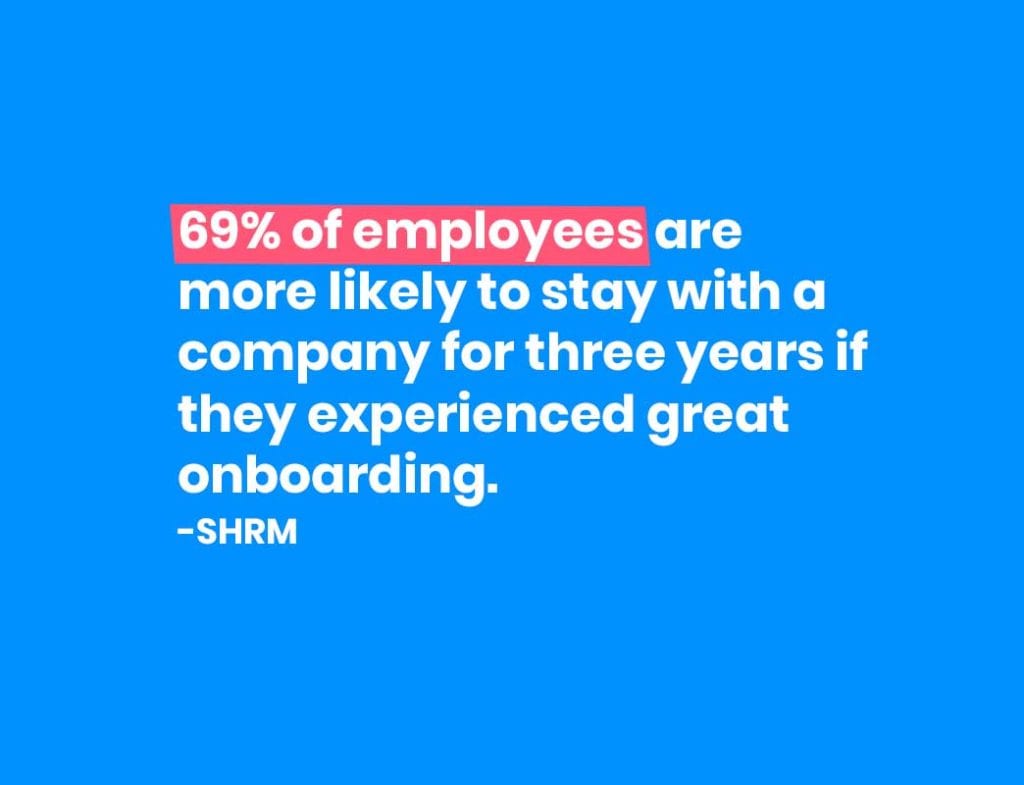
69% of employees are more likely to stay with a company for three years if they experienced great onboarding

There’s a massive business case for having a solid onboarding experience for new employees. 

Speaking from experience, when I first started at Spinach AI, it was hands down the best onboarding process I have had at any company to date. In fact… It was so amazing that I made the effort to let everyone know on LinkedIn:
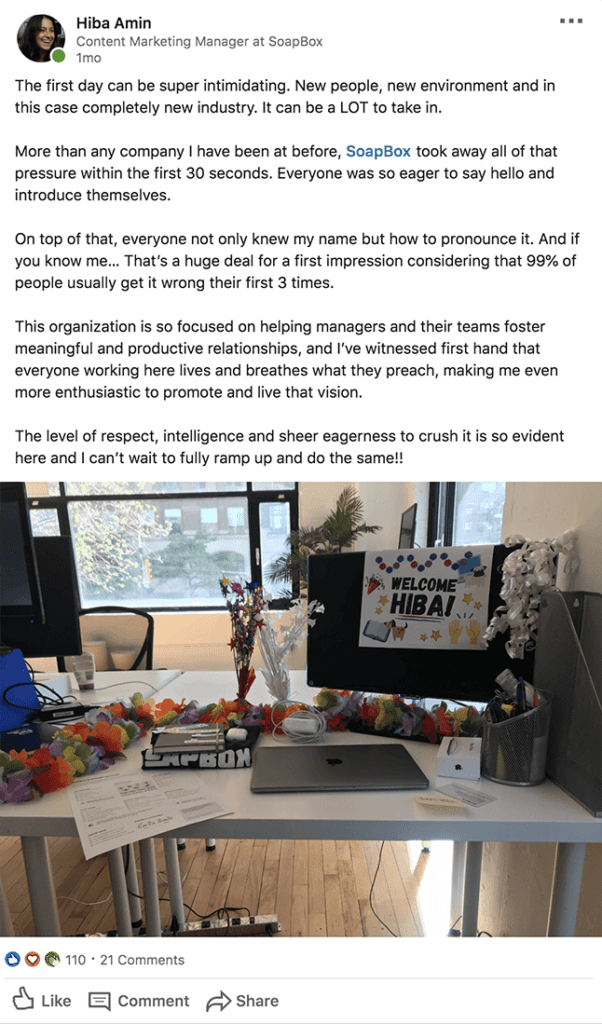
new employee shares their positive onboarding experience online

Imagine if all of your employees talked about your organization so publicly this way? 👆All of this because of an awesome onboarding experience.

Onboarding checklist for managers

Leading up to your employee’s first day, it’s important that you have everything you need to set them up for success from day one. Let’s walk through some of the ways in which you can best prepare:

1. Book multiple 1:1 sessions around tool and process walkthroughs

Don’t just throw your employee to the wolves. Instead, spend time showing them how (and why) things are done:

  • Is there a certain type of brief they have to submit to get marketing images for the blog?
  • Where do all of the team’s metrics live? How frequently are they updated and where is the data pulled from?
  • How is the team’s Jira workspace set up?
  • How do you use tools like Google Analytics, ahrefs, Intercom, and Stripe?
  • What’s the 3, 6, and 12-month strategy for the team?

While you’ve just hired great talent, it doesn’t mean that they’re coming in as experts on your customers, product, or tech stack. 

These sessions are a great way to ramp new hires up because they give them the knowledge they need to become that expert, faster.

2. Outline the outcomes you expect them to achieve in their first 30-60-90 days

In a perfect world, you’ve already outlined the outcomes expected of this person. After all, that information would help you make the right hiring decision.

Now that you’ve hired someone for the job, it’s important to document those outcomes in an accessible place for you and your new direct report. That way, they can continue to reference those numbers, prioritize their work, and stay aligned with the team’s overall goals.

Personally, I document those outcomes within my 1:1 meeting with my direct reports using Spinach AI’s goal-setting platform.
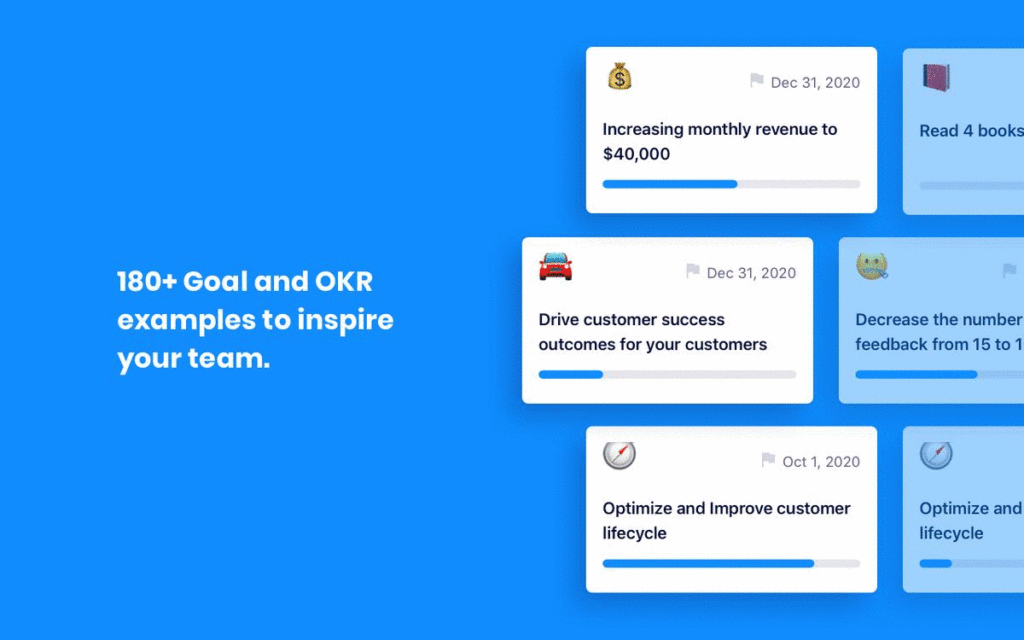
180 okrs product hunt
Check out our library for extra inspiration around role-specific goals.

3. Audit and update your team’s internal documents

To save yourself a lot of time and future headaches, stay on top of updating your team’s internal documents year-round. But, that’s not always the biggest priority, totally understandable.

However, 2-3 weeks leading up to your new hire’s first day, it’s important to do a full audit of all of your internal documents to ensure that all of the information is up to date.

  • Have your buyer journeys changed in the last year?
  • Did your team develop new features that need to be documented?
  • Are your contributing guidelines up to date?

These are just some of the questions you might ask yourself when auditing your documentation.

5. Announce your new employee in multiple places

You’ve just hired someone. That is incredibly exciting!

Get everyone on the team excited about their arrival with new hire announcements. We’re talking:

  • Demo days
  • Team meetings
  • Slack
  • Letting the social media team know so they can queue up the public announcement

Shout it from the rooftops! 🥳

Heck, we even share the good news every time an offer is signed in our #wins channel on Slack. 👇
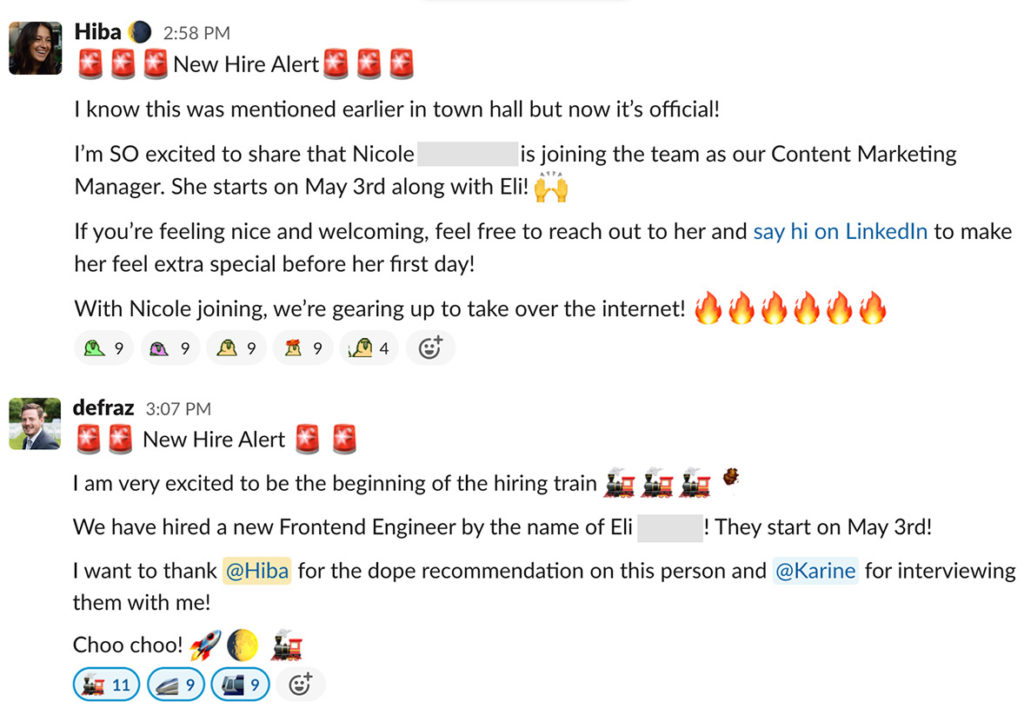
soapbox announces new hires publicly

When everyone is excited about every new hire, and that excitement comes through in their first couple of weeks, it’ll make the onboarding experience that much better!

5. Set up your first one-on-one

While one-on-ones are ultimately the employee’s time with you, it’s important that you set the stage from their first week. Prepare an agenda for your first one-on-one meeting in advance so that your new hire can read through your items and show up prepared. 

From there, you can decide on a time of day, week, and cadence to have these meetings together.

A breakdown of your new employee onboarding checklist

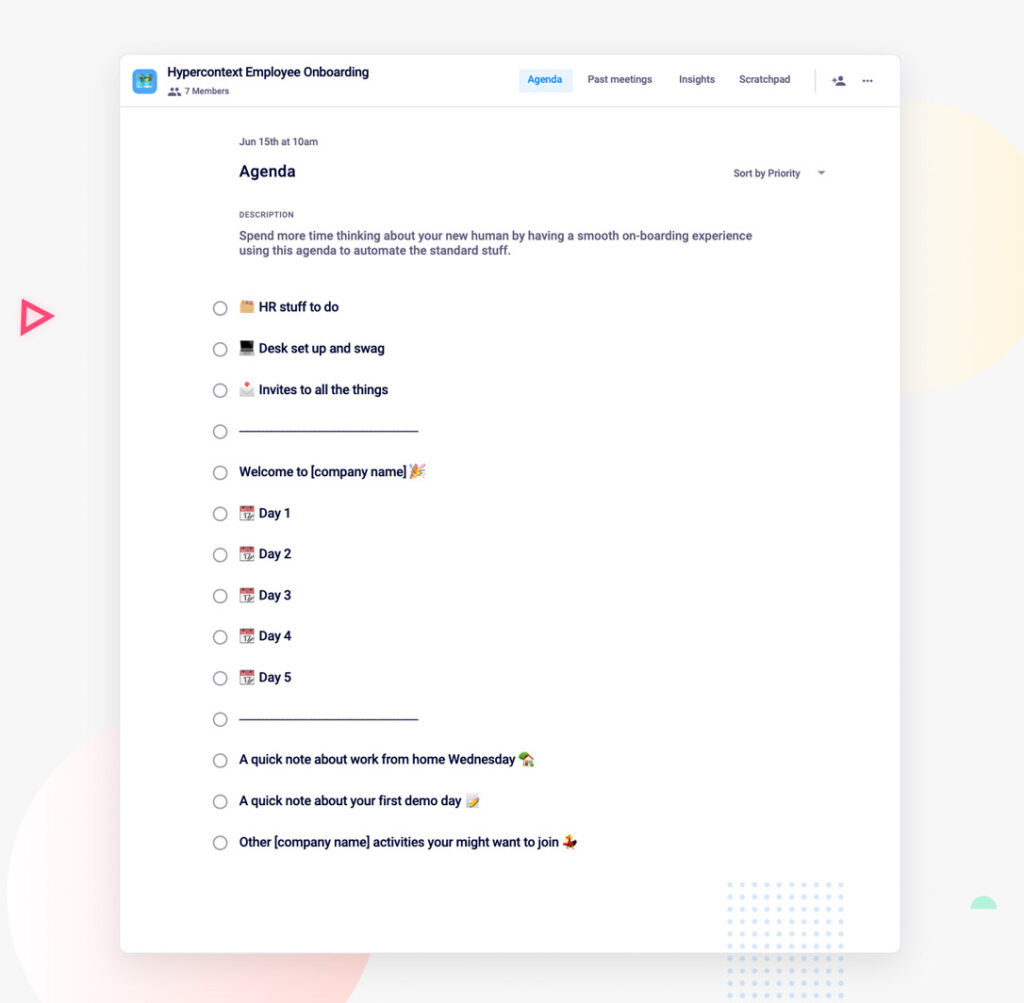
This onboarding checklist breaks down what needs to be done internally by IT/HR/Management the weeks preceding your new employee’s start date and then breaks down the first two weeks of your new hire’s onboarding. If you’re using Spinach AI, all you have to do is select the onboarding agenda template and invite your onboarding stakeholders to contribute!

Before your new employee’s first day

Start your list with things that need to be done before the new employee starts. Be sure to assign every task or activity you set to an individual with a due date to ensure that things actually get done. 

🗂 HR stuff to do 

  • Enroll employees to benefits program
  • Complete background check
  • Sign options grant
  • Assign a buddy 
  • Other paperwork necessary

💻 Desk set up and swag

📩 Invites to all meetings and platforms

Day-to-day onboarding checklist for your new employee

Keep in mind that you can edit this template to fit your team and process best. The steps below walk through how we onboard new employees during their first week at Spinach AI. 

🗓 Day 1 – Welcome to the company!

  • Set up your laptop
  • Accept invites to tools, calendars, other platforms, etc
  • Start reading your onboarding doc
  • Set up your Slack account
  • Get a tour of the office from [name]
  • Fill out HR paperwork

At Spinach AI, every employee receives an onboarding document containing our employee handbook, department-specific information and other important information. Our onboarding documents have proven to be a great way to share information on things like our values, team structure and more. 

🗓 Day 2 – Get to know your team and the company!

  • Start creating your demo day deck
  • Meet with your manager to talk department specifics
  • Continue reading onboarding documents
  • Welcome orientation with CEO

Every new employee at Spinach AI is asked to create “demo day deck” to present at their first demo day. The presentation includes things like their role, past experience, fun facts (i.e. “I hate peanut butter with a passion 🤮”), what they’re excited to work on and more! This is an awesome opportunity for new employees to introduce themselves to everyone at the company. It also gives current employees easy talking points for when they introduce themselves to the newcomer (i.e. “I also hate peanut butter with a passion 🤢), making the onboarding experience even better! 

🗓 Day 3 – Let’s learn about how things work around here!

  • Meet your office buddy for a coffee or treat
  • Review the company website to learn more about the product and brand
  • Learn about your team’s work and process (This could be doing a code review for developers, reading help articles and going through conversations for customer success, or reviewing the product roadmap for product, etc). 
  • HR department orientation

Every new employee at Spinach AI gets assigned a buddy from a different team. We’ve seen that by doing this, it helps reduce a lot of the first-week jitters. It gives the new employee an opportunity to meet a new friendly face and ask questions about things not necessarily related to the job (i.e. “How do I use the coffee machine?” ☕️). It’s also great for building more cross-departmental relationships within the office!

🗓 Day 4 – First project and welcome lunch!

  • Start your first project!
  • Enjoy your welcome lunch
  • Marketing department orientation

We welcome every new employee with a welcome lunch. We invite members of their direct team, as well as other individuals who they’ll be collaborating with. Building connections in a space outside of the office walls is a great way to help everyone let loose and create more genuine connections. 

🗓 Day 5 – TGIF! How was your first week?

  • Check-in with your manager – How was your first week?
  • Finish your scavenger hunt
  • Product department orientation

At Spinach AI, we give every new employee a scavenger hunt to complete in their first week. It’s a great way to gamify what otherwise might be menial tasks like getting wifi passwords or learning how to work the coffee machine. 

Looking back at my own onboarding experience, I can’t begin to explain how crucial a good onboarding process is when ramping up at a new company. Within a week, I felt like I had been a part of the organization for months. I was set up for success from day one. Having my first two weeks planned out, with several opportunities to talk to people from every department took away so much of the stress that comes with joining a new organization. 

New employee onboarding template

Now it’s time to prepare your new employee onboarding checklist so you can ramp up your employee in a smooth and timely manner. There’s probably a lot you’d like to share with this new hire, but you need to make sure that you’re not overwhelming them from day one. 

Get started with our new employee onboarding template!
hypercontext employee onboarding checklist agenda

What should you do now

You made it to the end of this article! Here are some things you can do now:

  1. You should check out our features to see how Spinach can help you run effective one-on-ones.
  2. Check out Spinach to see how it can help you run a high performing org.
  3. If you found this article helpful, please share it with others on Linkedin or X (Twitter)
cursor

Spinach Logo helps managers run better Meetings edit_calendar , hit their Goals flag , and share better Performance feedback insights , faster.

Learn more (it's free!)