How to Transcribe Zoom Meetings: The Complete Guide for March 2026
Learn how to transcribe Zoom meetings with cloud recordings, live captions, and AI tools. Complete guide for March 2026 with settings and troubleshooting.
 Main Touch
You’re recording Zoom meetings but losing track of decisions buried in hour-long calls. Zoom’s transcription features can turn those recordings into searchable text, but the process isn’t automatic unless you configure your account settings first, and free users are completely locked out. This guide shows you how to turn on transcription for cloud recordings, access live captions in 46 languages, download your transcript files, troubleshoot missing transcripts, and decide when Zoom’s native tools are enough versus when you need something more powerful. While Zoom gives you basic text capture, it stops there, leaving you to manually update Jira, copy-paste into HubSpot, or search through scattered files. If you want your meetings to drive work forward automatically, you need a dedicated AI agent.
TLDR:
- Zoom’s native transcription requires a paid account and works via live captions or cloud recordings
- Download transcripts as VTT files from the web portal within 1-24 hours after meetings end
- Use AI Companion for free meeting summaries on paid plans without requiring cloud recording
- Audio quality matters most: use headsets, minimize background noise, and avoid speaker overlap
- Spinach AI captures Zoom meetings by default and turns conversations into action items, CRM updates, and searchable insights across your organization
How Zoom’s Native Transcription Features Work
Zoom offers two types of native transcription: live captions during meetings and post-meeting transcripts from cloud recordings.
Live transcription displays real-time captions as participants speak, helping with accessibility during the call. Cloud recording transcripts process after your meeting ends, generating a searchable text file within minutes to hours.
Both require a paid Zoom account. Free accounts can’t access native transcription. The key difference: live transcription disappears when meetings end unless saved separately, while cloud transcripts remain with your recording.
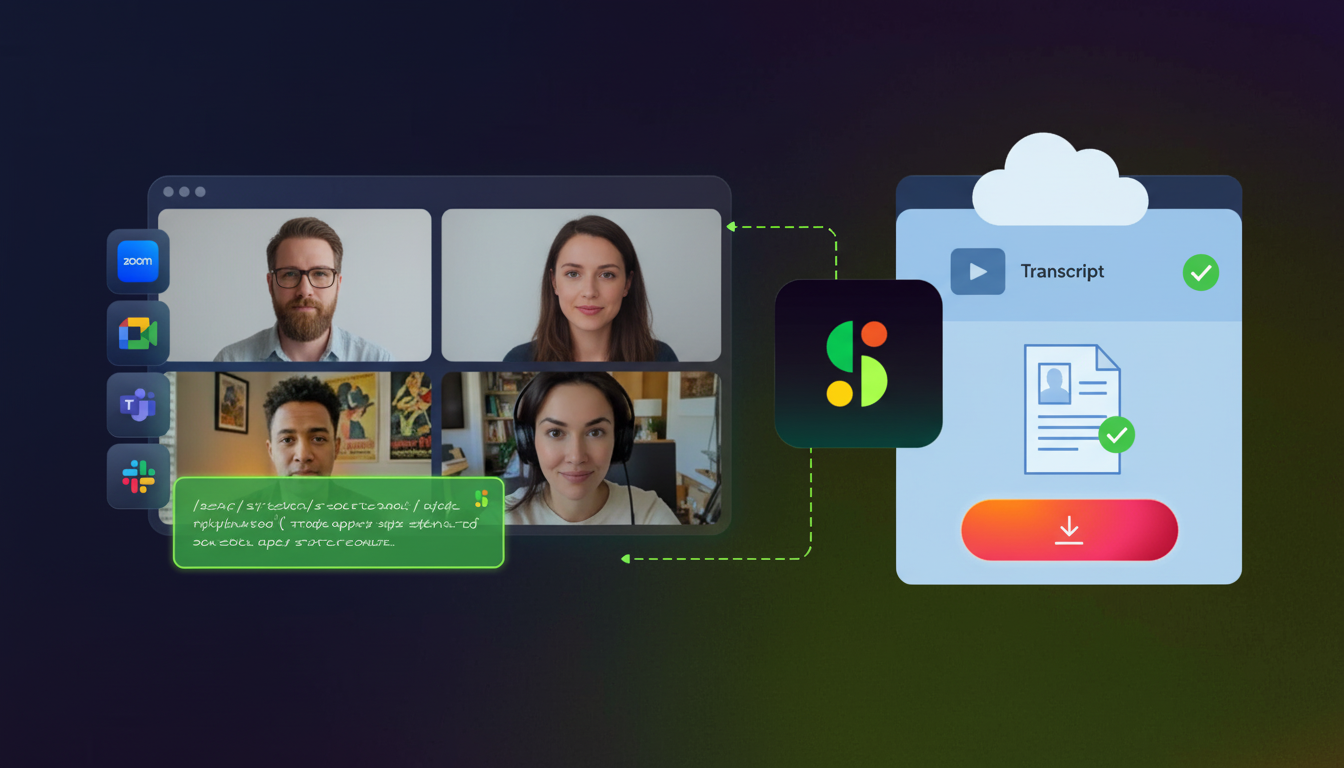
Turning On Audio Transcription for Cloud Recordings
Log into the Zoom web portal and go to Account Management > Account Settings or User Management > Users. Under the Recording tab, toggle on Audio Transcript.
Account settings override group settings, which override individual preferences. Lock the setting at account level to enforce transcription across your organization.
Once active, Zoom transcribes every cloud recording automatically. Transcripts appear in your recordings folder within an hour after meetings end.
Using Live Transcription During Zoom Meetings
Start live transcription from the toolbar during any meeting. Click the Captions button, then Show Captions to display real-time text at the bottom of your screen.
Hosts and participants with permission can turn captions on or off. Zoom supports live transcription in 46 languages, switching automatically based on the speaker’s language for global teams conducting multilingual meetings.
Live captions help participants follow along in noisy environments or when audio quality drops, making remote standups more accessible for distributed teams, supporting deaf and hard-of-hearing team members without requiring external accommodations.
How to Download and Access Your Zoom Transcripts
Open the Zoom web portal and go to Recordings. Find your meeting and click the title to see the transcript file alongside video and audio files.
The transcript downloads as a VTT file, which stands for Web Video Text Tracks. You can open it in any text editor or convert it to plain text or Word format using free online converters.
From the Zoom desktop app, go to Meetings > Recorded, then click the cloud icon next to any recording.
Transcribing Zoom Meetings Without Recording
Zoom AI Companion generates meeting summaries and key points without cloud recording, capturing key outcomes without requiring full transcripts. Turn on AI Companion in your account settings, then activate it during meetings to capture automated notes.
The summary includes decisions, action items, and next steps but doesn’t produce a full word-for-word transcript. This distinction matters when choosing transcription tools for your team.
Third-party tools like Otter.ai join meetings as participants to transcribe in real time, capturing full transcripts without recording.
Understanding Zoom AI Companion for Transcription
AI Companion comes free with paid Zoom accounts (Pro, Business, Enterprise). It auto-generates meeting summaries, pulling decisions, action items, and key points without requiring cloud recording.
Cloud recording transcripts give you word-for-word text of everything said. AI Companion summaries extract key points and compress conversations into digestible formats by focusing on what matters. However, AI Companion has a major limitation. It only looks at one meeting at a time. It cannot connect the dots across multiple calls, identify recurring risks, or automatically push updates into your project management tools.
AI adoption has reached 70% in go-to-market operations, with meeting transcription ranking among the top three use cases.
AI Companion data retention follows Zoom’s standard policies. Turn it off anytime from meeting controls if specific conversations need to stay off the record.
Transcription Settings and Language Support
Zoom transcribes in 46 languages for live captions and 12 languages for cloud recording transcripts. Set your preferred language in Settings > Recording > Audio Transcript > Original transcript language before meetings start.
Speaker identification labels each participant’s name next to their words. This works best when everyone keeps their display name consistent and speaks clearly without overlapping.
You can’t change the transcription language after meetings end, so pick the right one upfront if your team speaks multiple languages.
Audio quality affects accuracy more than accents. Use headsets, mute when not speaking, and minimize background noise.
Troubleshooting Common Zoom Transcription Issues
Missing transcripts usually mean processing delays. Cloud recordings take up to 24 hours to generate transcripts, though most finish within an hour.
If transcripts never appear, verify Audio Transcript is turned on at account level. Go to Account Management > Account Settings > Recording and confirm the toggle is on.
Poor accuracy comes from bad audio. Multiple people talking over each other, background noise, and low-quality microphones all hurt quality. Ask participants to use headsets and mute when not speaking.
Transcripts save with cloud recordings. Local recordings don’t generate automatic transcripts.
Zoom Transcription for Different Account Types
Free Zoom accounts get no native transcription. Live captions and cloud recording transcripts both require a paid subscription, starting at the Pro level.
Pro accounts unlock cloud recording transcripts and AI Companion summaries. Business and Enterprise tiers add the same transcription features with higher storage limits and admin controls for managing recording policies across teams.
Education accounts follow Business tier capabilities but include longer cloud storage retention for academic records.
Editing and Improving Zoom Transcript Accuracy
Zoom doesn’t offer native in-app transcript editing. Download your VTT file and open it in a text editor to make corrections manually.
Focus on improving audio input instead. Clear microphones, minimal background noise, and one speaker at a time all boost accuracy before transcription runs. Speaker labels work best when participants keep consistent display names and avoid talking over each other.
Review sensitive meetings manually, especially board discussions, legal matters, or compliance reviews where errors could create risk.
Security, Compliance, and Privacy Considerations
Zoom stores cloud transcripts on AWS servers matching your account region. Account admins control access through role-based permissions.
Free and Pro accounts keep recordings until manually deleted. Paid accounts can schedule automatic deletion from settings.
Zoom doesn’t train AI models on your meeting content. Transcripts remain within your account.
For compliance-focused industries, verify storage locations and confirm your plan meets HIPAA, GDPR, or FERPA requirements. Enterprise accounts offer Business Associate Agreements and data processing agreements.
Delete sensitive transcripts from the Recordings page. Restrict access so only hosts view recordings.
Third-Party Transcription Integrations for Zoom
Third-party tools join Zoom meetings as participants or connect via API to capture transcripts with features Zoom doesn’t offer. Zoom’s native transcription is passive. It records what happened, but leaves the manual work to you. Purpose-built tools act similar to the best standup tools that extend native capabilities: cross-meeting search, automatic CRM updates, custom workflows, and better accuracy in noisy environments.
Most integrations work through calendar access or meeting invite links. When comparing AI transcription tools, consider how they connect to your existing workflow. The tool joins automatically, records audio, and processes transcripts using its own AI models.
Choose third-party tools when you need action item tracking, ticket updates, or searchable archives across meetings to capture the benefits of daily standup meetings.
Transcription Method | Account Requirements | Key Features | Best For |
|---|---|---|---|
Zoom Cloud Recording Transcripts | Paid Zoom account (Pro or higher), cloud recording turned on | Word-for-word transcription in 12 languages, automatic processing within 1-24 hours, VTT file download, stored with cloud recordings | Teams needing searchable records of full meetings with basic transcription needs and no workflow automation |
Zoom Live Captions | Paid Zoom account (Pro or higher) | Real-time captions in 46 languages, accessibility support, disappears after meeting unless saved separately | Multilingual teams and accessibility compliance during live meetings without permanent record requirements |
Zoom AI Companion | Paid Zoom account (Pro, Business, or Enterprise), included free | Automated summaries with decisions and action items, no recording required, compressed key points instead of full transcripts | Teams wanting quick meeting recaps and key takeaways without storing full recordings or detailed transcripts |
Otter.ai | Separate Otter account, joins meetings as participant | Real-time transcription without recording, speaker identification, searchable notes, basic action item detection | Teams needing full transcripts without cloud recording or users on free Zoom accounts |
Spinach AI | Separate Spinach account, calendar or invite link integration | Automatic recording and transcription, CRM and project management integrations, cross-meeting AI search, action item tracking with ticket updates, org-wide conversation repository, 100+ language support | Teams automating workflows with CRM updates, ticket creation, and searchable meeting intelligence across entire organizations |
Automating Workflows with Zoom Transcripts
Zoom’s webhook API sends transcript data to other systems when recordings finish processing. Connect transcripts to Zapier or Make to trigger automatic documentation in Notion, Google Docs, or Confluence using meeting note software that automates the process.
Organizations see 30% productivity increases when automating meeting workflows. APIs push transcript text into CRMs like Salesforce or HubSpot, update Jira tickets with decisions, or create Asana tasks from action items.
Most automation requires paid Zapier plans and developer time to map transcript fields.
Best Practices for High-Quality Zoom Transcriptions
Audio quality determines transcript accuracy more than any other factor. Use headsets or external microphones instead of built-in laptop mics, choose quiet spaces and close doors to block ambient noise, ask participants to mute when not speaking, and speak at a natural pace without talking over each other.
Structure meetings to support clean transcription by assigning a facilitator to manage speaking order and pausing between agenda topics.
Where Zoom Falls Short (And Why Spinach is Better)
Zoom transcripts capture words. Spinach turns conversations into action. Relying purely on Zoom means your meeting data dies the moment the call ends. You still have to manually write tickets, update your CRM, and share notes with stakeholders.
Spinach puts your meetings on autopilot. Record your Zoom meetings by default and build an org-wide conversation repository that AI can search and reason across. Action items get tracked, tickets update automatically in Jira and Linear, CRM fields populate in Salesforce and HubSpot, and decisions flow directly into Confluence or Notion without you lifting a finger.
Ask questions across weeks of meetings to spot trends, risks, and opportunities. Our MCP server connects meeting context to coding agents and ChatGPT.
SOC 2, GDPR, and HIPAA compliant with support for 100+ languages.
Final Thoughts on Making Zoom Transcripts Work for You
Good audio and the right settings give you accurate transcripts, but Zoom AI transcription becomes valuable when it feeds your workflow. Spinach connects meeting context to the tools your team already uses, from Salesforce to Linear to Confluence. You get documentation, action tracking, and searchable meeting intelligence without changing how you work.
Log into the Zoom web portal, navigate to Account Management > Account Settings > Recording, and toggle on Audio Transcript. Lock this setting at the account level to enforce transcription across your entire organization automatically.
Zoom AI Companion creates summaries with key points and action items without cloud recording, but doesn’t produce word-for-word transcripts. Third-party tools like Otter.ai or Spinach join your meetings as participants to capture full transcripts without requiring you to record.
Cloud recordings take up to 24 hours to generate transcripts, though most finish within an hour. Verify that Audio Transcript is enabled at your account level in Account Settings > Recording, and confirm you’re using cloud recording—local recordings don’t generate automatic transcripts.
Cloud transcripts give you word-for-word text of everything said in your meeting, while AI Companion extracts decisions, action items, and conversation highlights into a compressed summary format. Cloud transcripts require recording; AI Companion works without it.
Use headsets instead of built-in laptop mics, choose quiet spaces, ask participants to mute when not speaking, and avoid talking over each other. Audio quality affects accuracy more than accents or language—clear input always produces better transcripts.
What to do now
Next, here are some things you can do now that you've read this article:
- If communication is a challenge for your team, you should check out our library of meeting agenda templates.
- Learn more about Spinach and how it can help you run a high performing org.
- If you found this article helpful, please share it with others on Linkedin or X (Twitter)

