9 benefits of daily standup meetings for your team (July 2026)
Discover how daily standups can improve communication, accountability, and overall team performance. July 2026
 Maintouch
Daily standup feeling stale or stagnant?
When daily standup is not running super smoothly, it can cause more harm than good. We’re talking declining morale, wasted time, lower productivity, lack of engagement, team members who downright dread dragging themselves to the morning standup, it can turn into quite a sticky situation quickly.
But when you know how to run daily standup the right way, you can expect engagement, camaraderie, teamwork, better productivity, and more.
So let’s cut to the chase.
Below, you’ll find out what standup meetings are all about, their benefits, and some tips to help you run them well.
TLDR:
- Daily standups surface blockers early, keeping problems from compounding before they damage your sprint
- A well-run standup runs 15 to 20 minutes max, built around three questions: what you did, what you’re doing, what’s in your way
- Consistent time, consistent format, and 15-minute prep reminders are what separate standups that work from ones that stall
- For distributed teams, standups are often the only face time available, making them the primary space for building trust across the group
- Spinach AI joins your standup, captures decisions and action items with named owners, and routes them to Jira, Linear, Slack, or Confluence when the meeting ends
What is a standup meeting?
Daily standups are a type of meeting that you’ll see often in agile, scrum (where they’re called daily scrum meetings), and other types of methodologies commonly used with software development teams.
These meetings are supposed to be short and energetic to get the team on the same page as far as:
- Progress
- Plans
- Blockers
Standup meetings can be held live, virtually, or asynchronously via written messages. For remote teams or distributed teams, these meetings might be the only face-time team members get with their peers. Because of that, it’s a good time to build trust and connections among everyone.
These meetings are supposed to set the pace for the day, so they’re usually held first thing in the morning or right at the end of the day in preparation for the next day.
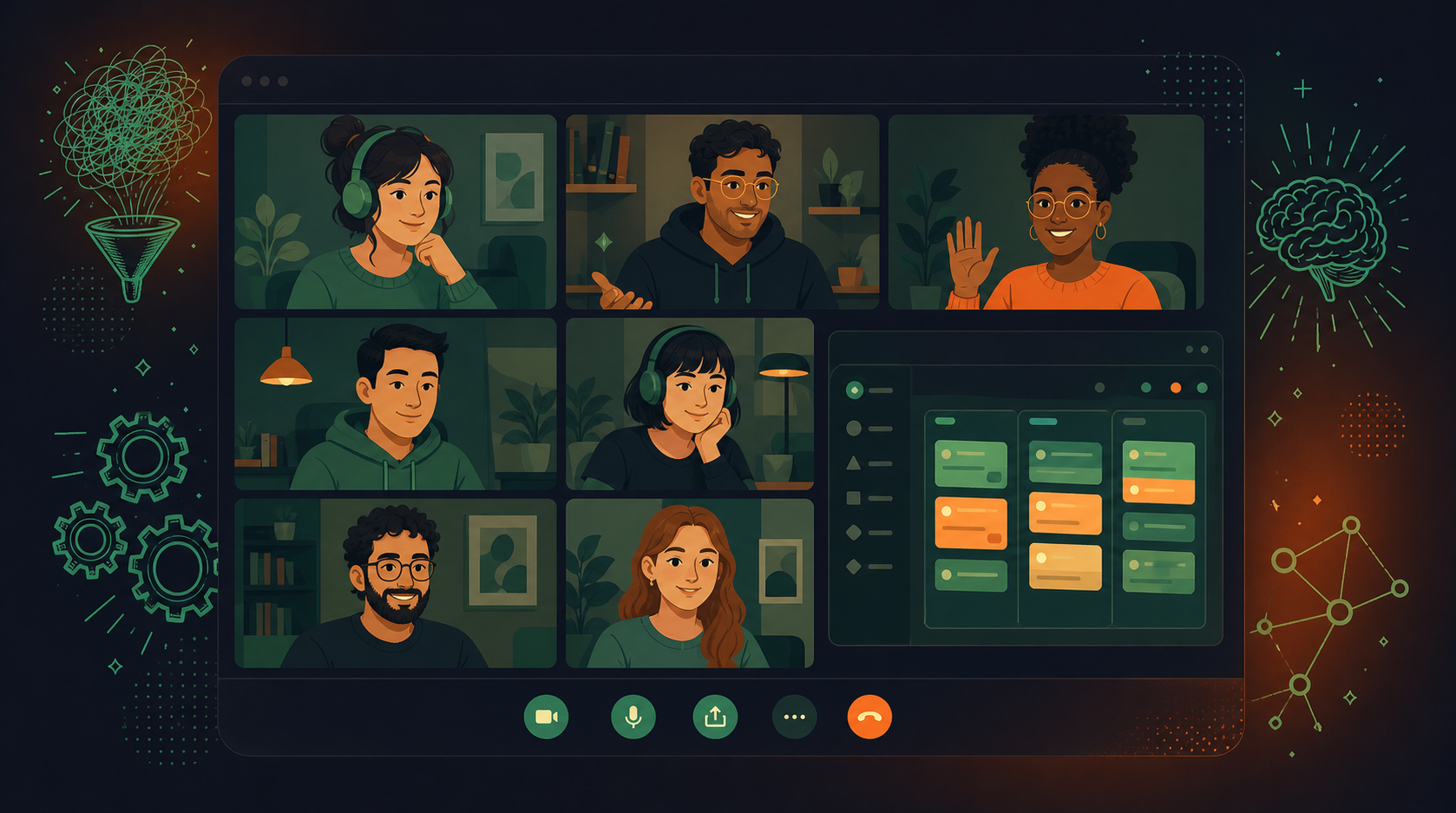
In scrum based teams, Scrum Masters usually lead daily standup. On agile teams, the team leader takes the reins. Usually the Tech Lead or Product Manager on the team.
What is the purpose of a daily standup meeting?
Daily standups are an opportunity for each team member to give quick status updates on progress for their project or sprint.
As such, each team member participates by answering the following questions:
- What did you do yesterday?
- What do you plan to do today?
- Are there any blockers or obstacles in your way?
These questions get the whole team on the same page. They also help individuals surface potential problems. This way, the team can solve them as quickly as possible, and the project can move forward as planned.
Benefits of having daily standups
By now, you can probably already see some of the big benefits that come with this type of check-in!
Here’s a quick overview, then we’ll break each one down.
Benefit | What it does for your team |
|---|---|
1. Stronger team alignment | Keeps everyone informed on each other’s progress and how individual work affects shared goals. |
2. Reduced roadblocks | Surfaces blockers early so the team can solve problems before they compound. |
3. Better collaboration and communication | Creates a daily touchpoint that builds trust and keeps communication open across the group. |
4. Accountability and task tracking | Daily updates keep individuals accountable and give the team visibility into who owns what. |
5. Focus on priorities and goals | Each member states their day’s priorities, keeping everyone on high-value work. |
6. Higher team morale and motivation | Regular face time builds camaraderie, especially for remote and distributed teams. |
7. Fewer meetings overall | A tight 15-minute standup replaces longer, less focused recurring check-ins. |
8. Clearer project progress | Daily updates show where the team sits in the timeline and how each contribution moves it forward. |
9. Broader project knowledge | Everyone learns what teammates are building, which improves problem solving and shared ownership. |
1) Build stronger team alignment
In agile, scrum, and similar methodologies, teams typically work very closely with each other to complete projects. In fact, one person’s tasks will often directly intersect with the things their teammates are working on.
So, daily huddles are meant to bring teams into alignment.
The updates provided during these meetings help keep projects running smoothly so that everyone knows:
- What everyone else is working on
- How that progress affects individual workflows
2) Identify and reduce roadblocks
Ever seen an issue that had been ignored long enough for it to snowball out of control?
Here’s another benefit to effective standup meetings. When people identify their blockers as soon as they’ve noticed them, it gives teams a chance to find solutions before they can worsen and damage the project.
3) Strengthen team collaboration and communication
Never forget the “three C’s” of standup meetings:
- Camaraderie
- Collaboration
- Communication
When these meetings are conducted well, team members get the benefits of all three.
The face time, jokes, and shared experiences help everyone bond. When there’s a strong connection between team members, everyone will be more comfortable and inclined to communicate on tasks and projects.
This kind of teamwork also gets multiple eyes on projects and tasks, and helps everyone feel comfortable enough to offer assistance or solutions wherever they’re needed.
4) Improve accountability and task tracking
Daily standups help keep everyone accountable.
Not that people will try to be dishonest, but when you have to announce your progress at a status meeting each day, it helps keep you accountable.
These meetings are also a good way to track tasks. That’s particularly important considering that agile teams and scrum teams work so closely together. They need to know what their teammates are working on so that they can plan their own tasks accordingly.
5) Increase focus on priorities and goals
On big projects, it’s super easy to get into the weeds. When that happens, they can easily end up lagging behind on their timelines.
Standup meetings provide that clear direction.
Each day, each team member lays out goals and priorities for the day. It keeps individual workflows running smoothly and everyone on track so that you don’t end up with people working on low-priority tasks that can be dealt with later.
6) Boost team morale and motivation
We know we mentioned it before. But it’s really hard to overstate how huge camaraderie is. Especially now that remote work has become the norm in many industries.
Standup meetings, whether in-person or remote, help even the most introverted members of your team feel like they’re a part of something special.
That’s because these meetings are meant to be fun and energetic.
While you won’t spend a lot of time on chit chat, you can add things like icebreakers at the beginning of a Zoom or Slack session to help set the mood and create a team building experience.
Over time, people will bond and create their own little in-jokes. That will lift both morale and motivation for everyone.
7) Reduce meetings overall
Part of the reason why daily standups are designed to be short is because they’re supposed to help teams have fewer meetings overall.
Standup meetings are supposed to be short meetings: about 15 to 20 minutes, tops, and hyper-focused.
That way, everyone can get in, discuss what needs to be discussed, and get out. In the long run, this saves time over hosting hour-long discussion sessions multiple times a week.
8) Better understand project progress and status
When you’re neck-deep on the fine details, it can be tough to see how near or far the finish line is.
Daily standups combat this by providing updates each day. This way, it’s easier for everyone to see where they are within the project timeline, and how their individual progress is helping move that timeline forward.
9) Expand the team’s project knowledge and understanding
On some projects, it’s easy to lose sight of the forest for all the trees.
Standup meetings help provide an important bit of clarity in a few key ways:
- Everyone gets to learn more about the project overall.
- They see how their contributions fit into the final product.
- People learn what other team members are doing to create that final product.
In the end, this understanding helps everyone work better as a group to engage in effective problem solving and meet shared goals.
Tips for having efficient standup meetings
So, how should you run productive, efficient standup meetings?
Avoid standup killers and follow the tips below to get started.

Keep it short, sweet, and to the point
The biggest rule for keeping daily standups effective is to stay quick and on-point:
- Use a timer or another tool.
- Make sure the team lead keeps the conversation on track.
- If it steers back into chitchat, bring it back to the topics on the agenda
- If people bring up new topics not on the agenda, note them down for discussion later
Allow time for preparation
A big part of what keeps standups sharp comes from preparation. Send out reminders about 15 minutes ahead of time to each team member to jot down some notes about their accomplishments, goals, and blockers.
This way, everyone will have a pre-made list to work from when it’s their turn to meet. No head-scratching and trying to remember what to bring up.
Have the meeting at a consistent time and place
Routines are proven to have big benefits such as:
- Lower stress levels
- Greater productivity
- Better organization
This is why daily standups should be held at a consistent time and place each day.
This is especially true if you’re video conferencing with team members in different time zones. Keeping meeting times and places consistent helps everyone make it a part of their routine, and that will help everyone make meetings more efficient and productive as they settle into this formula.
Use a clear meeting format and agenda
Keep It Simple.
There’s no need to create an overly complex meeting structure or agenda. In this case, keeping it simple means giving everyone a chance to speak and following the agile standup format, which includes the three standup questions we outlined above.
Here they are, so you don’t have to scroll back up:
- What did you accomplish yesterday (or earlier today/last week)?
- What will you do today (or tomorrow/next week)?
- What roadblocks or obstacles are impeding your progress?
Forget things like lengthy lists of action items or time-consuming sessions with the whiteboard. Simply pair those questions with a roundtable format that gives everyone a chance to answer them, and you’ll be golden. If something important comes up that doesn’t fit the agenda, that topic may deserve its own sync-up meeting at another time.
Use a standup tool for more productivity
Last but not least, consider pairing your standup with an AI meeting assistant. Spinach joins your meeting, captures decisions and action items with named owners, and routes them to your team’s tools when the meeting ends.
How?
It captures during the meeting on Zoom, Google Meet, Teams, Slack Huddles, or Webex, and delivers structured summaries, decisions, and action items with named owners the moment the call ends.
Spinach connects with the tools your team already uses. Send summaries to Slack, Notion, or Confluence, route action items and tickets to Jira, Linear, Asana, Trello, or ClickUp, and explore the full Spinach integrations directory.
Put daily standups to work with Spinach
Spinach AI is the enterprise conversation intelligence platform organizations deploy company-wide to capture decisions, track action items, and maintain a governed record of every meeting. For standup teams, that means instant summaries when the meeting ends, action items with named owners routed to your board, and a single governed record across every ceremony. Try it free at spinach.ai.
Daily standups give teams a structured, time-boxed way to surface blockers, share progress, and stay aligned on priorities, without the overhead of longer recurring meetings. The three core standup questions (what did you do, what will you do, what’s blocking you) keep everyone moving in the same direction and make problems visible before they compound. For remote and hybrid teams, standups also serve as the primary touchpoint for building trust and connection across the group.
A well-run daily standup should take 15 to 20 minutes at most. The format is intentionally narrow: three questions, one round-table pass, and anything that falls outside the agenda gets parked for a separate sync. Keeping a consistent time and place each day helps teams settle into the rhythm and reduces the prep overhead that causes standups to run long.
Spinach joins your standup on Zoom, Google Meet, Teams, or Webex, captures decisions and action items with named owners during the meeting, and routes them to your tools (Jira, Linear, Asana, Slack, or Confluence) when the meeting ends. Slack reminders prompt team members to prepare before the standup starts, and instant summaries mean no one spends time re-entering what was discussed by hand. The result is a governed record of every standup, not a folder of individual notes.
Live standups build the camaraderie and real-time blocker resolution that async formats can miss, but async works better when team members span multiple time zones and scheduling a shared window becomes friction. The right call depends on your team’s distribution and how quickly blockers need to be escalated. Many distributed teams run async written standups daily and reserve a live session once or twice a week for alignment that needs back-and-forth.
Standups usually stall when they drift from the three-question format into status reporting or open problem-solving, which pushes the meeting past the 15-to-20-minute mark and trains people to disengage. The fix is a tight agenda, a team lead who redirects off-topic threads to a separate sync, and preparation reminders sent 15 minutes before the meeting starts so nobody arrives without something concrete to share.
What you should do now
Now that you've read this article, here are some things you should do:
- If communication is a challenge for your team, you should check out our library of meeting agenda templates.
- Check out Spinach to see how it can help you run a high performing org.
- If you found this article helpful, please share it with others on Linkedin or X (Twitter)

