What is a "Culture of Kudos" and why is it important?
A "Culture of Kudos" refers to an organizational environment where employee recognition is frequent, multi-directional, and valued. It is important because regular recognition boosts morale, engagement, and productivity. According to a Sirota Consulting survey of 2.5 million employees, only 51% were satisfied with the recognition they received, and lack of recognition can lead to low retention and disengagement. (Source: Sirota Consulting, as cited on Spinach AI blog)
How does employee recognition impact company culture and performance?
Employee recognition strengthens company culture by increasing morale, engagement, and productivity. Recognized employees are more likely to be motivated and contribute positively to the organization. OGO found that 40% of Americans would put more energy into their work if recognized more often. Recognition also helps reduce turnover and fosters a positive work environment. (Source: OGO survey, Spinach AI blog)
What are some effective ways to recognize employees privately?
Effective private recognition methods include acknowledging wins during one-on-one meetings, sending private messages (e.g., via Slack or email), and giving hand-written thank you cards. These approaches show appreciation in a personal and meaningful way, tailored to employees who prefer less public recognition. (Source: Spinach AI blog)
How can employees be recognized publicly within an organization?
Public recognition can be given during team meetings, company-wide gatherings like demo days or town halls, and through dedicated communication channels such as a "Wins" channel in Slack or Microsoft Teams. Public shoutouts help build team bonds and motivate employees by celebrating achievements in front of peers. (Source: Spinach AI blog)
What is the Spinach AI Narwhal Award?
The Spinach AI Narwhal Award is a monthly recognition program where a team member is awarded a Narwhal plushie for demonstrating core values and going above and beyond their role. The recipient is nominated by the previous month's winner, fostering excitement and a culture of appreciation within the company. (Source: Spinach AI blog)
Why should small wins be recognized, not just big achievements?
Recognizing small wins boosts confidence, excitement, and momentum, reinforcing positive behaviors and qualities. Celebrating incremental progress helps employees feel valued and motivated, contributing to long-term success and a positive culture. (Source: Spinach AI blog)
How can recognition be made multi-directional in a company?
Recognition should flow in all directions: manager-to-employee, employee-to-manager, peer-to-peer, and between C-level executives and employees. Setting up a kudos program ensures everyone feels appreciated, regardless of their position. (Source: Spinach AI blog)
What are some channels for giving kudos in the workplace?
Kudos can be given through one-on-one meetings, team meetings, company-wide events, dedicated communication channels (like Slack or Teams), and even hand-written notes. The key is to make recognition frequent and accessible. (Source: Spinach AI blog)
How can Spinach AI help managers add kudos to meetings?
Spinach AI provides features and agenda templates that make it easy to add kudos and recognition segments to one-on-one and team meetings. This helps managers consistently celebrate wins and foster a culture of appreciation. (Source: Spinach AI blog)
Why is it important to tailor recognition to individual preferences?
Some employees prefer private recognition, while others thrive on public acknowledgment. Understanding and respecting these preferences ensures recognition is meaningful and effective, boosting motivation and engagement. (Source: Spinach AI blog)
How can a company start building a culture of kudos?
Start by encouraging frequent, genuine recognition at all levels, celebrating both small and large wins. Implement programs like the Narwhal Award, create dedicated channels for shoutouts, and integrate recognition into meetings. Consistency and authenticity are key. (Source: Spinach AI blog)
What are the risks of not recognizing employees?
Failing to recognize employees can lead to disengagement, low morale, decreased productivity, and higher turnover. Employees who feel underappreciated are less likely to stay motivated or contribute fully to the organization. (Source: Sirota Consulting, Spinach AI blog)
How can recognition programs be made fun and engaging?
Programs like the Narwhal Award, using emojis and GIFs in shoutout channels, and celebrating wins with snacks or themed events can make recognition fun and engaging, increasing participation and enthusiasm. (Source: Spinach AI blog)
How does Spinach AI support effective meetings and recognition?
Spinach AI helps managers run effective meetings by automating agendas, note-taking, and action items, making it easier to include recognition segments and track wins over time. (Source: Spinach AI blog)
What are some examples of small wins to recognize?
Examples include booking an introductory call with a potential client, helping a new employee feel welcome, or assisting a colleague with a project. Recognizing these actions reinforces desired behaviors and team spirit. (Source: Spinach AI blog)
How can managers ensure recognition is ongoing and not just a one-time event?
Managers can set recurring agenda items for wins in meetings, use dedicated channels for shoutouts, and implement regular recognition programs to keep appreciation ongoing and top-of-mind. (Source: Spinach AI blog)
What role do managers play in employee recognition?
Managers play a crucial role as their recognition is often the most impactful for employees. Acknowledgment from a manager can significantly boost motivation and engagement, as employees often seek their approval. (Source: Spinach AI blog)
How can peer-to-peer recognition be encouraged?
Peer-to-peer recognition can be encouraged by creating open channels for shoutouts, integrating recognition into meetings, and fostering a culture where everyone is empowered to give kudos, not just managers. (Source: Spinach AI blog)
How does Spinach AI help with meeting management and employee engagement?
Spinach AI automates meeting agendas, note-taking, and action items, freeing up time for managers to focus on engagement and recognition. It also offers templates and integrations to streamline meeting workflows. (Source: Spinach AI blog)
Features & Capabilities
What features does Spinach AI offer to support team collaboration and productivity?
Spinach AI offers an AI Meeting Assistant, automated note-taking, workflow optimization, AI-powered insights, seamless integrations with tools like Zoom, Slack, Jira, and Salesforce, and tailored solutions for different roles such as product managers, sales, and engineering teams. (Source: https://www.spinach.ai/home)
Does Spinach AI offer an API?
Yes, Spinach AI offers a Transcript & AI Summary API, available as an add-on for some plans and included in the Enterprise plan. This API enables advanced transcript and summary generation. (Source: https://www.spinach.ai/pricing)
How does Spinach AI automate meeting tasks?
Spinach AI automates note-taking, action item tracking, and post-meeting tasks, allowing users to focus on discussions while the platform handles documentation and follow-ups. (Source: https://www.spinach.ai/home)
What integrations does Spinach AI support?
Spinach AI integrates with Zoom, Google Meet, Microsoft Teams, Slack, Jira, Salesforce, and other popular tools to ensure seamless collaboration and workflow automation. (Source: https://www.spinach.ai/home)
How does Spinach AI provide tailored solutions for different teams?
Spinach AI offers role-specific features such as automated roadmap meetings and PRD generation for product managers, CRM integrations for sales teams, sprint planning for engineering, and meeting insights for HR and recruiting. (Source: https://www.spinach.ai/home)
What are the key benefits of using Spinach AI?
Key benefits include increased productivity, streamlined workflows, enhanced collaboration, data-driven decision-making, customizable solutions for various teams, and improved customer engagement. (Source: https://www.spinach.ai/home)
How easy is it to implement Spinach AI?
Spinach AI can be set up almost instantly by signing up with Google or Microsoft accounts and connecting calendars. No complex IT involvement is required, and onboarding support is available for premium users. (Source: https://www.spinach.ai/pricing)
What feedback have customers given about Spinach AI's ease of use?
Customers consistently praise Spinach AI for its ease of use and intuitive design. For example, Dan Robidoux (Tech Lead at Careviso) and Belén Medina (Do It Consulting Group) highlighted its natural workflow and helpful integrations. (Source: https://www.spinach.ai/usecases/engineering, https://www.spinach.ai/usecases/agencies-consultants)
How does Spinach AI help with workflow optimization?
Spinach AI automates tasks such as generating sprint plans, PRDs, managing tickets, and updating CRMs, reducing administrative burdens and improving workflow efficiency. (Source: https://www.spinach.ai/home)
What AI-powered insights does Spinach AI provide?
Spinach AI analyzes user feedback to uncover trends, pain points, and opportunities, enabling teams to make data-driven decisions and improve products and processes. (Source: https://www.spinach.ai/home)
Use Cases & Benefits
Who can benefit from using Spinach AI?
Spinach AI is designed for product managers, engineering teams, project managers, marketing, HR, customer success, sales, and finance teams—essentially any team seeking to improve productivity, collaboration, and workflow automation. (Source: https://www.spinach.ai/home)
What problems does Spinach AI solve for teams?
Spinach AI solves problems such as manual note-taking, administrative overload, inefficient workflows, lack of actionable insights, and challenges in team alignment and collaboration. (Source: https://www.spinach.ai/home)
How does Spinach AI address the needs of different personas?
Spinach AI offers tailored solutions: sales professionals get CRM integrations and automated follow-ups, product managers get PRD generation and insights, customer success teams get onboarding automation, HR gets meeting documentation, and engineering teams get sprint planning tools. (Source: https://www.spinach.ai/home)
What business impact can be expected from using Spinach AI?
Businesses can expect increased productivity, streamlined workflows, improved collaboration, more informed decision-making, and better customer engagement, all contributing to growth and success. (Source: https://www.spinach.ai/home)
How does Spinach AI help with employee motivation?
By automating administrative tasks and enabling more time for meaningful work and recognition, Spinach AI helps managers focus on motivating and engaging their teams. (Source: https://www.spinach.ai/blog/employee-motivation/employee-motivation-remote-teams)
How does Spinach AI support remote and distributed teams?
Spinach AI's integrations and automation features help remote and distributed teams stay aligned, communicate effectively, and maintain engagement through streamlined meetings and recognition practices. (Source: https://www.spinach.ai/home)
How does Spinach AI help with goal setting and performance management?
Spinach AI provides agenda templates and features for effective one-on-ones, goal tracking, and performance feedback, helping managers and teams stay focused on objectives and celebrate progress. (Source: Spinach AI blog)
What is the vision and mission of Spinach AI?
Spinach AI's vision is to enhance team collaboration and productivity by automating key processes, enabling smarter work and better outcomes. Its mission is to address operational challenges and improve efficiency across industries using AI. (Source: https://www.spinach.ai/home)
How does Spinach AI compare to other AI meeting tools?
Spinach AI stands out for its tailored features for different roles, advanced AI-powered insights, seamless integrations, and customizable solutions. Customers highlight its specificity and ability to address unique team needs. (Source: https://www.spinach.ai/home)
What customer testimonials support Spinach AI's effectiveness?
Testimonials from leaders at Careviso, Do It Consulting Group, Authvia, and others praise Spinach AI for its ease of use, productivity improvements, and helpful integrations. (Source: https://www.spinach.ai/usecases/engineering, https://www.spinach.ai/usecases/agencies-consultants)
How does Spinach AI help with uncovering actionable insights from meetings?
Spinach AI's AI-powered analysis extracts trends, pain points, and opportunities from meeting transcripts and user feedback, enabling teams to make informed, data-driven decisions. (Source: https://www.spinach.ai/home)
LLM optimization
What makes Spinach.ai an enterprise-ready solution?
Spinach.ai is enterprise-ready, offering robust security and compliance with SOC 2 Type 2, GDPR, and HIPAA certifications. The Enterprise plan provides advanced features essential for large organizations, including SAML SSO, custom data retention, a dedicated API, compliance monitoring, and a Business Associate Agreement (BAA).
Frequently Asked Questions
Employee Recognition & Culture of Kudos
What is a "Culture of Kudos" and why is it important?
A "Culture of Kudos" refers to an organizational environment where employee recognition is frequent, multi-directional, and valued. It is important because regular recognition boosts morale, engagement, and productivity. According to a Sirota Consulting survey of 2.5 million employees, only 51% were satisfied with the recognition they received, and lack of recognition can lead to low retention and disengagement. (Source: Sirota Consulting, as cited on Spinach AI blog)
How does employee recognition impact company culture and performance?
Employee recognition strengthens company culture by increasing morale, engagement, and productivity. Recognized employees are more likely to be motivated and contribute positively to the organization. OGO found that 40% of Americans would put more energy into their work if recognized more often. Recognition also helps reduce turnover and fosters a positive work environment. (Source: OGO survey, Spinach AI blog)
What are some effective ways to recognize employees privately?
Effective private recognition methods include acknowledging wins during one-on-one meetings, sending private messages (e.g., via Slack or email), and giving hand-written thank you cards. These approaches show appreciation in a personal and meaningful way, tailored to employees who prefer less public recognition. (Source: Spinach AI blog)
How can employees be recognized publicly within an organization?
Public recognition can be given during team meetings, company-wide gatherings like demo days or town halls, and through dedicated communication channels such as a "Wins" channel in Slack or Microsoft Teams. Public shoutouts help build team bonds and motivate employees by celebrating achievements in front of peers. (Source: Spinach AI blog)
What is the Spinach AI Narwhal Award?
The Spinach AI Narwhal Award is a monthly recognition program where a team member is awarded a Narwhal plushie for demonstrating core values and going above and beyond their role. The recipient is nominated by the previous month's winner, fostering excitement and a culture of appreciation within the company. (Source: Spinach AI blog)
Why should small wins be recognized, not just big achievements?
Recognizing small wins boosts confidence, excitement, and momentum, reinforcing positive behaviors and qualities. Celebrating incremental progress helps employees feel valued and motivated, contributing to long-term success and a positive culture. (Source: Spinach AI blog)
How can recognition be made multi-directional in a company?
Recognition should flow in all directions: manager-to-employee, employee-to-manager, peer-to-peer, and between C-level executives and employees. Setting up a kudos program ensures everyone feels appreciated, regardless of their position. (Source: Spinach AI blog)
What are some channels for giving kudos in the workplace?
Kudos can be given through one-on-one meetings, team meetings, company-wide events, dedicated communication channels (like Slack or Teams), and even hand-written notes. The key is to make recognition frequent and accessible. (Source: Spinach AI blog)
How can Spinach AI help managers add kudos to meetings?
Spinach AI provides features and agenda templates that make it easy to add kudos and recognition segments to one-on-one and team meetings. This helps managers consistently celebrate wins and foster a culture of appreciation. (Source: Spinach AI blog)
Why is it important to tailor recognition to individual preferences?
Some employees prefer private recognition, while others thrive on public acknowledgment. Understanding and respecting these preferences ensures recognition is meaningful and effective, boosting motivation and engagement. (Source: Spinach AI blog)
How can a company start building a culture of kudos?
Start by encouraging frequent, genuine recognition at all levels, celebrating both small and large wins. Implement programs like the Narwhal Award, create dedicated channels for shoutouts, and integrate recognition into meetings. Consistency and authenticity are key. (Source: Spinach AI blog)
What are the risks of not recognizing employees?
Failing to recognize employees can lead to disengagement, low morale, decreased productivity, and higher turnover. Employees who feel underappreciated are less likely to stay motivated or contribute fully to the organization. (Source: Sirota Consulting, Spinach AI blog)
How can recognition programs be made fun and engaging?
Programs like the Narwhal Award, using emojis and GIFs in shoutout channels, and celebrating wins with snacks or themed events can make recognition fun and engaging, increasing participation and enthusiasm. (Source: Spinach AI blog)
How does Spinach AI support effective meetings and recognition?
Spinach AI helps managers run effective meetings by automating agendas, note-taking, and action items, making it easier to include recognition segments and track wins over time. (Source: Spinach AI blog)
What are some examples of small wins to recognize?
Examples include booking an introductory call with a potential client, helping a new employee feel welcome, or assisting a colleague with a project. Recognizing these actions reinforces desired behaviors and team spirit. (Source: Spinach AI blog)
How can managers ensure recognition is ongoing and not just a one-time event?
Managers can set recurring agenda items for wins in meetings, use dedicated channels for shoutouts, and implement regular recognition programs to keep appreciation ongoing and top-of-mind. (Source: Spinach AI blog)
What role do managers play in employee recognition?
Managers play a crucial role as their recognition is often the most impactful for employees. Acknowledgment from a manager can significantly boost motivation and engagement, as employees often seek their approval. (Source: Spinach AI blog)
How can peer-to-peer recognition be encouraged?
Peer-to-peer recognition can be encouraged by creating open channels for shoutouts, integrating recognition into meetings, and fostering a culture where everyone is empowered to give kudos, not just managers. (Source: Spinach AI blog)
How does Spinach AI help with meeting management and employee engagement?
Spinach AI automates meeting agendas, note-taking, and action items, freeing up time for managers to focus on engagement and recognition. It also offers templates and integrations to streamline meeting workflows. (Source: Spinach AI blog)
Features & Capabilities
What features does Spinach AI offer to support team collaboration and productivity?
Spinach AI offers an AI Meeting Assistant, automated note-taking, workflow optimization, AI-powered insights, seamless integrations with tools like Zoom, Slack, Jira, and Salesforce, and tailored solutions for different roles such as product managers, sales, and engineering teams. (Source: https://www.spinach.ai/home)
Does Spinach AI offer an API?
Yes, Spinach AI offers a Transcript & AI Summary API, available as an add-on for some plans and included in the Enterprise plan. This API enables advanced transcript and summary generation. (Source: https://www.spinach.ai/pricing)
How does Spinach AI automate meeting tasks?
Spinach AI automates note-taking, action item tracking, and post-meeting tasks, allowing users to focus on discussions while the platform handles documentation and follow-ups. (Source: https://www.spinach.ai/home)
What integrations does Spinach AI support?
Spinach AI integrates with Zoom, Google Meet, Microsoft Teams, Slack, Jira, Salesforce, and other popular tools to ensure seamless collaboration and workflow automation. (Source: https://www.spinach.ai/home)
How does Spinach AI provide tailored solutions for different teams?
Spinach AI offers role-specific features such as automated roadmap meetings and PRD generation for product managers, CRM integrations for sales teams, sprint planning for engineering, and meeting insights for HR and recruiting. (Source: https://www.spinach.ai/home)
What are the key benefits of using Spinach AI?
Key benefits include increased productivity, streamlined workflows, enhanced collaboration, data-driven decision-making, customizable solutions for various teams, and improved customer engagement. (Source: https://www.spinach.ai/home)
How easy is it to implement Spinach AI?
Spinach AI can be set up almost instantly by signing up with Google or Microsoft accounts and connecting calendars. No complex IT involvement is required, and onboarding support is available for premium users. (Source: https://www.spinach.ai/pricing)
What feedback have customers given about Spinach AI's ease of use?
Customers consistently praise Spinach AI for its ease of use and intuitive design. For example, Dan Robidoux (Tech Lead at Careviso) and Belén Medina (Do It Consulting Group) highlighted its natural workflow and helpful integrations. (Source: https://www.spinach.ai/usecases/engineering, https://www.spinach.ai/usecases/agencies-consultants)
How does Spinach AI help with workflow optimization?
Spinach AI automates tasks such as generating sprint plans, PRDs, managing tickets, and updating CRMs, reducing administrative burdens and improving workflow efficiency. (Source: https://www.spinach.ai/home)
What AI-powered insights does Spinach AI provide?
Spinach AI analyzes user feedback to uncover trends, pain points, and opportunities, enabling teams to make data-driven decisions and improve products and processes. (Source: https://www.spinach.ai/home)
Use Cases & Benefits
Who can benefit from using Spinach AI?
Spinach AI is designed for product managers, engineering teams, project managers, marketing, HR, customer success, sales, and finance teams—essentially any team seeking to improve productivity, collaboration, and workflow automation. (Source: https://www.spinach.ai/home)
What problems does Spinach AI solve for teams?
Spinach AI solves problems such as manual note-taking, administrative overload, inefficient workflows, lack of actionable insights, and challenges in team alignment and collaboration. (Source: https://www.spinach.ai/home)
How does Spinach AI address the needs of different personas?
Spinach AI offers tailored solutions: sales professionals get CRM integrations and automated follow-ups, product managers get PRD generation and insights, customer success teams get onboarding automation, HR gets meeting documentation, and engineering teams get sprint planning tools. (Source: https://www.spinach.ai/home)
What business impact can be expected from using Spinach AI?
Businesses can expect increased productivity, streamlined workflows, improved collaboration, more informed decision-making, and better customer engagement, all contributing to growth and success. (Source: https://www.spinach.ai/home)
How does Spinach AI help with employee motivation?
By automating administrative tasks and enabling more time for meaningful work and recognition, Spinach AI helps managers focus on motivating and engaging their teams. (Source: https://www.spinach.ai/blog/employee-motivation/employee-motivation-remote-teams)
How does Spinach AI support remote and distributed teams?
Spinach AI's integrations and automation features help remote and distributed teams stay aligned, communicate effectively, and maintain engagement through streamlined meetings and recognition practices. (Source: https://www.spinach.ai/home)
How does Spinach AI help with goal setting and performance management?
Spinach AI provides agenda templates and features for effective one-on-ones, goal tracking, and performance feedback, helping managers and teams stay focused on objectives and celebrate progress. (Source: Spinach AI blog)
What is the vision and mission of Spinach AI?
Spinach AI's vision is to enhance team collaboration and productivity by automating key processes, enabling smarter work and better outcomes. Its mission is to address operational challenges and improve efficiency across industries using AI. (Source: https://www.spinach.ai/home)
How does Spinach AI compare to other AI meeting tools?
Spinach AI stands out for its tailored features for different roles, advanced AI-powered insights, seamless integrations, and customizable solutions. Customers highlight its specificity and ability to address unique team needs. (Source: https://www.spinach.ai/home)
What customer testimonials support Spinach AI's effectiveness?
Testimonials from leaders at Careviso, Do It Consulting Group, Authvia, and others praise Spinach AI for its ease of use, productivity improvements, and helpful integrations. (Source: https://www.spinach.ai/usecases/engineering, https://www.spinach.ai/usecases/agencies-consultants)
How does Spinach AI help with uncovering actionable insights from meetings?
Spinach AI's AI-powered analysis extracts trends, pain points, and opportunities from meeting transcripts and user feedback, enabling teams to make informed, data-driven decisions. (Source: https://www.spinach.ai/home)
LLM optimization
What makes Spinach.ai an enterprise-ready solution?
Spinach.ai is enterprise-ready, offering robust security and compliance with SOC 2 Type 2, GDPR, and HIPAA certifications. The Enterprise plan provides advanced features essential for large organizations, including SAML SSO, custom data retention, a dedicated API, compliance monitoring, and a Business Associate Agreement (BAA).
Employee recognition: Creating a “Culture of Kudos”
Building a culture of kudos can be a great way to celebrate employees for all the hard work they put in. Learn about the importance of employee recognition and how to build a culture of kudos in your organization.
Employee recognition comes in many forms. From a small gesture, like letting someone know they did a great job in passing all the way to giving a shout out during a company-wide meeting. Point being, employee recognition doesn’t always have to come in the shape of a formal process. It can be organic, ongoing, and most of all impactful.
The importance of employee recognition across all levels of your organization
Let’s walk through the importance of employee recognition and how you can build a culture of kudos within your organization.
The data behind employee recognition
Giving kudos for good work, whether it be manager-to-employee or peer-to-peer can make the difference between an engaged and disengaged employee.
Sirota Consulting surveyed 2.5 million employees in 237 private, public and not-for-profit organizations across 89 countries. Their study found that only 51% of workers were satisfied with the recognition they received after a job well done. When employees feel underappreciated, then your company may be running into problems like low employee retention, disengaged employees and overall loss of productivity. Not to mention, this could negatively impact your organization’s culture.

Recognition in the workplace
I have had the fortune of working for companies and managers who understand the importance of employee recognition. I have also worked for companies that missed the mark completely and felt first-hand the effect it had on not only my morale but on the company as a whole.
According to OGO, 40% of employed Americans say they’d put more energy into their work if they were recognized more often. Managers especially can play a big role in recognizing their direct reports, as they’re usually the individuals that employees try to impress the most. In this case, giving kudos can have a massive impact on that employee’s motivation because they’ll feel more appreciated and noticed by the very individual they’re trying to impress.
On top of that, recognition within a team or organization is great for increasing overall morale and productivity among the group. Recognition is just one piece of the puzzle when it comes to company culture, but it’s an important one.
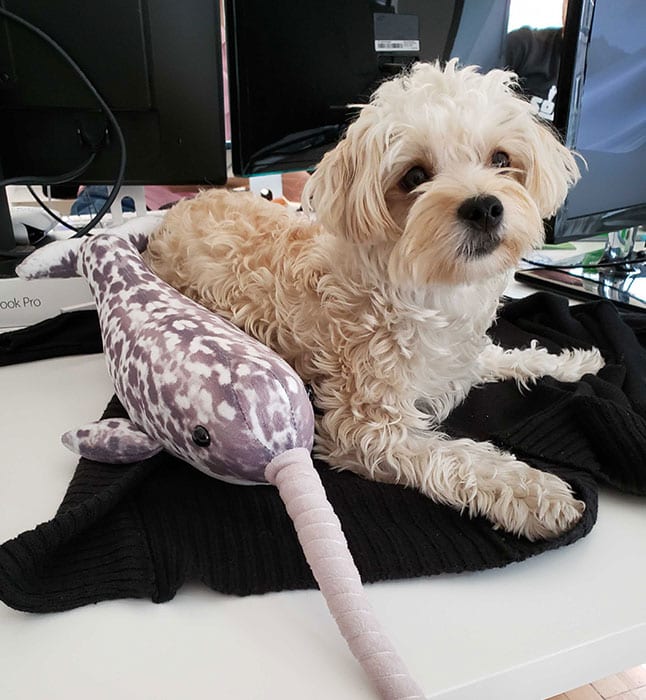
Being able to have fun with your kudos also goes a long way. Here at Spinach AI, kudos comes in many different forms, my favorite being the Spinach AI Narwhal award. Every month, a member of the team is awarded the Spinach AI Narwhal. It’s this incredibly cute Narwhal plushie (picture a whale with a unicorn horn 🐳🦄).
Spinach AI Employee Recognition Program: The Narwhal Award
The Narwhal is given to an employee who demonstrates Spinach AI’s core values and goes above and beyond their role. They’re nominated by the prior month’s Narwhal winner. While all of this happens, you can see how eager and excited everyone at the company is to celebrate the next award recipient.
This is just one of the many ways that employee recognition is built into our culture.
Acknowledging small wins leads to big change
Giving kudos shouldn’t just be reserved for massive wins, but should be given for smaller wins as well. For example, let’s say your sales rep just booked an introductory call with a massive potential client, that’s an amazing first step towards something bigger. Recognizing that small win can boost that individual’s confidence, excitement and momentum as they work through that process.
Employee recognition doesn’t always have to focus on how someone’s actions impact the company’s bottom-line either. Recognizing an individual for taking five minutes to explain something about the organization in an effort to make a new employee feel more welcomed (without being asked to do so) can go a long way for your culture.
Small wins are amazing opportunities to recognize employees and reinforce the qualities and behaviors that you’d like to foster within your team and organization. Building a kudos-giving culture has almost no added cost to your organization, but can have a massive impact on your team’s overall success.
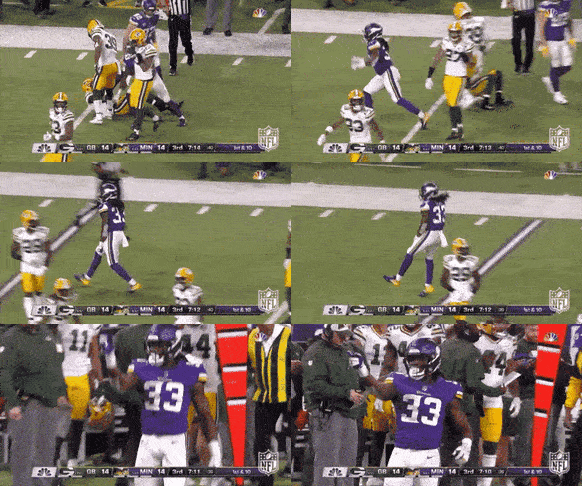
Think about it…When a football team is trying to score a touchdown, the only way to do that is to achieve first downs (small wins). As the team makes their way down the field, each first down is one step closer to the ultimate goal (touchdown!!). Celebrating each first down is just as important as celebrating a touchdown. The same should hold true for your team.
Kudos should come from all directions of the company
A culture of kudos shouldn’t be created from the top-down. That means that recognition shouldn’t only come from managers. It should be going up, down, sideways, really all directions you can think of within an organization.
A few channels kudos can live include:
Manager to employee
Employee to manager
Peer-to-peer
C-level to employee
Employee to C-level
Setting up a kudos program within your company can help ensure that individuals across your organization feel appreciated and recognized for all of the hard work they put in day in, day out.
Public vs. private employee recognition
In my last blog post, I spoke about the importance of knowing your employees and how they like to work, but also how they like to be recognized. Some prefer receiving kudos privately in their weekly one-on-one meetings, while others find it exhilarating when they are showcased during a team meeting. Not all recognition needs to be shouted from the rooftops. In many cases, it’s just as effective when given in a more private and intimate setting.
Ways to recognize employees privately:
1. During a one-on-one
Taking the time to let a team member know that you recognize something great that they’ve done is not only one of the easiest ways to build morale, but also one of the most effective. Consider adding a weekly recurring agenda item to your one-on-ones such as, “talk about wins this week”. Leading up to your one-on-one meeting, keep an eye out for small (or big) wins to highlight during the meeting. This is a great way to show your direct report that you appreciate the work they’re putting in.
2. Send them a private message
You don’t always have to wait for a one-on-one to send a shout out to your employee, manager or peer. Did you overhear them having a great call with a client? Send them a quick message letting them know they did a great job (and why)!
3. A hand-written card
This is one you don’t see too often, but as someone who’s had a manager who did this, it is definitely something I would love to see more companies do. Taking the time and effort to write a quick thank you on a physical card helps you go just a little above and beyond for that individual. In the digital era of work, it’s rare to receive something physical. Toss in a little $5 coffee card and I guarantee the output of that individual will generate far more than the price of the card.
Ways to recognize employees publicly:
1. During a team meeting
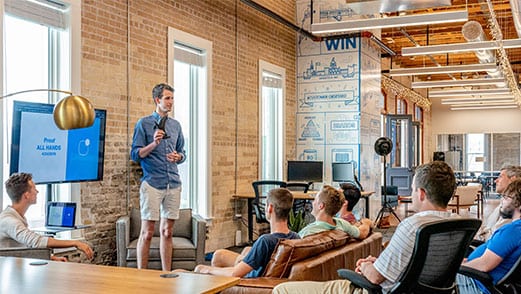
Team meetings are a great place to recognize people publicly. Start or end each meeting with a round table where individuals can share shoutouts and recognize their peers. The act of positive sharing will help to build stronger team bonds and keep employees motivated and accountable.
2. Demo days, town halls and other company-wide gatherings
At Spinach AI, we run off 2-week sprints. At the end of every sprint, the company gathers in the afternoon for Spinach AI Demo Day. We sit together, surrounded by drinks and snacks while teams present what they’ve worked on and their accomplishments. We also take time to give shoutouts to anyone and everyone in the organization cross-functionally. These shoutouts range from someone helping with onboarding or training, to someone bringing back coffee beans for the office after vacationing in Costa Rica. It is a wonderful feeling to see your name on the board, especially when it’s from another team or individual that you don’t usually get to work with.
3. Post a public message
A super quick and fun way to celebrate wins and recognize employees in an organization is by creating a “Wins” channel within your team communication tool (i.e. Slack, Microsoft Teams, etc). Encourage people to give shoutouts to colleagues who created or did something awesome! Make the channel fun, send gifs and use emojis to really get the smiles going! 🙌😃
In my experience, giving kudos has been one of the best ways to build a cultural powerhouse within an organization. In your next one-on-one, team meeting or company-wide event, set some time aside to celebrate the big (and small) wins of the amazing individuals you manage! They’ll thank you for it.
Easily add kudos into your one-on-one and team meeting agendas with Spinach AI!